



Best Organic Baby Formula (2026 Guide)
This post may contain affiliate links. As an Amazon Associate, I earn from qualifying purchases. Please read my disclosure.When I was researching formula for my kids, I spent weeks reading labels in the baby aisle and scrolling through ingredient lists online at 2 a.m. I wanted organic, but I also needed to understand what that actually meant. Was European formula really better? Did I need goat milk? What about all those scary ingredients I kept reading about?
The truth is, choosing formula felt overwhelming. But after consulting with pediatricians, reviewing over 65 different brands, and testing formulas with both my kids, I’ve narrowed down the cleanest, highest-quality organic options available today.
This guide will help you find the best organic baby formula for your little one without the confusion or endless research. Whether you’re supplementing, exclusively formula feeding, or transitioning from breastfeeding, you’ll find a safe, nutritious option here.
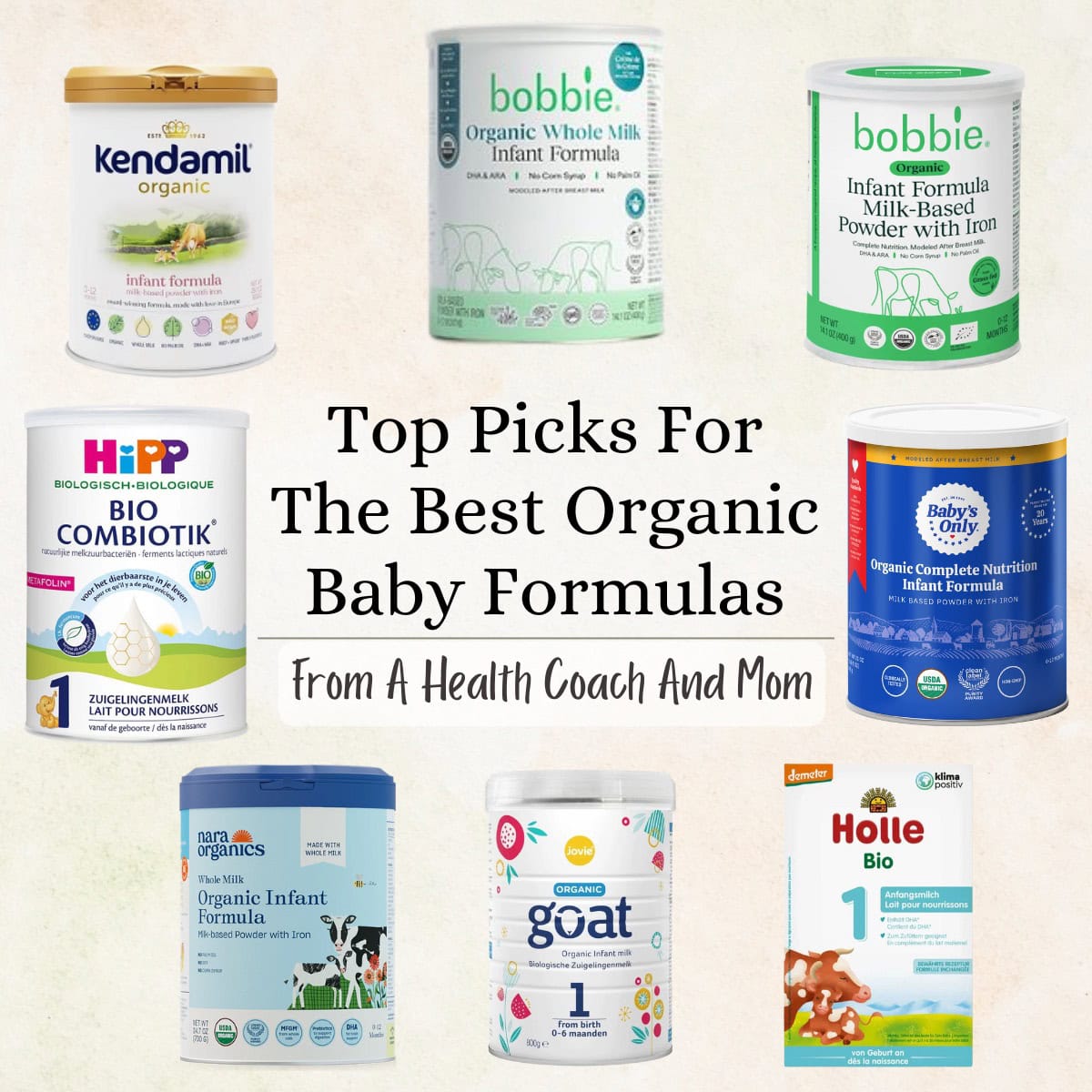
Table of Contents
hide
A Quick Note On Feeding
I strongly believe that FED is best. Whether you breastfeed for a year, six months, or not at all doesn’t make you a better or worse parent. I nursed my daughter for eight months before switching to formula, and it was one of the hardest decisions I made as a new mom. With my son, I supplemented from two months onwards because he was eating way more than I could produce! Both kids are healthy and thriving.
If you need formula, don’t feel guilty about it. Your baby needs you happy and healthy more than anything else.
Top Picks: Best Organic Baby Formulas
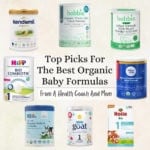
Here’s my at-a-glance view of the top organic formulas for different needs:
- Best Overall – USDA Organic And EU Organic Formula: Bobbie Organic Infant Formula
- Best EU Organic Formula: HiPP Dutch
- Best Whole Milk Formula (US Made): Bobbie Organic Whole Milk Infant Formula
- Best Whole Milk Formula (Made In Europe): Kendamil Organic
- Best Gentle Formula (For Fussiness & Gas): Bobbie Organic Gentle
- Best Goat Milk Formula: Jovie Goat
- Best Budget Formula: Holle PRE & Holle Stage 1
- Best Hypoallergenic Formula: HiPP HA
A quick note: you may have seen Nara Organics on earlier versions of this guide. Nara issued a voluntary recall of all its whole milk infant formula in June 2026 after it was linked to several infant botulism cases. I’ve removed it from this guide until (and unless) the company can show the issue has been fully resolved. If your baby has been eating Nara formula, stop immediately and talk to your pediatrician. You can find more details in the FAQ section below.
Disclaimer & Methodology
This guide is based on over 200 hours of research including peer reviewed studies, consultations with pediatricians and dietitians, collecting feedback from thousands of parents, and personal experience with my two kids. I’m a board-certified health coach and certified nutritionist, and this post has been medically reviewed by Katie Drakeford, MA, RD, CSP, LD, CLC (see my about page for more info about Katie). My recommendations are not a substitute for professional medical advice. Always consult your pediatrician before starting or switching formulas.
This post contains affiliate links, which means I may earn a small commission if you purchase through my links at no extra cost to you. I only recommend products I’ve personally researched or used with my own children.
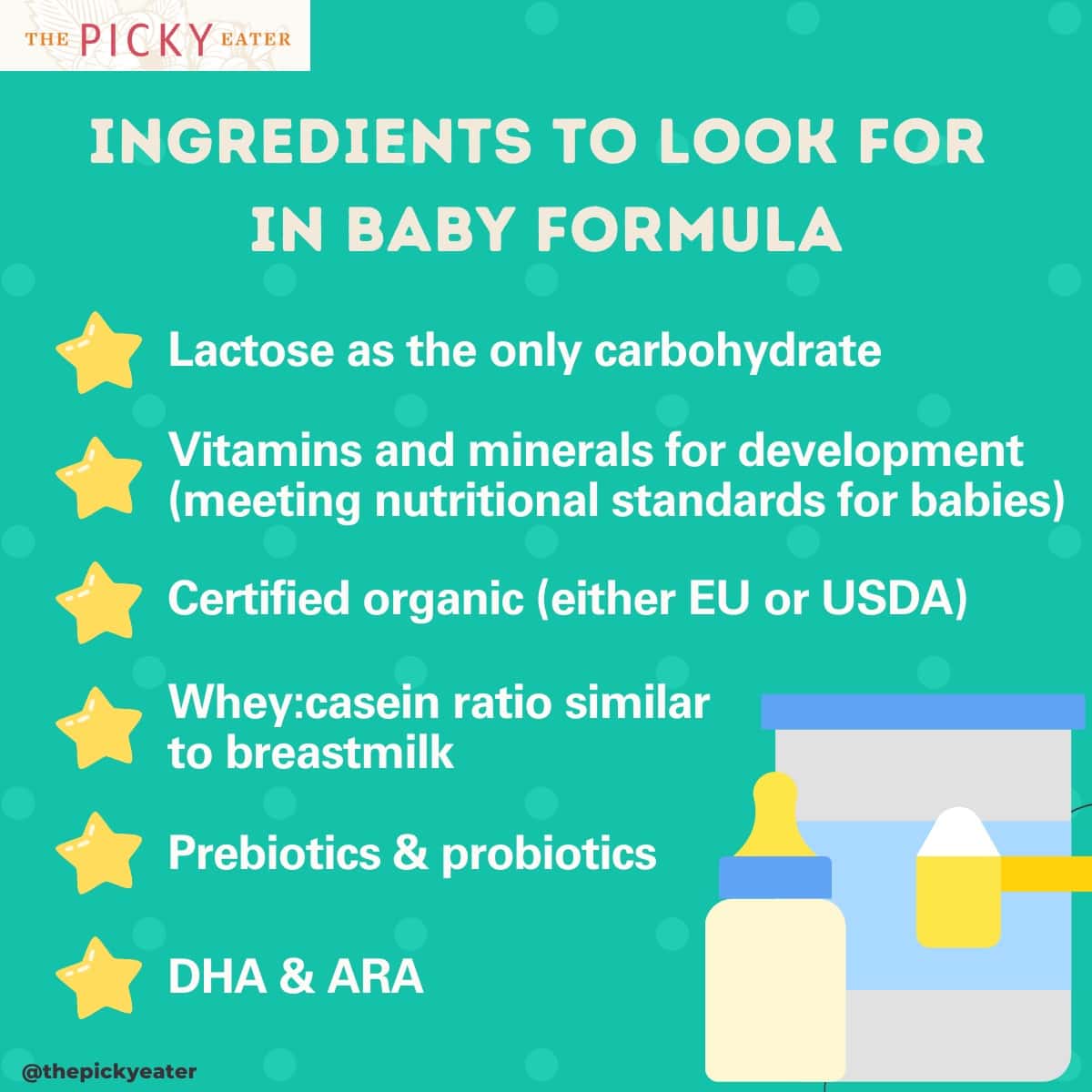
What To Look For In Organic Baby Formula
Before we get into specific brands, here’s what I prioritize when choosing formula:
✅ Certified Organic (USDA or EU certified)
✅ No added sugars, sucrose, syrup solids, or maltodextrin (lactose should be the main carbohydrate)
✅ Contains DHA and ARA for brain and eye development
✅ Includes prebiotics and probiotics when possible (Learn More: Prebiotics For Kids)
✅ 60:40 whey-to-casein ratio (mimics mature breast milk)
✅ No hexane-extracted DHA (or undetectable after extraction)
✅ Palm oil-free (or uses sustainable palm oil, learn more: Palm Oil In Baby Formula)
✅ Non-GMO
✅ No Carrageenan
✅ Good parent reviews for tolerance and mixing
A note on prebiotics and probiotics: I used to weigh these heavily, but the research here is actually pretty mixed. A 2011 review from the European Society for Pediatric Gastroenterology found there wasn’t enough evidence to recommend routine use of prebiotic-supplemented formulas, and more recent 2026 research on HMOs (the most talked-about prebiotic right now) found no meaningful difference in fussiness, crying, colic, or growth compared to formula without them.
Now, including prebiotics & probiotics is always a plus and definitely can’t hurt, but I also wouldn’t rule out a formula just because it doesn’t have these added in. If you want the benefits, you can always add a separate prebiotic or probiotic and control the dose yourself (more on that below).
The 8 Best Organic Baby Formulas
1. Bobbie Organic Whole Milk – Best Overall Organic Formula
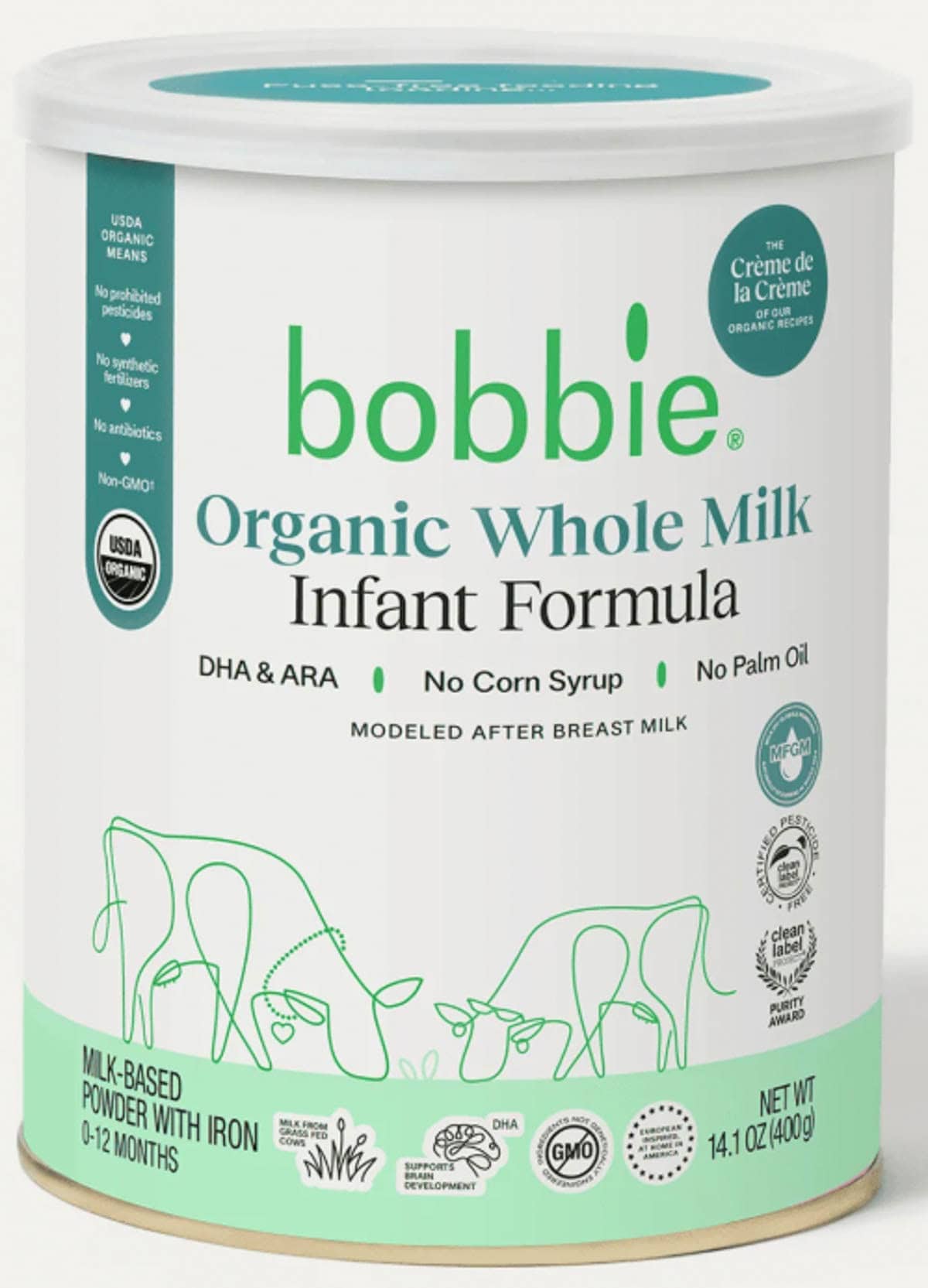
What It Is: USDA and EU organic formula made with organic whole milk, manufactured in the US
Age Range: 0-12 months
Why I Love It: Bobbie’s Whole Milk formula is my top pick this year, and the whole milk part is what sets it apart. About 20% of the fat in this formula comes naturally from the whole milk itself, with the rest from an added organic oil blend (high oleic sunflower or safflower oil, low erucic rapeseed oil, and coconut oil). That means less added vegetable oil overall compared to formulas made with skim milk, which rely on oil blends for 100% of their fat.
Like all Bobbie formulas, it uses algae-based DHA instead of fish oil or hexane-extracted DHA. That matters for a few reasons: algae DHA doesn’t introduce a fish allergen, it’s vegetarian, it doesn’t affect the smell or taste of the formula, and it carries a lower risk of mercury exposure. It’s also completely free of palm oil, which research has linked to harder stools and reduced calcium and DHA absorption in babies.
Bobbie is USDA and EU organic certified, made end to end at the company’s own facility in Heath, Ohio, which means it doesn’t spend weeks in transit on a cargo ship like imported European formula does. Every batch is third-party tested for heavy metals, and all four Bobbie formulas have been named a Top Choice by Consumer Reports for their low or non-detect levels of arsenic, lead, cadmium, and mercury (plus non-detect BPAs and phthalates).
Bobbie was also the first infant formula company to earn the Sorette Seal of Approval, an independent audit covering ingredient sourcing, manufacturing practices, and marketing claims. Following the Nara Organics recall, Bobbie added PCR-based spore testing on all incoming whole milk powder to screen specifically for C. botulinum before production even begins, working with food safety lab IEH. They’re rolling this out to all their dairy ingredients by July 2026.
You won’t find added prebiotics or probiotics in this formula. Bobbie’s stance is that the naturally occurring lactose already has mild prebiotic properties, and given the mixed research on added HMOs and prebiotics (see above), they’d rather not add synthetic versions just for a marketing claim. If you want probiotics, they sell probiotic drops separately so you can control the dose based on what your baby needs.
Price: $23.40 per 14.1oz can (subscription), $26.49 at Target. Also available at Walmart and Whole Foods.
Where To Buy: Bobbie website, Target stores nationwide
| Pros | Cons |
|---|---|
| USDA + EU Organic, FDA regulated, made in the US | No prebiotics |
| Naturally occurring whole milk fat, less added oil | No probiotics |
| Available at Target, Walmart, Costco, Whole Foods | |
| 60:40 whey:casein ratio | |
| Meets EU DHA standards, Algae-based DHA (no fish oil, no hexane) | |
| No palm oil, soy oil, corn syrup, or maltodextrin | |
| Lactose is the only carbohydrate | |
| Affordable compared to European formulas | |
| Clean Label Purity Award and Pesticide Free certified. Third-party tested, Consumer Reports Top Choice. |
2. Kendamil Organic – Best European Whole Milk Formula
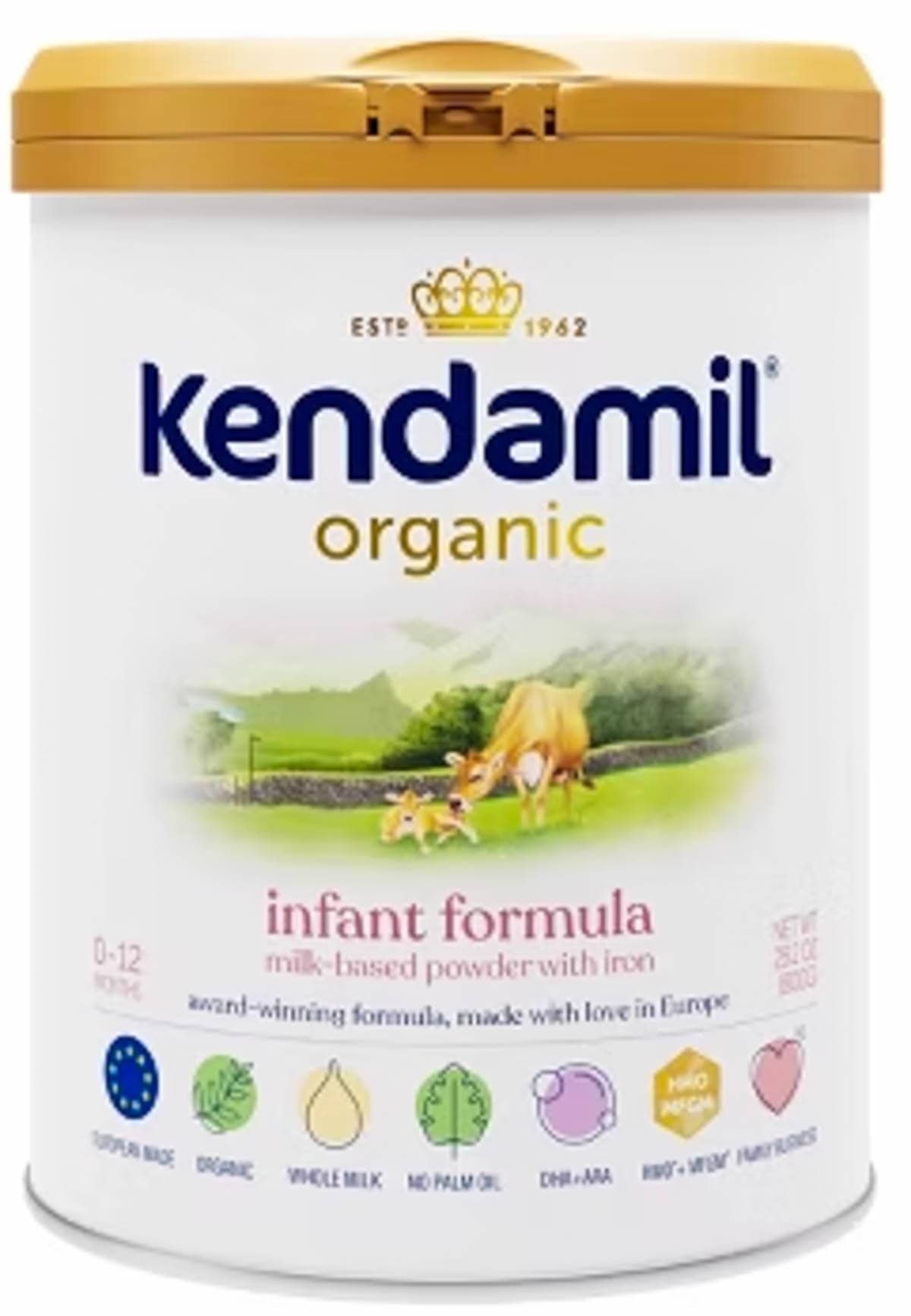
What It Is: UK organic formula made with whole milk
Age Range: 0-6 months (Stage 1), 6+ months (Stage 2)
Kendamil is similar to Nara Organics and Bobbie’s Whole Milk formula because it’s made organic whole milk instead of skim milk, which means less added vegetable oils. It contains HMOs (human milk oligosaccharides), a prebiotic that supports immune health, and includes DHA and ARA.
The formula is completely free of palm oil and soy oil, and uses coconut oil as one of the main fat sources. Parents consistently mention that Kendamil smells sweet and tastes good, making it one of the best options for picky breastfed babies who are resistant to formula.
I recommended Kendamil to many parents during the formula shortage in 2022, and heard good feedback that it mixed well and most babies took to it without fussiness.
The formula doesn’t contain probiotics, so you’d need to add those separately if you want them. It also contains taurine, l-carnitine, and nucleotides, but Kendamil doesn’t use chemical solvents to extract these nutrients.
Price: $42.49 for a 28.2oz container at Target, $41.13 with subscription – $52.99 per 28oz container online
Where To Buy: Target, Bottles & Burps, Organic’s Best
| Pros | Cons |
|---|---|
| Made with organic whole milk | No probiotics |
| Lactose is the only carbohydrate | |
| Contains HMOs for immune support | |
| No palm oil or soy oil | |
| Contains prebiotics, DHA, ARA (non-hexane extracted) | |
| Available online and at Target | |
| Clean Label Purity Project Award | |
| Highest milk fat percentage of any formula |
3. Bobbie Organic Gentle – Best For Fussiness & Gas
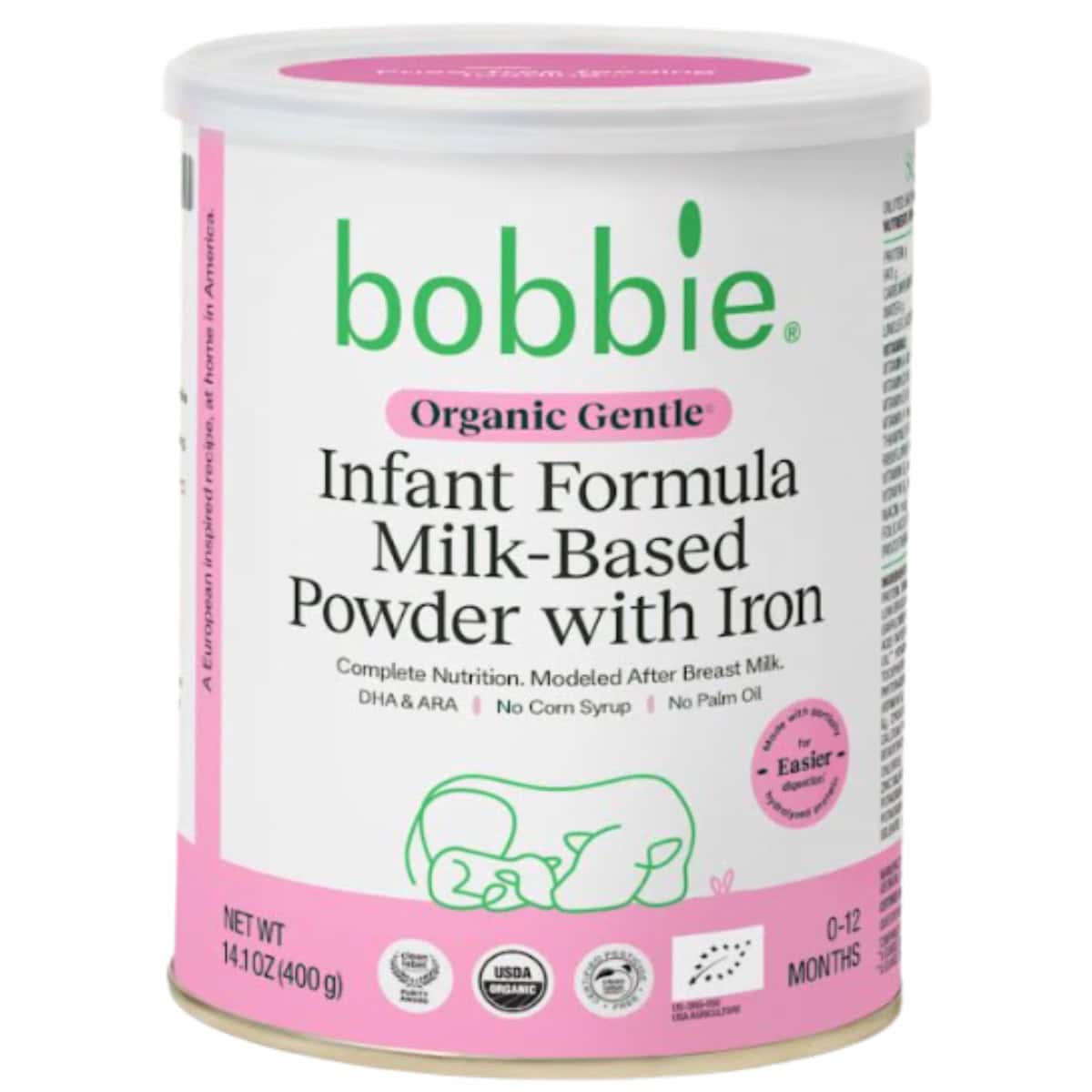
What It Is: USDA and EU organic tolerance formula for gassy or fussy babies
Age Range: 0-12 months (infant formula) and 12+ months (toddler formula)
Why I Love It: Bobbie Organic Gentle is the only organic tolerance formula on the market made with 100% lactose. Most “gentle” or “sensitive” formulas swap out lactose for corn syrup solids, maltodextrin, or sucrose to make it cheaper to produce once the protein is broken down. Bobbie didn’t take that shortcut.
The formula uses 100% partially hydrolyzed whey protein, meaning the protein molecules are already broken down into smaller pieces that are easier for a sensitive tummy to digest. That can help with the fussiness, gas, and crying that some babies experience on a standard formula, without switching all the way to a fully hypoallergenic option. It’s important to know this is different from an extensively hydrolyzed formula like HiPP HA (more on that below): Gentle is meant for general fussiness and gas, not a diagnosed cow’s milk protein allergy.
It’s made with organic milk from grass-fed cows, is Clean Label Purity Award and Pesticide Free Certified, and skips palm oil, corn syrup, sucrose, and maltodextrin, just like the rest of the Bobbie lineup.
I ranked this ahead of Bobbie’s classic Original formula because it fills a need nothing else on this list does (an organic option for fussy, gassy babies that still uses real lactose), and it’s where I’m seeing the most parent demand right now. If your baby is doing just fine on a standard formula, the Original below is still a fantastic, slightly more affordable choice. Learn More: Bobbie Organic Gentle Formula Review.
Price: $28-$32 per 14.1oz can
Where to buy: Bobbie’s website, Target, Whole Foods
| Pros | Cons |
|---|---|
| USDA + EU Organic | More expensive than Bobbie Original |
| Only organic tolerance formula made with 100% lactose | No prebiotics or probiotics added |
| Partially hydrolyzed whey for easier digestion | Not hypoallergenic, won’t help with a diagnosed milk allergy |
| Clean Label Purity Project certified | |
| No palm oil, corn syrup, sucrose, or maltodextrin | |
| Available in stores and online |
4. Bobbie Organic (Original) – Best Classic US-Made Organic Formula
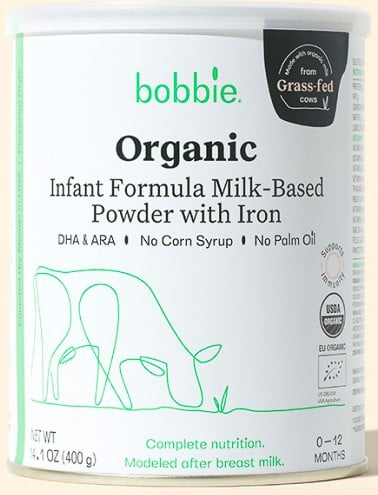
What It Is: USDA organic, European-style formula made in the US with organic skim milk
Age Range: 0-12 months
Why I Love It: Bobbie’s Original formula is the one that put the brand on the map, and it’s still an excellent option if your baby doesn’t need the whole milk or gentle formulas above. It has a 60:40 whey-to-casein ratio modeled after breast milk, uses algae-based DHA (no fish oil, and no hexane used to extract it), and is completely free of palm oil, soy oil, corn syrup, and maltodextrin. Lactose is the only carbohydrate.
Bobbie was created by a mom, Laura Modi, who developed the formula after feeling frustrated over a lack of clean options for her baby. And when my nephew transitioned from breastfeeding after 8 months, Bobbie’s Original formula was what worked best for him. He didn’t have any digestive issues, and everyone in the family felt good that he was getting organic nutrition without a lot of extra additives.
Like the Whole Milk and Gentle formulas, Original doesn’t include added prebiotics or probiotics (see the note above on why).
Price: $23.40 per 14.1oz can (subscription), $26.49 at Target
Where To Buy: Bobbie’s website, Target
| Pros | Cons |
|---|---|
| USDA Organic certified, FDA regulated | No probiotics |
| Made in the US, available at Target | No prebiotics |
| 60:40 whey:casein ratio | |
| No palm oil, soy oil, corn syrup, or maltodextrin | |
| Lactose is the only carbohydrate | |
| Affordable compared to European formulas | |
| Clean Label Purity Award and Pesticide Free certified |
5. HiPP Dutch – Best European Organic Formula

What It Is: EU-certified organic formula with a complete nutritional profile
Age Range: 0-6 months (Stage 1), 6+ months (Stage 2)
Why I Love It: HiPP Dutch is one of my top picks when it comes to organic baby formula. It has a whey-to-casein ratio that mimics breast milk and includes DHA and ARA for brain development. The formula is free from GMOs, added sugars, starch, soy, and synthetic preservatives.
I tested HiPP Dutch with my daughter when she was four months old, and she took to it immediately (my son did too when he was born!). The powder mixes easily, even at 3 a.m. when you’re half asleep, and I didn’t notice any increase in spit-up or fussiness. The container is also easier to use than some European brands since it comes in an airtight can instead of a foil-lined box.
There are two things worth knowing before you buy. First, HiPP Dutch sources its DHA from fish oil rather than algae. That introduces a potential fish allergen, can change the smell of the formula slightly, and carries a small risk of mercury exposure. Second, HiPP Dutch is made entirely with skim milk, not whole milk, so 100% of its fat comes from the added vegetable oil blend, which includes palm oil. Palm oil has been linked in research to harder stools and reduced calcium and DHA absorption in some babies. If either of these is a dealbreaker, Bobbie or Kendamil (above) use algae-based DHA and skip palm oil entirely.
Also Good:
- HiPP UK Stage 1 ($36.99-$42.99): Similar to HiPP Dutch but more affordable. Contains prebiotics (but no probiotics) and comes in a box instead of a can. Great budget-friendly European option.
- HiPP PRE Germany ($28.99-$37.99): Designed for babies 0-3 months. Contains both prebiotics and probiotics. More affordable than HiPP Dutch and comes in a box.
Price: $42.99-$48.99 per 28.2oz container (depending on quantity purchased)
Where To Buy: Organic’s Best
| Pros | Cons |
|---|---|
| Mimics breast milk composition | Contains palm oil |
| Contains prebiotics and probiotics | Uses hexane extraction (though removed) |
| EU Organic certified, non-GMO | Not available in US stores (online only) |
| No added sugars or maltodextrin | DHA sourced from fish oil |
| Easy-to-use container | |
| Contains DHA & ARA |
6. Jovie Goat – Best Goat Milk Formula
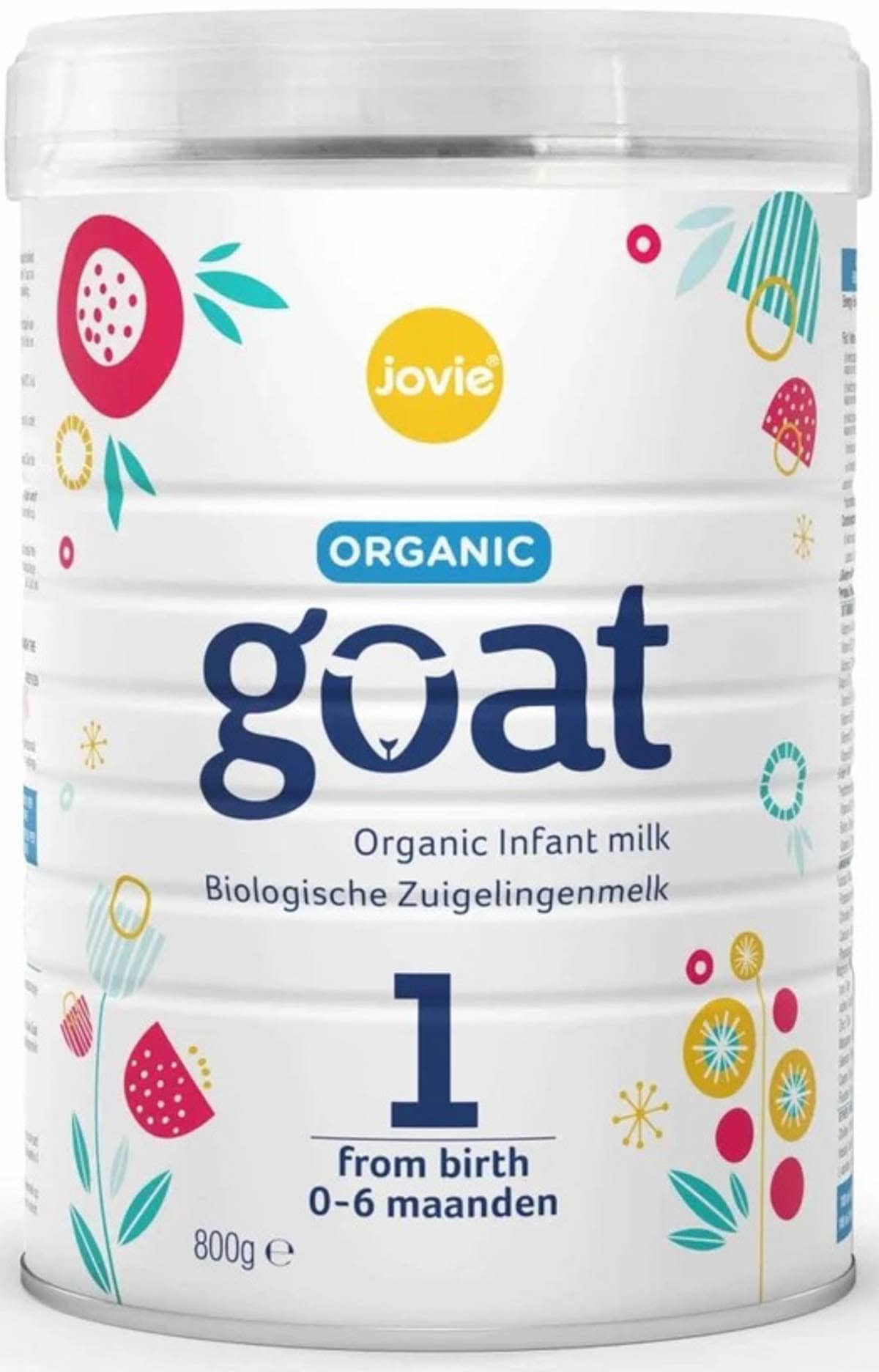
What It Is: EU organic goat milk infant formula
Age Range: 0-6 months (Stage 1), 6+ months (Stage 2)
Why I Love It: Jovie is the best goat milk formula available, and it’s a great option for babies who have trouble digesting cow’s milk. Made with organic whole A2 goat milk, this formula is easier on sensitive tummies since goat milk contains only A2 protein (versus both A1 and A2 in cow’s milk).
The ingredients are 100% organic and non-GMO, with added prebiotics and a whey-to-casein ratio similar to breast milk. Jovie is also free of glucose syrup solids, maltodextrin, palm oil, and soy oil.
I recommended Jovie to a friend whose baby was having constant spit-up and gas on cow’s milk formula. Within three days of switching to Jovie, her baby was sleeping better and much less fussy.
One thing to note: Jovie uses fish oil for DHA, so it’s not vegetarian-friendly. It also doesn’t contain probiotics. (Learn More: Jovie Formula Review).
Price: $56.99-$64.99 per 28.2oz container (depending on number ordered)
Where To Buy: Organic’s Best
| Pros | Cons |
|---|---|
| Made with A2 organic whole goat milk | No probiotics |
| EU Organic certified | Expensive |
| No palm oil or soy oil | Not vegetarian (contains fish oil) |
| Contains prebiotics | |
| Contains DHA/ARA | |
| Can be easier to digest than cow’s milk | |
| No added sugars |
7. Baby’s Only Organic – Best Budget-Friendly US Formula
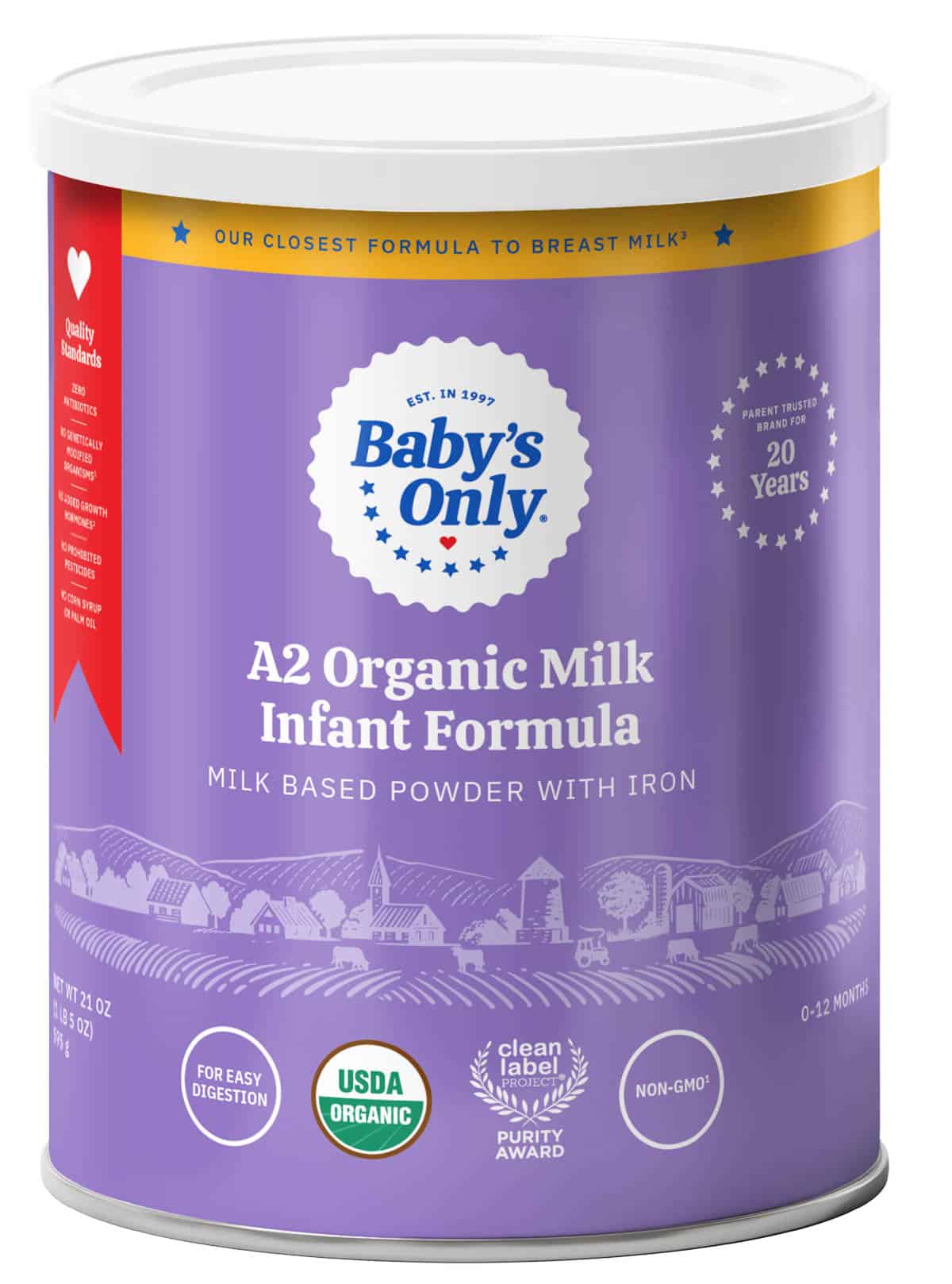
What It Is: USDA organic formula available in US stores
Age Range: 0-12 months (infant formula) and 12+ months (toddler formula)
Why I Love It: Baby’s Only Organic is the most affordable USDA organic formula you can buy in the US. It’s made with organic A2 milk, is non-GMO, and is Clean Label Purity Project certified. The formula contains no palm oil, no corn syrup, and no glucose syrup solids.
Baby’s Only is free of syrup solids and added sugars, and while it doesn’t contain full DHA/ARA or probiotics, I like Baby’s Only for parents who want organic nutrition on a budget. The formula has full-fat nutrition and a simple ingredients list. It’s been a trusted brand for over 20 years and is widely available both online and in stores.
Price: $30 per 21oz can
Where To Buy: Amazon, natural grocery stores like Sprouts
| Pros | Cons |
|---|---|
| Affordable organic option | No probiotics |
| No palm oil | No full DHA or ARA |
| Clean Label Purity Project certified | |
| Contains prebiotics | |
| Available in stores and online |
8. Holle PRE – Best Budget European Formula
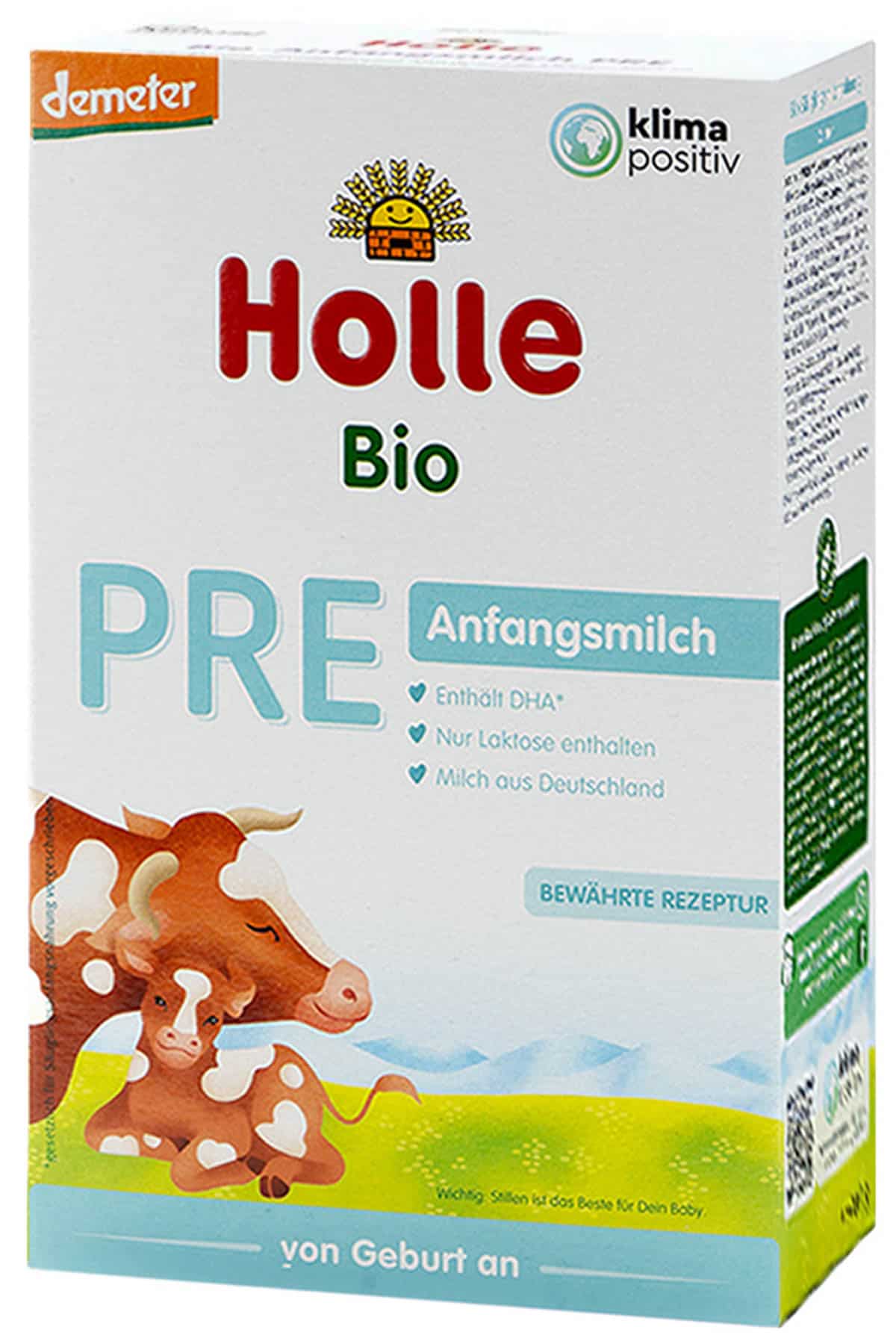
What It Is: Demeter biodynamic certified organic formula from Germany
Age Range: [PRE] 0-3 months, [Stage 1] 0-6 months, [Stage 2] 6+months
Why I Love It: Holle PRE is one of the most affordable European formulas, and it carries a Demeter biodynamic certification, which is even stricter than regular organic standards. This ensures the highest animal welfare standards and commitment to sustainability.
The formula is simple and clean, with organic ingredients and no added maltodextrin (though Stage 2 does contain some). Holle PRE now includes DHA and ARA, which wasn’t always the case with older formulations.
I like Holle PRE for parents who want to supplement with their own probiotics and prebiotics. The formula doesn’t include these, so you have full control over what you’re adding.
One limitation is that Holle PRE is designed for babies 0-6 months (ideally 0-3 months). After that, you’ll need to switch to Stage 1 or Stage 2. Additionally Holle (across all stages) doesn’t have a whey:casein ratio that matches breastmilk, so that might cause digestive discomfort in some babies
Price: $21.85-$27.49 per 400 gram box
Where To Buy: Organic’s Best
Also Good:
- Holle Goat Stage 1 ($25.71-$33.99): Made with organic A2 goat milk. Bioland certified. Good option for babies sensitive to cow’s milk, though the whey-to-casein ratio doesn’t mimic breast milk, which can be constipating for some babies. Contains maltodextrin.
- Holle Bio Stage 1 ($21.85-$27.49): Similar to Holle PRE but for ages 0-6 months. Demeter certified. Contains DHA and ARA. Includes maltodextrin (unlike Holle PRE).
| Pros | Cons |
|---|---|
| Affordable European formula | No probiotics |
| Demeter biodynamic certified | No prebiotics |
| EU Organic certified | Stage 1 & 2 contains maltodextrin |
| Contains DHA and ARA | Whey:casein ratio doesn’t match mature breastmilk |
| No maltodextrin in PRE stage |
RUNNER UP: HiPP HA – Best Hypoallergenic Formula
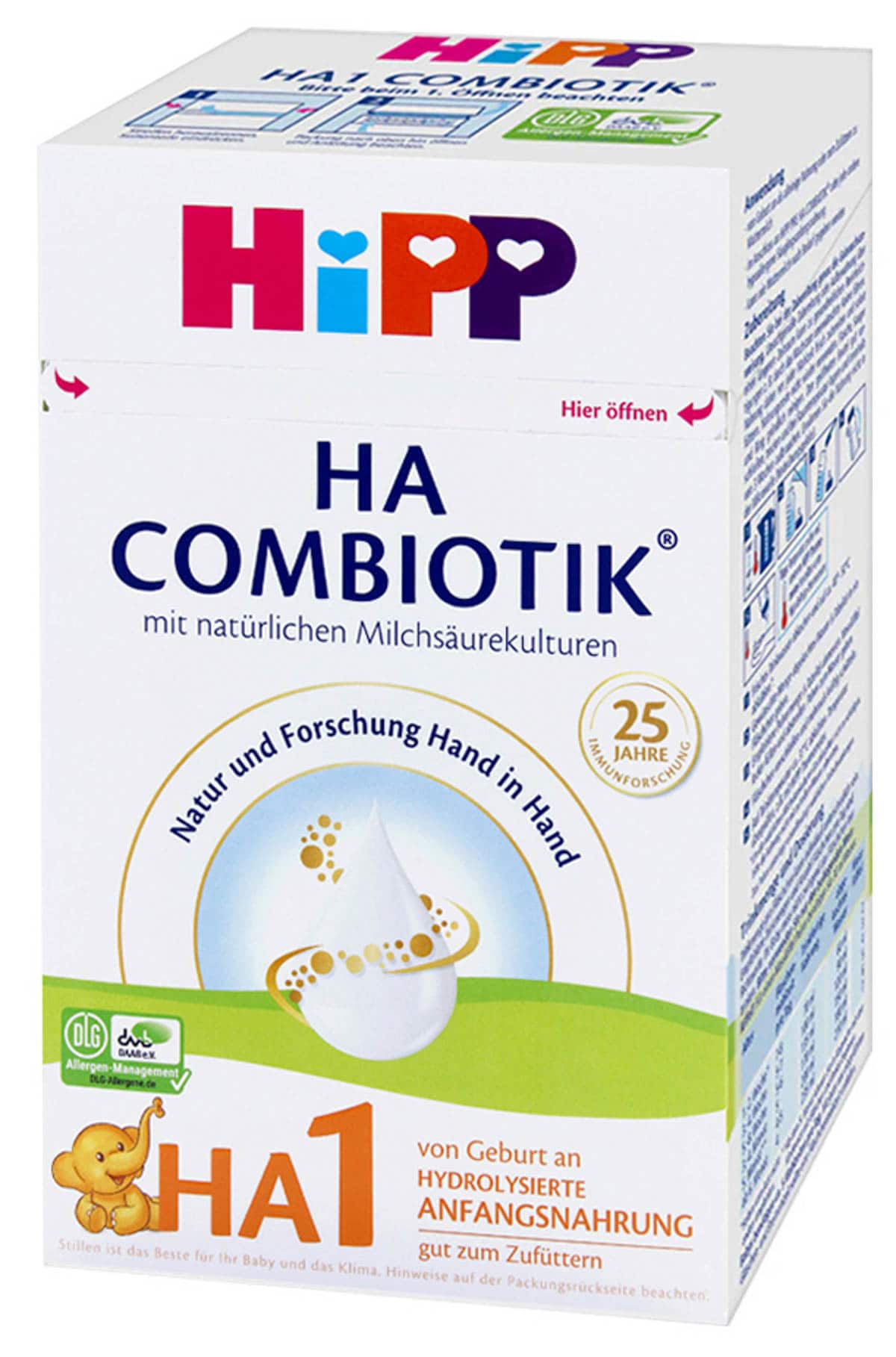
What It Is: European hypoallergenic formula for cow’s milk sensitivities
Age Range: 0-3 months (Stage PRE), 0-6 months (Stage 1), 6+ months (Stage 2)
HiPP HA is the best option if your baby has a cow’s milk protein sensitivity (but not a full allergy). The formula contains extensively hydrolyzed protein (86-87% broken down), which is easier for sensitive tummies to digest.
It’s 100% whey with no casein, and includes prebiotics, probiotics, DHA, and ARA. The lactose content is the same as regular formula, so if your baby has severe lactose intolerance, this may not work.
A friend of mine switched to HiPP HA after her baby had constant gas and fussiness on regular formula. Within a week, her baby was sleeping through the night and much happier overall.
While HiPP HA isn’t technically certified organic (because the hydrolyzed protein requires more processing), all other ingredients are organic.
Price: $31.71-$42.99 per 600 gram container
Where To Buy: Organic’s Best
Also Good:
- HiPP Comfort ($30.85-$42.99): Meant to relieve gas, fussiness, and digestive discomfort, HiPP Comfort is even more broken down than HiPP HA. Contains extensively hydrolyzed protein, (86-87% broken down), 100% whey (no casein), reduced lactose content and modified fats.
- HiPP AR ($30.85-$40.99): Meant to ease reflux in infants, HiPP AR contains locust bean gum that thickens the formula slightly to prevent reflux and/or reduce spit up.
| Pros | Cons |
|---|---|
| Hydrolyzed protein for easier digestion | Not fully organic |
| No casein (100% whey) | Regular lactose content (not suitable for severe lactose intolerance) |
| Contains prebiotics | May not work for diagnosed cow’s milk protein allergy |
| Contains probiotics | |
| Includes DHA and ARA | |
| No added sugars |
Organic Baby Formula Comparison Chart
Here’s a quick side-by-side comparison of all the formulas featured in this guide:
| Formula Brand | Type Of Milk | Pre-biotics | Pro-biotics | DHA & ARA | Palm Oil? | Soy Oil? | Malto-dextrin | Price Per Can |
|---|---|---|---|---|---|---|---|---|
| HiPP Dutch | Organic Skim Milk, Whey | ✓ | ✓ | ✓ | Yes | No | No | $42.99 – $48.99 |
| Bobbie Original | Organic Skim Milk, Whey | No | No | ✓ | No | No | No | $25 |
| Bobbie Whole Milk | Organic Whole Milk, Skim Milk, Whey | No | No | ✓ | No | No | No | $28 |
| Kendamil Organic | Organic Whole Milk, Skim Milk, Whey | ✓ (HMOs) | No | ✓ | No | No | No | $41.13 – $52.99 |
| Jovie Goat | Organic Whole Goat Milk | ✓ | No | ✓ | No | No | No | $56.99 – $64.99 |
| Baby’s Only Organic | Organic Grass-Fed Milk, Skim Milk, Whey | ✓ | No | ✓ (DHA only) | No | No | No | $30 |
| Holle PRE | Organic Whole Milk, Whey | No | No | ✓ | Yes | No | No | $21.85 – $27.49 |
| HiPP HA | Hydro-lyzed Whey (No Casein) | ✓ | ✓ | ✓ | Yes | No | No | $31.71 – $42.99 |
| HiPP UK | Organic Skim Milk, Whey | ✓ | No | ✓ | Yes | No | No | $36.99 – $42.99 |
| HiPP PRE Germany | Organic Skim Milk, Whey | ✓ | ✓ | ✓ | Yes | No | No | $28.99 – $37.99 |
| Holle Goat | Organic Goat Milk | No | No | ✓ | Yes | No | Yes | $25.71 – $33.99 |
| Holle Bio Stage 1 | Organic Skim Milk, Whey | No | No | ✓ | Yes | No | Yes | $21.85 – $27.49 |
Key: ✓ = Contains this ingredient/feature; No = does not contain; Yes = contains
Notes:
- All formulas listed are certified organic (USDA or EU)
- All formulas are non-GMO
- All formulas use lactose as the primary carbohydrate (no corn syrup solids)
- DHA extraction methods vary by brand: some use algae (no fish allergen, lower mercury risk), others use fish oil (introduces a potential allergen and small mercury risk), and some use hexane-extraction for ARA (removed and reported as undetectable in the final product).
European vs. American Baby Formula
You’ll notice that several of my top picks are European formulas, and that American brands like Bobbie are now closing the gap. Here’s why Europe has historically had an edge:
European formulas have stricter standards:
- No corn syrup solids or processed sugars allowed
- Minimum 30% of calories must come from lactose
- No synthetic nutrients extracted with chemical solvents
- More transparent testing for trace contaminants
- Required DHA in all formulas (not required in US)
US formulas are improving: Brands like Bobbie are now meeting EU standards while being made in the US, using algae-based DHA and skipping palm oil altogether. That gives you European-quality nutrition with the convenience of buying at Target, plus a shorter supply chain from factory to your door.
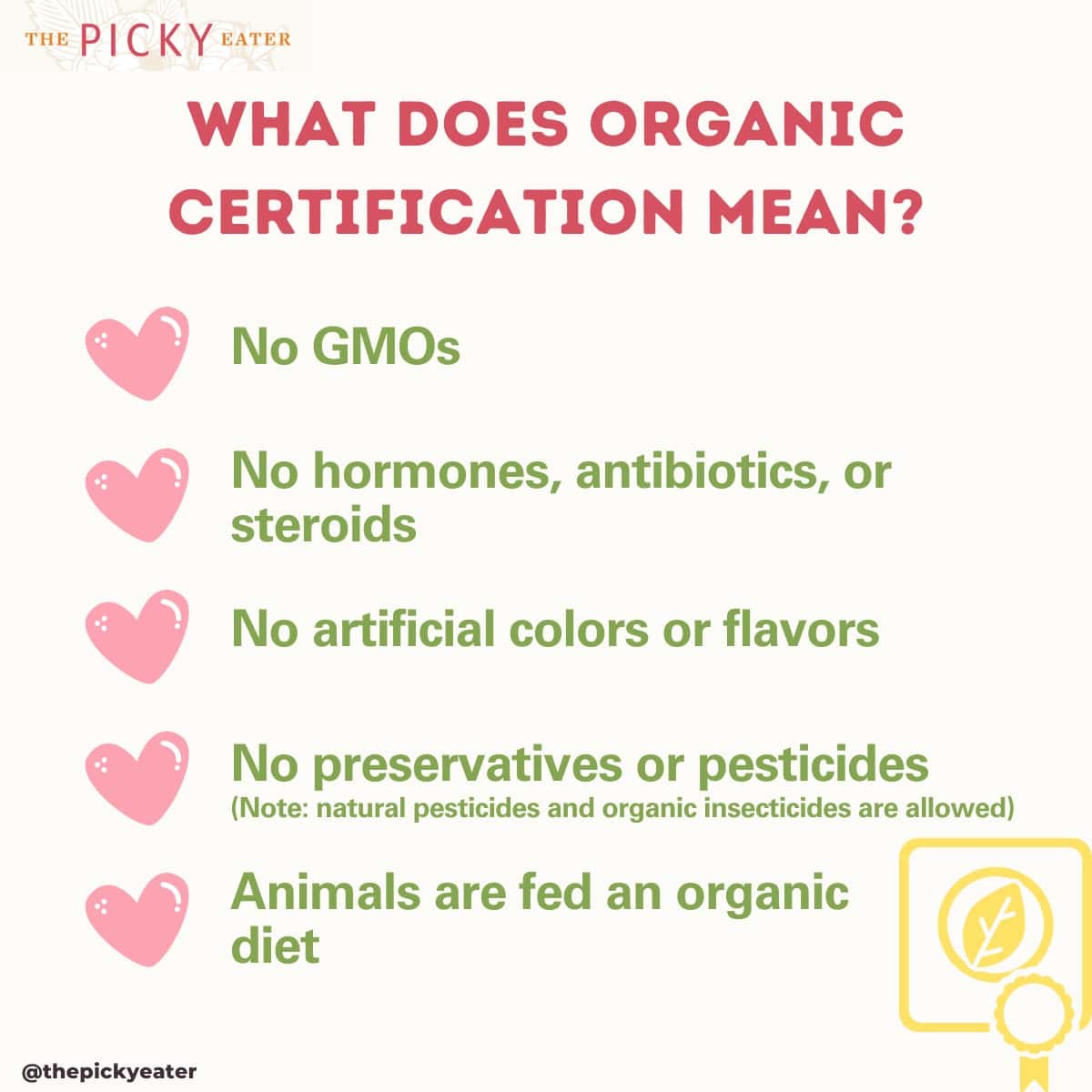
Both EU and US organic formulas must be 95% organic and free from growth hormones, GMOs, and antibiotics. The main difference is that Europe regulates more strictly when it comes to added ingredients and testing standards.
All US-based formulas are regulated by the FDA, and all European formulas are regulated by the European Commission, which also certifies formulas as organic. Additionally, Europe has designations that are “beyond organic” like “Demeter,” which essentially means biodynamic farming on top of organic farming.
A note on organic labeling: Certified organic does not mean the same thing as “made with organic ingredients.” If a package has the label “made with organic ingredients,” it means that only 70% of the ingredients are organic, not 95%. (Source).
Understanding Formula Stages (European Formulas)
European formulas come in stages to match your baby’s changing nutritional needs:
- Stage PRE/1 (0-6 months): Gentlest formula, often 100% lactose-based, less iron since babies have iron stores until 6 months
- Stage 2 (6-10 months): More iron, adjusted vitamins and minerals for growing babies
- Stage 3 (10-12+ months): Designed to supplement solid foods
US formulas typically have one stage for 0-12 months, then a separate toddler formula for 12+ months.
What About Palm Oil And DHA Sourcing?
I hear from so many parents that two of the biggest concerns are palm oil and how a formula’s DHA is sourced.
Palm Oil: Palm oil is added to mimic palmitic acid in breast milk, but it can cause digestive issues in some babies. It reacts with calcium in the gut and may lead to constipation or harder stools, along with reduced calcium and DHA absorption. Formulas like Bobbie, Kendamil, and Jovie are palm oil-free, which I prefer.
DHA Sourcing: DHA and ARA can come from a few different places. Algae-based DHA (used by Bobbie) doesn’t introduce a fish allergen and carries a lower mercury risk. Fish oil-based DHA (used by HiPP Dutch and Jovie) is effective but adds a potential allergen and a small mercury exposure risk, and can affect the smell of the formula. Some formulas also use hexane, a petroleum-based solvent, to extract DHA and ARA from algae; the hexane is removed after extraction and is reported as undetectable in European formulas due to strict testing.
If any of this concerns you, I’d recommend choosing an algae-based, non-hexane formula like Bobbie or Kendamil.
Best Supplements For Baby Formula
I have gotten a lot of questions about what to supplement with if your baby is on a formula that doesn’t have DHA added, what probiotic to use, or what to do if your baby is getting some breast milk along with their formula (in which case you need to add Vitamin D). Here’s what I recommend:
Best Vitamin D Drops: Bobbie Vitamin D Drops (USDA organic, vegan, Clean Label certified, only 3 drops per day)
Best Probiotic Drops: Bobbie Probiotic Drops (1 billion live cultures, can be mixed into anything, helps with colic and crying)
Best Prebiotics: BeginHealth (for infants 0-12 months, no artificial flavors or stabilizers)
Best DHA Supplement: Nordic Naturals Baby’s DHA (pure, no preservatives, includes Vitamin D)
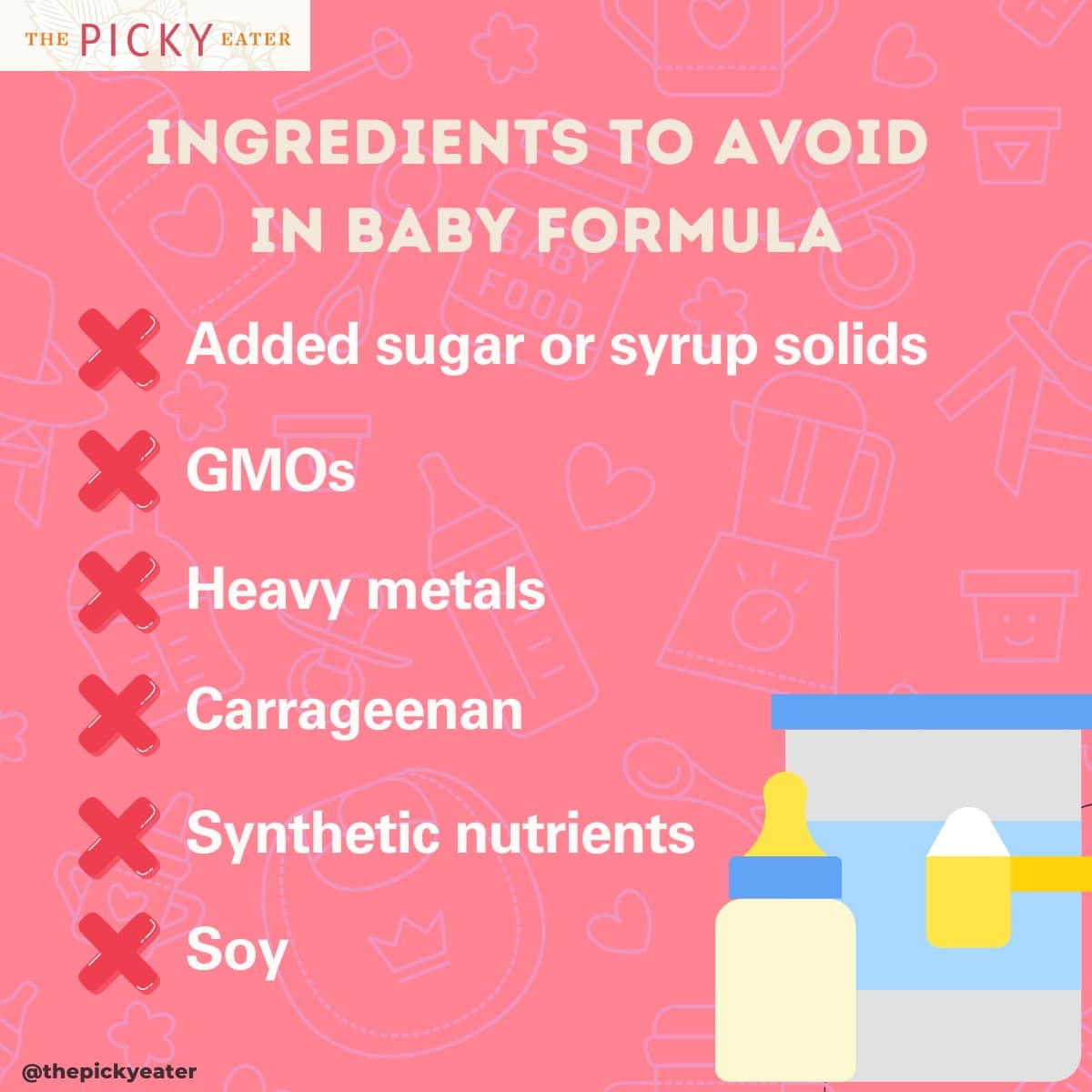
Ingredients To Avoid In Baby Formula
Here are the ingredients that I recommend avoiding in baby formula, whenever possible:
❌ Corn Syrup Solids/Maltodextrin: Cheaper alternatives to lactose that provide empty calories without nutritional benefit.
❌ GMOs: May contain trace pesticides.
❌ Hexane-Extracted DHA/ARA: While DHA and ARA are important for brain development, some are extracted using hexane (a neurotoxic solvent). Look for formulas with non-hexane extracted versions or algae-based DHA.
❌ Carrageenan: Added as a stabilizer in ready-to-feed formulas; linked to intestinal inflammation and banned in EU.
❌ Palm Oil: Can bind with calcium in baby’s gut, causing digestive issues and harder stools.
❌ Soy Protein: May contain phytoestrogens that may not be suitable for infants. Always consult your pediatrician before using soy formula. (Source: Check out this study about soy).
FAQs
What is the closest formula to breast milk?
Any formula with a 60:40 whey-to-casein ratio and key vitamins and minerals is very close to breast milk. HiPP Dutch, Bobbie, Kendamil, and Nara Organics all mimic breast milk composition.
Is organic formula really better?
Organic formulas are free from antibiotics, chemical fertilizers, hormones, and pesticides. While research doesn’t show huge long-term health advantages, many parents (including myself) prefer organic for peace of mind. If you can afford it, it’s worth the investment.
However, not all families may be able to choose organic formula, in which case I firmly believe that fed is best, and you should choose the formula that works for your budget and your baby. Other considerations such as price, or needing a hypoallergenic formula (which by definition will not be organic due to the hydrolyzed proteins), or availability should also be kept in mind when choosing a formula.
What happened to Nara Organics formula?
Nara Organics voluntarily recalled all of its whole milk organic powdered infant formula in June 2026 after the CDC linked it to several infant botulism cases. If your baby has consumed Nara formula, stop feeding it to them right away and contact your pediatrician, since symptoms of infant botulism can take weeks to show up. I’ve removed Nara from this guide and will only add it back if the company can show the safety issue has been fully resolved.
How long is baby formula good for?
Most formulas need to be used within one month of opening. Unopened formula is typically good for 6-12 months (check the expiration date on the container).
Can you mix formulas?
Technically yes, but this can be tricky. If you want to mix formulas (to transition between brands or because your baby does well with a blend), consult your pediatrician first to make sure you’re following correct mixing instructions.
How do I know which baby formula to choose?
Here are some steps to help you make an informed choice when deciding which is the right formula for your baby:
1) Talk to your pediatrician first – they can provide recommendations based on your baby’s specific needs.
2) Determine the type of formula – cow’s milk, goat’s milk, hypoallergenic, vegan, etc. based on your baby’s age and any allergies or dietary restrictions.
3) Consider the ingredients list and choose formulas that have no sugar or syrup solids added, are non GMO and/or organic, contain DHA/ARA, and meet your baby’s nutritional requirements.
4) Consider cost & budget! Always choose a formula that meets your budget constraints.
What if my baby doesn’t like the formula I chose?
Not every baby likes every formula. Some formulas can cause constipation or upset stomach in certain babies while keeping others perfectly happy. If you try a formula and it doesn’t work after 4-6 weeks, it’s ok to switch to something else.
Other Helpful Resources
I have specific guides for each type of formula, if you’re looking for more detailed information! Here are my guides to the best goat milk formula, the best hypoallergenic formula, the best toddler formula, and the best vegan baby formula.
If you’re choosing a European formula, I also have translated instructions and guides for each one! Here they are: HiPP Dutch, HiPP PRE Germany, Holle PRE, Holle Bio, Holle Goat
Final Thoughts
Choosing the right formula for your baby is a personal decision, and there’s no one-size-fits-all answer. What works for one baby might not work for another, and that’s completely normal. If you try the formulas I recommend and they don’t work for your baby, that is ok!
If you can afford organic European formulas like HiPP or Kendamil, or European style options like Bobbie, those are your best bets. And if you’re on a tight budget, just try to find a formula free of syrup solids, maltodextrin and added starches.
The most important thing is that your baby is fed, healthy, and happy. Whether you breastfeed, formula feed, or do a combination of both doesn’t define you as a parent.
You’re doing an amazing job. Trust your instincts, consult your pediatrician, and know that you’re making the best choice for your family. I hope this post helped you find the right baby formula for you and your little one!












Hi! first of all thank you so much for all this great research and clear presentation. Saved me time during my research.
I am going to start supplementing my baby’s breastmilk diet with formula as he reaches 6m. I was going to get an european brand, but with the recent regulations I will likely stick with an american option. It appears that the Americans have chosen mostly Soy Oil to dilute their expensive other oils, and the Europeans have chosen mostly Palm Oil.
I was wondering if you have done research on the ingredient compromise of palm oi vs. soy oil. Understand both are sub-optimal, but should we prefer one of the other (if we need to compromise on one)? You mentioned you are ok with the European formulas having Palm Oil because the quantity is small. Do you have a sense for how much Soy Oil American formulas like Baby’s Only Whey Protein have vs. the other healthier oils? It feels like the inclusion of Soy Oil is the largest compromise for this brand/formula.
Sorry for all the questions but you seem like you have done so much good research, hopefully these are easy questions for you and maybe helpful for others. Thank you thank you thank you!
Hi Juliana! Given all of the issues with exposing babies to soy early (this is just one study but there are many others), I’d choose palm oil over soy oil any day. I don’t have a sense of how much soy oil American formulas use, but honestly any amount of soy oil is worse than palm oil in my opinion. The potential hormonal issues caused by soy far outweigh any potential digestive stress from palm oil. And even with the regulation issues, if I had a 6 month old baby right now I’d still be ordering European formula! Hope that helps, let me know if you have any other questions!
What is the difference between Hipp Dutch and Hipp pre?
Hi Grace! The only difference is where they are made – HiPP Dutch is made in the Netherlands, HiPP PRE is made in Germany. But from an ingredients standpoint they are virtually identical. Hope that helps!
Hello,
My little one was diagnosed with GERD and he’s currently 8 weeks old. I just purchased Hipp AR but I feel it’s thick and I’ve noticed a sudden cough that’s come about as well as more hiccups. The spitting up has gotten better but it still happens from time to time. I was wondering what your thoughts are on Hipp Anti-Reflux? It’s so thick and I find myself feeling like I’m giving him a milkshake over just milk. I was reading an article that stated it doesn’t help with GERD and can actually cause more problems. Should I go back to HIPP PRE? Help!
Hi Vanessa! I actually don’t know many parents who have tried HiPP AR — most parents who have kids with reflux end up going to HiPP HA or HiPP PRE. But HiPP AR is meant to be thick to soothe tummies and settle more in the stomach to reduce spitting up. I think, if your baby is doing well on it and your pediatrician is not concerned about the cough or the hiccups (and your pediatrician is comfortable with HiPP AR) – that you can continue with AR and switch to HiPP PRE once he gets older – as most babies grow out of reflux issues around 4-6 months! Hope that helps!
Hi Anjali,
Loved reading your post about organic formulas. I actually had a question regarding iron supplements if you are familiar with them. We use NovaFerrum. Any insight on what you feel is the best? Thanks in advance!
Hi Christa! I actually like Nature’s Nutra better – it has cleaner ingredients than NovaFerrum. Hope that helps!
Hello,
I was wondering if you have a preference on ready made formula vs. powder formula? My first had an allergy and eczema and I used hipp ha for him. This time around with my second, I’m currently using hipp ready made pre and switched to ha pre when I ran out of the pre formula for a few days but have since gone back to pre. Do you see an issue with jumping back and forth? And what are you opinions on both ready made options as well as powder vs premixed.
Hi Vanessa! Yes – my preference is powder formula. The reason is because the ready made formula has to add thickeners/stabilizers in order to be able to be shelf-stable – so it ends up being more processed than the powdered versions. There’s no issue between switching back and forth, but if you have the option, I’d go with the powder. Plus, the powder version is cheaper per oz! 🙂 Hope that helps!
Hello,
I use Topfer Pre for my little one and it has no maltodextrin in it. Stage one and onward do have maltodextrin, just as stage one and up in Holle and Hipp formulas do. I’m hoping to get some clarification on what your research found that would have Topfer score lower than those other formulas.
Thanks for your insight
Hi Nicole! The Topfer that was listed on my chart was Stage 1 (not pre) — I didn’t have pre included on this version of the chart the way I did for HiPP and Holle. My chart is now updated to include Topfer PRE and you’ll see that it’s ranked just as highly as HiPP! The only thing that makes it a little less ideal is that it doesn’t have prebiotics (it only has probiotics) – but that’s a small difference. Hope that helps, let me know if you have any other questions!
Thanks so much! I really appreciate the update and am feeling better about my choice.
Oh good I’m so glad!
I have read…and re-read…and re-re-read your https://pickyeaterblog.com/whats-the-best-organic-formula-for-your-baby/ post and I’m overwhelmed…
If you had to pick one formula from North America that is organic or non-gmo, no sugar, no hexane extracted DHA and no taurine… which one would you go for?
Thanks so much!
Hi Kim! If you want to stick to something from North America and not Europe, my top two choices would be either Baby’s Only with Whey, or Kabrita USA. Hope that helps! Let me know if you have any other questions!
Hi, if I choose organic natures only whey only, do I need to give baby dha supplements? I see there are 2 lines, the whey only & the whey with dha
Hi Liz! Yes, if you choose Baby’s Only without DHA, then I would recommend supplementing. But honestly, I’d just choose the one with DHA since it’ll make things a lot easier on you and you won’t have to worry about supplementing! Hope that helps!
Hey! Thanks for your post!
I have a few questions,
I have a baby with gas and that’s what makes him writh around at night and in the evening. I’ve seen that in Earth best it is written against gases and fussiness. Can a hipp help this? And if so, what kind of hipp? compfort? Or the usual?
Also better that it will be reduced lactose ..
And there’s a difference if I buy in uk or dutch?
ML
Danielle 🙂
Hi Danielle! I wouldn’t recommend Earth’s Best for a baby that’s gassy/uncomfortable. HiPP HA or HiPP Comfort would probably be your best bets — HiPP Comfort has a reduced lactose content so I’d probably recommend trying that first, and then move to HiPP HA if HiPP Comfort doesn’t work. For both of those formulas, there is only one version (from Germany). Hope that helps!
thank you so much!
can you pls tell why you wouldnt recommend earths best for gass and fussiness?
and are hipp formulas non gmo?
ml danielle
No problem! There are a few reasons why I wouldn’t recommend Earth’s Best: The whey-casein ratio of Earth’s Best isn’t as close to breastmilk as HiPP which can cause more tummy troubles, Earth’s best has soy oil which can be allergenic, and Earth’s Best has a number of synthetic ingredients (which you can see on my chart) that HiPP doesn’t have. All of these can cause digestive issues in little ones and makes Earth’s Best just not as high quality as HiPP or the European formulas on my list. All HiPP formulas are 100% organic and Non GMO – Europe has higher standards than the US, so the quality of the formula is going to beat US standards most of the time. Hope that helps!
also, i sew that there is a uk hipp comfort, is that ok?
its difficult to get german one in my contrey….
Hi Danielle! I haven’t seen the UK version of HiPP Comfort, but if you have access to that I’d assume it has the same ingredients as the German HiPP Comfort – so it likely is fine!
Thank you for this amazing information. I have a 3 week old and will be using formula for the 1st time. You mentioned that if we can purchase directly from Germany that is the best. Do you have a link of where to best order? Thank you!
Hi Erica! I’m so glad this was helpful! If you want to purchase direct from Germany, I’d recommend OrganicBabyFood. And if you want to order HiPP directly from the Netherlands, I’d recommend ordering from DutchExpatShop! Hope that helps and congrats on the birth of your little one!
Hi Anjali!
I am planning to wean our 5 month old from breastfeeding over the next 1-2 months and plan to order HiPP Dutch. My question is whether to begin with stage 1 if introducing the formula slowly over that period, or if just using stage 2 is acceptable?
Thank you for your thorough research and information. I was doing my own research and it was nice to have my conclusion supported and compared to the other options as shown in your table. So, thank you very much!
Hi Tierra! The main difference between Stage 1 and Stage 2 is the iron content (stage 2 has more iron, which is important for babies >6 months old who are exclusively formula fed because their iron stores start to decrease at that age). But if you’re going to be introducing formula slowly over a couple months, and your baby will be starting solids soon, then you could probably just start with Stage 1 and use it for a couple months, and then switch to Stage 2 when your baby is 8/9 months old and fully weaned. If your baby has never had formula before, less iron is probably better to start with to avoid the risk of constipation – and technically Stage 1 can be used for the entire first year of life for babies who are eating a variety of solids and getting iron through food! Hope that helps, let me know if you have any other questions!
Hi, I’m wondering if there is a Hipp formula that is 100% whey protein, but not hydrolyzed?
Hi Casey! As far as I know, there isn’t. The only HiPP formula that is 100% whey is HiPP Comfort, which is hydrolyzed as well.
Hi Anjali,
My 3.5 month old baby has been suffering with gas and colic, I’ve tried every other US formula but he just seemed miserable! I finally gave HIPP Dutch a try and it seems to be working great! Only that my son’s poop has suddenly become hard from pasty. He doesn’t seem so comfortable pooping like before, this started after I switched to Hipp. I’ve been giving him BioGaia since he’s 2 months old which his Ped had recommended in order to help with colic. I was wondering with pro/prebiotic present in Hipp Dutch, me giving him BioGaia too is causing this? Wanted to get your thoughts and if there was any other Hipp formula I could try to help with his stool! Or if there was a way to continue with Hipp Dutch. He’s definitely 100% better than the USA formulas!
Thanks so much!
Hi Sanjana! I’m so glad HiPP Dutch helped resolve your son’s gas and colic! Regarding the probiotic in HiPP Dutch — they use this one: Hereditum® Lactobacillus Fermentum Cect 5716. I don’t think BioGaia + HiPP Dutch should be causing constipation — I haven’t heard of multiple probiotics causing constipation in babies so I’d be surprised if that was the case. For the poop situation, it could just be that your baby is still adjusting to the new formula (which can take up to 2 weeks). Or it could be that HiPP Dutch is constipating your little one — which again, would be surprising because I haven’t heard of that before but every baby is different! You could always try HiPP UK or HiPP PRE which are very similar to HiPP Dutch but may not have the same effect. Or you could try HiPP HA which is formulated for babies who have a little bit of sensitivity to cow’s milk formula and that should help with his stool as well. Let me know if you have any questions and keep me posted on what ends up working for your little one!
Hi Anjali,
I’m so happy came across your blog through a FB group post! My lo is 5 months old and is on hipp German stage 1 and I was wondering if I should continue with hipp German or go with hipp Dutch or baby”s only. I just want him to chunk up a little bit as he is in the 10th percentile for weight. He has acid reflux and spits out his milk after all his feeds. (PS – we have tried every formula with him for his spitups…from smilac to enfamil to Acid reflux formula… nothing worked and we even tried hipp pre but he didn’t like it at all🙄😬 and allergy has been ruled out by his pediatrician I don’t know if he will like hipp Dutch then as both don’t have starch 🤔) Also what do you suggest for starting solids…im so confused whether to start with rice cereal in formula or go the natural way by starting out with bananas or sweet potato…what has been your personal experience on starting solid. Thank you!
Hi Prerna! I’m so glad you’ve found my blog helpful! 🙂 To your question — if your goal is to help your baby gain weight, switching formulas likely won’t do the trick since nutritionally, HiPP Germany has the same caloric / fat content as HiPP Dutch and should also be similar but not as close to Baby’s Only. If your baby is really sensitive to the taste of different formulas I’d probably just stick with HiPP Germany since that is working and it’s really similar to HiPP Dutch ingredients wise. Regarding starting solids, I wouldn’t recommend starting with rice cereal unless your pediatrician strongly recommends rice cereal for allergenic reasons. Rice cereal is basically nutritionally void, and it doesn’t help in training a baby’s palate to like all kinds of flavors. I also wouldn’t recommend starting with any fruits or anything overly sweet — since babies naturally like sweet things, solids is a great opportunity to train their taste buds to enjoy other flavors! So I’d recommend starting with something neutral like avocados, carrots, green beans, butternut squash or sweet potato — and introduce all of those first before trying a fruit — following the guidelines of one new food every 3 days. Once you get through those 5 veggies, the first fruits I’d recommend are pears, apples, blueberries (nothing super sweet like banana/mango/pineapple). Then I’d introduce more veggies (broccoli, cauliflower, spinach), and then move onto plain, whole milk yogurt, lentils/beans — and then move onto adding spices (tiny pinches of spices like cumin/coriander/turmeric/cinnamon/nutmeg/etc) to your baby’s food. You can see a sample feeding schedule here, and more recipe ideas for homemade baby food here! Also – solids is a great way to add more calories to your baby’s diet via healthy fats (whole milk yogurt, avocado, olive oil/coconut oil, etc.) Hope that helps, let me know if you have any other questions!
Thank you Anjali for replying back…the inputs you have provided are Soo helpfully🤗! Just wanted to ask…when you say avacado…just plain avacado? Nothing to be added…right? Also how much quantity should I begin with a table spoon once a day ?
Hi Prerna! No problem at all! I’m glad it was helpful! And yes, just plain avocado – don’t add anything except water to thin it out. You can start with 1 tbsp per day and offer as much as your baby will eat! Usually 1-2 tbsp per sitting at that age is good though! 🙂
Does HIPP Stage 2 use fish oil? From what I read online HIPP is no longer vegetarian friendly because of use of fish oil?
Hi Namita! Yes the DHA in HiPP Stage 1 does come from fish, but Stage 2 doesn’t have fish oil so it should be vegetarian friendly. Let me know if you have any other questions!
Thanks. Which Hipp Stage 2 ready to feed do you prefer? UK, German or Dutch?
No problem! I’d recommend HiPP Dutch Stage 2. HiPP Germany Stage 2 has starch added, and HiPP UK Stage 2 has soy lecithin added. Hope that helps!
Hi! Do you have ranked recommendations for babys allergic to cows milk?
Hi Dana! Yes! Here is my post about the best goat milk formulas: https://pickyeaterblog.com/best-goat-milk-formula/ – hope that helps!
Hi, regarding Kabrita.
I noticed the link you provided shows kabrita 12-24 month.
My son is 1 month. Drinking Holle but consistently constipated.
Would you recommend the kabrita on the link..Or do I need to source Kabrita infant (not sold in usa) ?
Hi Alain! I wouldn’t recommend Kabrita infant — that one is actually not the US based formula, it’s made in Europe and has totally different ingredients. I would say, if your pediatrician is comfortable with Kabrita 12-24 months for your baby, that you should use the 12-24 month formula. This is what Kabrita has to say about their toddler formula: In the US, the FDA has a number of important requirements that must be completed before a company may market their formula as an infant product. Although our toddler formula meets the FDA nutrient requirements for infant formula, we do not recommend it as the only source of nutrition for either infants or toddlers. We are working on bringing Kabrita goat milk infant formula to the US market in 2019.
What would you recommend as the best hypoallergenic formula? I know Hipp has one but I’m not sure if this the Dutch or UK version. I’m not quite clear on the differences. My daughter is 6 months old and transitioning from breastmilk and not quite in solids so she needs iron.
Hi Karin! I’d actually recommend HiPP Comfort as the best hypoallergenic formula. This post explains why I like HiPP Comfort the best! Hope that helps!
Which baby’s only organic with whey are you referring to? The new one with DHA/ARA? Or just regular whey?
Hi Sara! The one referred to in my chart is the one with DHA/ARA included. Hope that helps!