



Vegetable Puree for Baby: Broccoli, Spinach, Cauliflower
This post may contain affiliate links. As an Amazon Associate, I earn from qualifying purchases. Please read my disclosure.As soon as my kids were old enough to start eating solids, this vegetable puree with spinach, broccoli, and cauliflower was one of my favorite blends. It was a great way to introduce greens without overwhelming their little tummies or taste buds. This puree is nutrient-dense, takes just 20 minutes to make, and freezes well, making it ideal for busy moms.
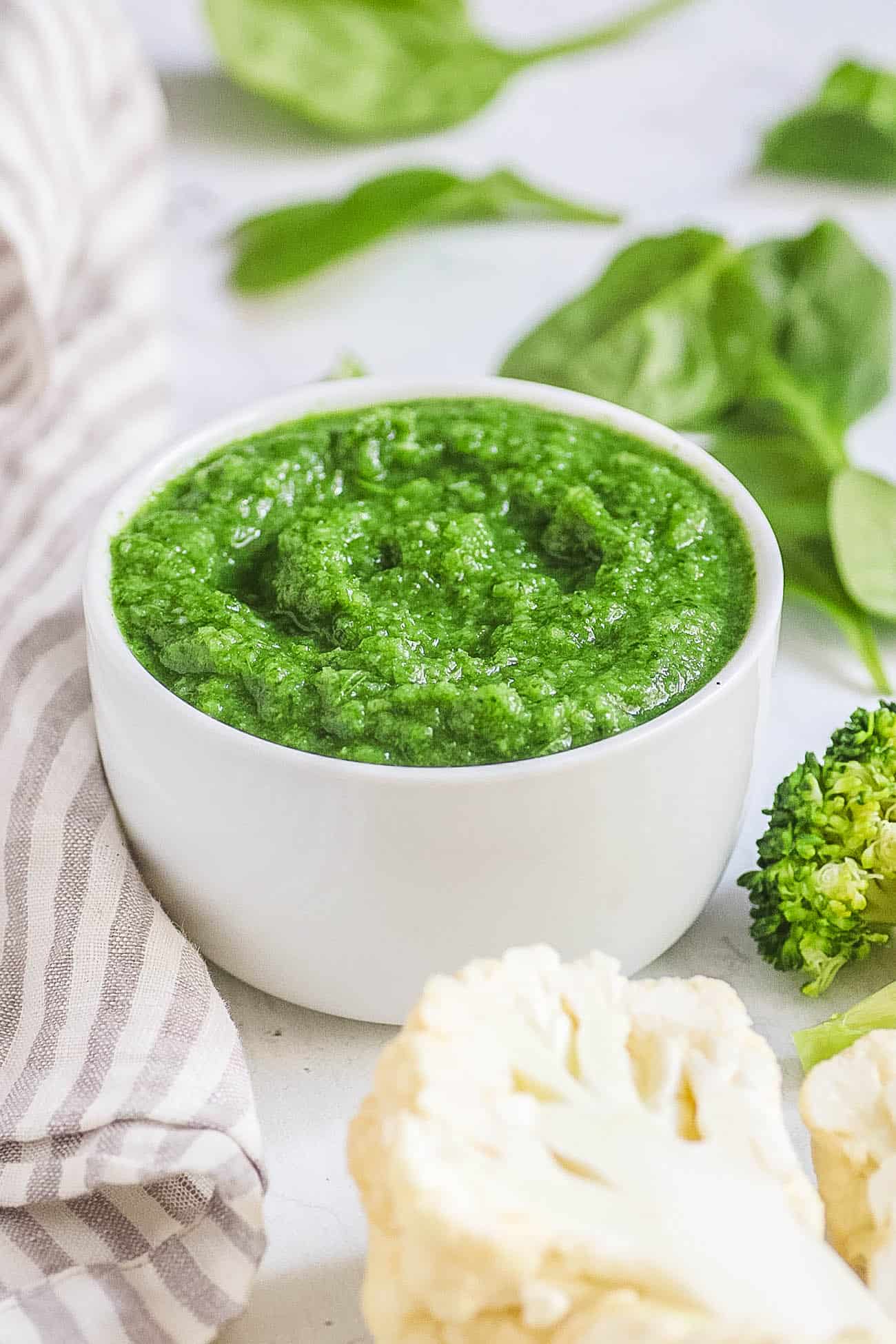
Vegetable puree for babies can be tricky, especially when the flavors are more earthy than sweet. Which is why I recommend starting with my milder green bean puree before moving on to these varieties, especially if your baby seems a bit fussy. If you have the time, I always recommend making your own baby food for better overall nutrition for your little one.
I started introducing these purees after getting my kids used to different vegetables. As a precaution, I first fed them a milder version like my avocado puree to get them used to the new texture. When my eldest was around 6 months, a good friend of mine came to babysit for the day while my husband and I went out. We came home, and I noticed the empty puree container on the counter, thinking my kid must have been really hungry. Turns out my friend actually mistook it for a pesto and had it over some pasta. Ha! She actually enjoyed it with a bit more seasoning.
👩🏽🍳 Why I Love This Recipe
This vegetable puree for baby is one of the most nutrition-focused recipes you can make for your baby, and as a mom and health coach, I cannot advocate for it enough. I add spinach for the essential iron, calcium, and vitamins A, C, and K, which promote bone health. The broccoli and cauliflower are rich in fiber, folate, and choline to help keep your baby regular and improve healthy cell growth and cognitive development.
In order to get the most out of these veggies, I make sure to follow a specific method. I steam the vegetables until just tender, which keeps the color, flavor, and nutrients intact. Blending in batches with just enough water helps me control the consistency, allowing me to tailor it to what my baby can tolerate and enjoy.
When I was pregnant, I began experimenting with purees and even ate them myself. Maybe it was some weird pregnancy craving, but this vegetable puree, especially the spinach, is great for expectant mamas too. This nutrition-dense superfood reduces birth defects, supports babies’ development, and promotes a healthy immune system. My husband said that, as babies, my kids favored this puree because I had been feeding it to them before they were born. Ha! I always recommend this recipe to parents, as it is one of the best ways to introduce greens and build good habits early.
Latest Recipe Video!
🥘 Ingredients
I keep the ingredients incredibly simple for this vegetable puree for baby and focus on using fresh, high-quality organic produce. This is what I use:
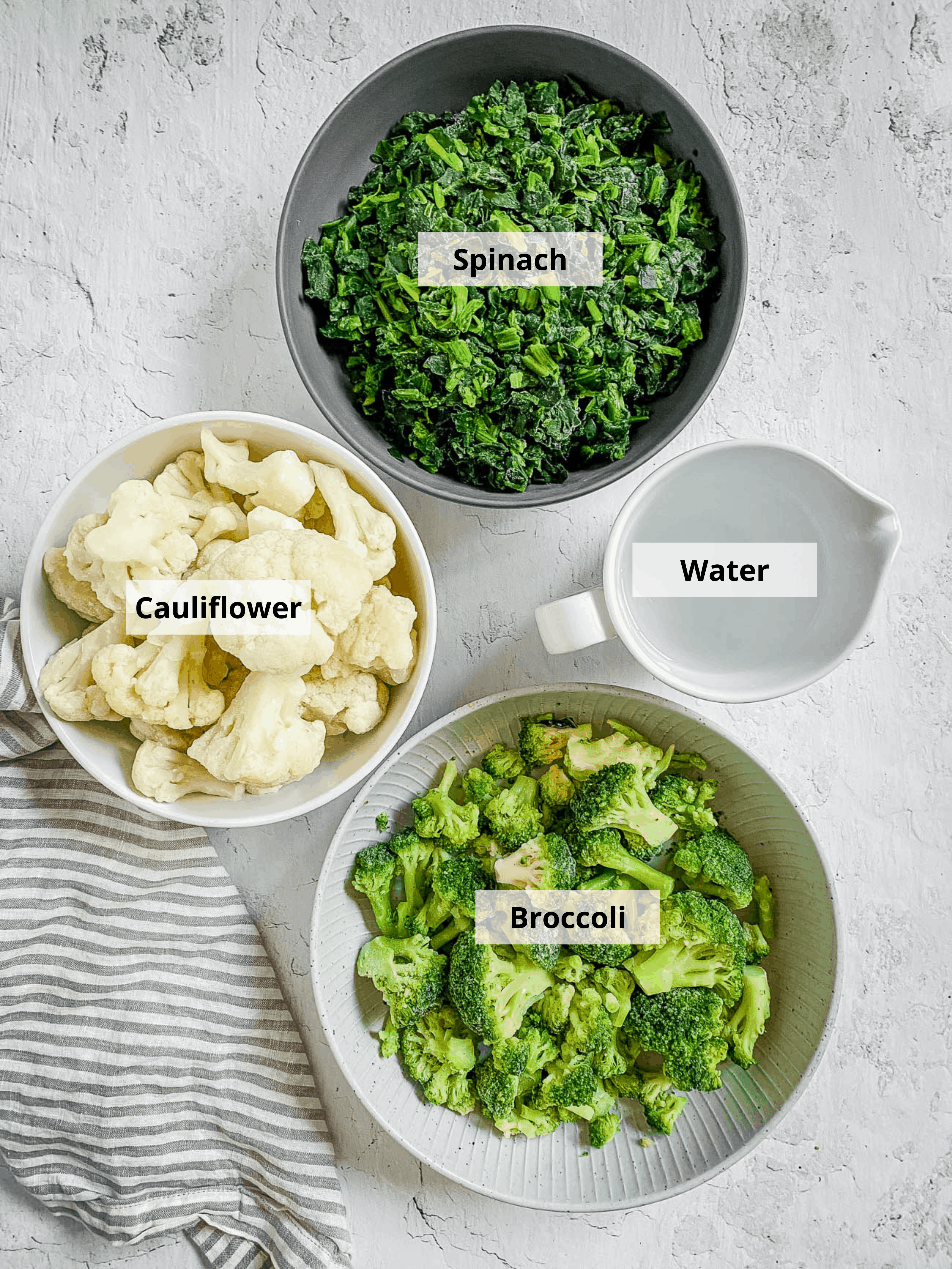
Broccoli florets: I use fresh or frozen florets, chopped into small pieces, allowing them to steam and blend easily.
Cauliflower florets: These are mild in flavor and balance out the stronger flavors of the greens and add a creamy texture.
Spinach leaves: For this recipe, I like using fresh baby spinach for its softer leaves and mild taste. Frozen spinach can also work once thawed.
Water: I add water gradually while blending to adjust the consistency depending on the stage of feeding.
🔪 How To Make
This puree requires a basic steam and blend method that keeps the taste and texture consistent every time. This is how I make it:
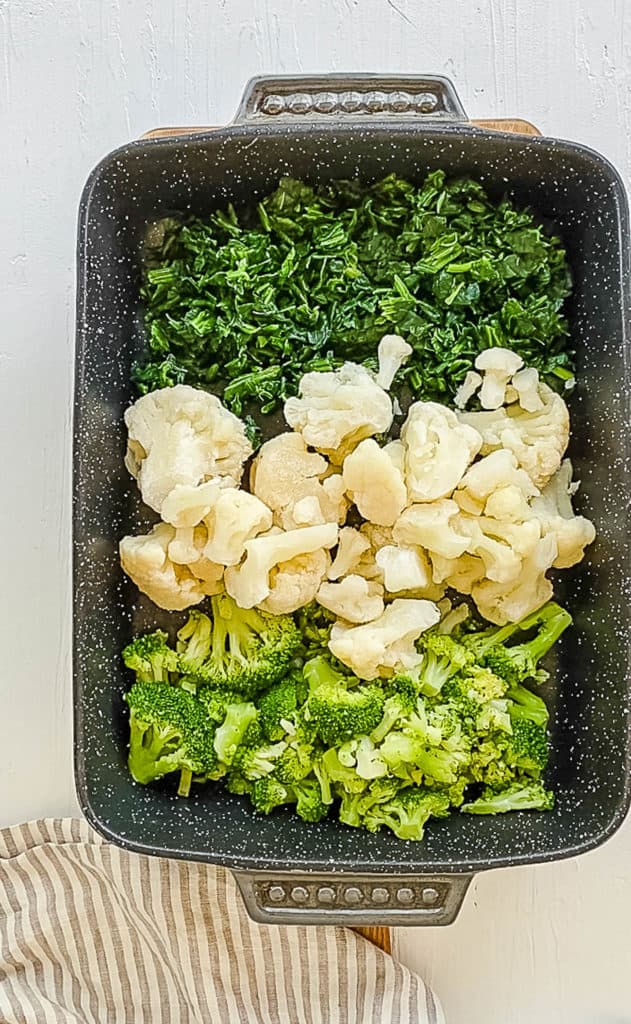
Prepare and steam: I wash and prepare my vegetables, then place them in a steamer or in a colander over boiling water, cover, and steam for 5 minutes until the broccoli and spinach are bright green.
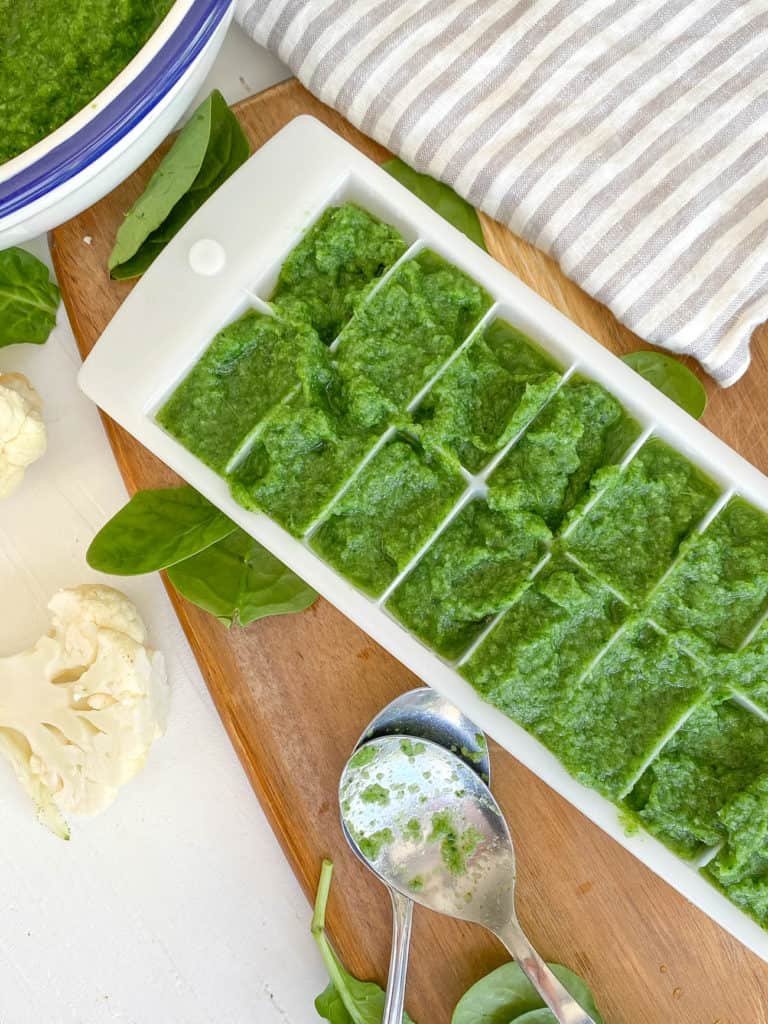
Puree and store: Next, I place my steamed vegetables into the blender and blend until smooth, adding water to thin it out as needed. I do this in batches. Once everything is blended, I pour it into ice cube trays, allow it to cool, wrap it with plastic wrap, and freeze.
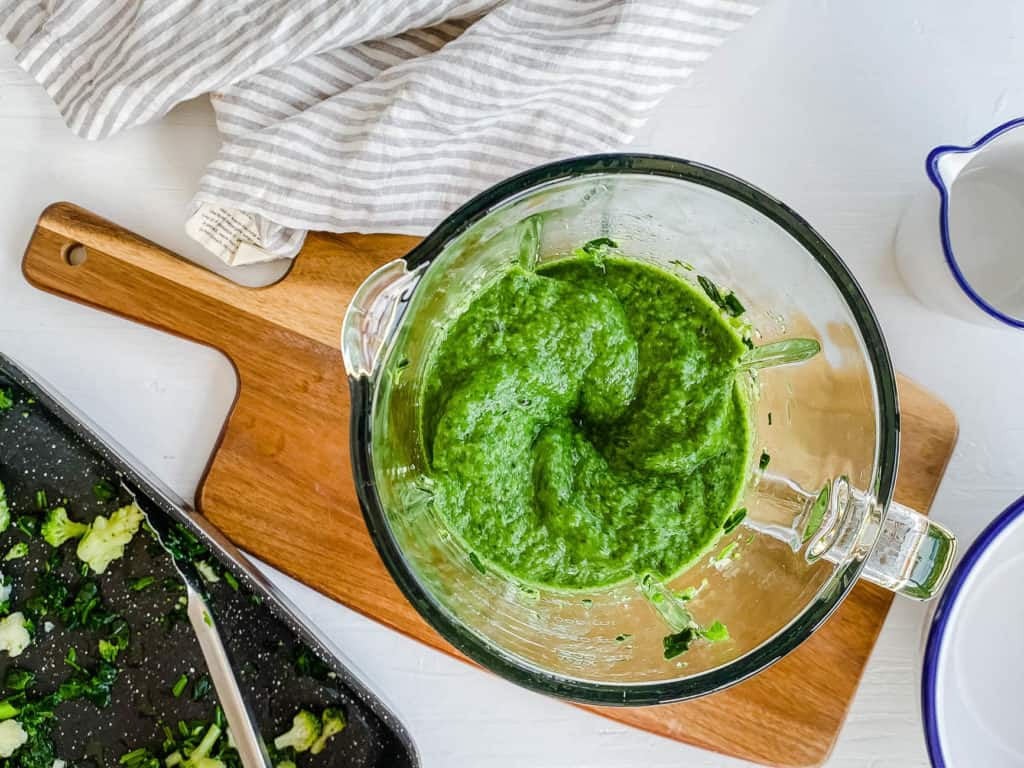
Thaw and serve: I thaw frozen puree in the fridge the night before using, or place the cubes in a bowl over a pot of hot water.
💭 Expert Tips
My #1 Secret Tip for this vegetable puree recipe is to stop steaming as soon as the vegetables turn a vibrant green color. This is how I keep the flavor mild and prevent it from becoming dull. Remember, babies start seeing color between 1-3 months, and vivid hues are great for their visual stimulation, cognitive development, and help them focus and engage.
Other Tips To Keep In Mind:
- Add breast milk or formula: Thinning the puree with breast milk or formula is a great way to include a familiar taste, making it more palatable.
- Water down for stages: For stage 1 feeding at around 6 months, I would make a very thin, almost soupy consistency, then thicken it up slowly.
- Never season: Never add any kind of salt, sugar, honey, or pepper to the food, as your baby’s system is not developed enough to handle it yet.
- Test your baby: Before feeding my baby’s blends, I first tested purees with 1 ingredient to identify any potential allergies.
- Never refreeze: Once you have thawed frozen puree, do not refreeze it, as it becomes unsafe for your baby to consume.
📖 Variations
I have tested a few simple variations to make these purees slightly more palatable for my babies. These are the ones I had the most success with:
Apple blend mix: I add 1/2 cup of steamed apple to soften the flavor and add a slight sweetness. Alternatively, I use my Instant Pot applesauce with cinnamon recipe, but make it without honey. Babies under 12 months should not be given honey as they are at risk of infant botulism.
Avocado boost mix: I blend 1/4 ripe avocado into the pureed veggies for a softer and creamier texture with added healthy fats. My kids love this and even had it with corn chips as they got a bit older.
Herby addition: Once your baby is used to greens, try adding a small pinch of fresh herbs to the puree. This is a great way to introduce new flavors and expand your baby’s palate. I recommend using herbs like basil, mint, parsley, and thyme. My kids loved a bit of fresh mint in their pea puree.
🍽 Serving Suggestions
Introducing babies to vegetable puree is a wild ride, and I had my fair share of hits and misses with my kids, and funnily enough, they were a lot less picky back then. If you want to make this puree more palatable for your little ones, I recommend sweetening it up with pineapple puree or homemade pear puree. You could also make a mix of blueberry puree and my healthy strawberry yogurt as a special little sweet treat. Full-fat Greek yogurt is safe for babies over 6 months.
Once my kids were over 8 months old, I started mixing their vegetable purees with my easy lentil stew for babies. This added a bit more protein and a creamy texture that they loved. It was also around the same age that I started giving them my homemade baby teething biscuits to soothe their sore and itchy gums.
🧊 Storing And ♨️ Reheating
Refrigeration: I store fresh puree in sanitized airtight containers or silicone pouches in the fridge for 3-4 days.
Freezing: First, I freeze portions of puree in ice trays, then transfer them to a sealed bag once solid. These keep well for up to 4 months.
Reheating: If frozen, I thaw the puree in the fridge overnight. Then, warm gently by placing the puree in a bowl and setting it on top of a pot of hot water, and allow the steam to warm it, stirring until smooth.
❓Recipe FAQs
Why does steaming work better than boiling for this puree?
Steaming is superior for these purees as there is far less nutrient loss. Water-soluble vitamins like vitamin C and folate leach directly out of the vegetable and into the water. If I do boil my vegetables, I make sure never to waste the water, as that is where all the good stuff is.
How can I get a completely smooth texture with no fibrous bits?
Texture issues almost always come down to the blender rather than the technique. Broccoli stems, in particular, are fibrous, and an immersion blender or lower-powered food processor may struggle to break them down. I recommend adding a tiny bit more water and blending the puree in smaller batches. You could also boil the broccoli in a bit of water until, and then use the boiling liquid in the puree so as not to lose any nutrients. Chopping up the stems into smaller pieces before steaming also works for a smoother texture.
Can these purees cause gas at first?
Yes, this is very common, especially when first introducing high fiber vegetables too quickly. To avoid discomfort, I started my kids with small portions earlier in the day and then gradually increased serving size, giving their systems a chance to adjust comfortably.
🥣 More Baby Food Recipes and Tips!
- Green Bean Puree
- Sweet Potatoes Baby Food
- Pineapple Puree
- Carrots Baby Food
- Zucchini Baby Food
- Butternut Squash Puree
- Pea Puree For Baby
- 10 Easy Baby Food Recipes for Beginners – Your Ultimate Guide to making baby food at home!

Love this plant based baby food recipe? Please leave a 5-star rating 🌟 in the recipe below and/or a review in the comment section further down the page!
You can also FOLLOW ME on FACEBOOK, INSTAGRAM, and PINTEREST to see more delicious, healthy, family-friendly food, and if you have any questions, I’m here to help!
🎥 Watch How to Make It
Vegetable Puree for Baby: Broccoli, Cauliflower, and Spinach
As soon as my kids were old enough to start eating solids, this vegetable puree with spinach, broccoli, and cauliflower was one of my favorite blends. It was a great way to introduce greens without overwhelming their little tummies or taste buds. This puree is nutrient-dense, takes just 20 minutes to make, and freezes well, making it ideal for busy moms.
Servings: 100 tablespoons
Calories: 17.4kcal
Ingredients
- 5 cups frozen organic broccoli
- 5 cups frozen organic spinach
- 10 cups frozen organic cauliflower
- At least 16oz water – more for a thinner puree
Instructions
- Put all of the frozen veggies in your steamer and steam for 5 minutes until the broccoli and spinach is bright green.
- Put into a blender in batches (there will be too much to put in all at once). Add water to thin the puree.
- Pour into ice cube trays, allow to cool, cover/wrap and freeze.
- Thaw in the fridge the night before use, or thaw by putting the ice cube in a bowl over a bowl of hot water on the counter to defrost.
Notes
- My #1 Secret Tip for this vegetable puree recipe is to stop steaming as soon as the vegetables turn a vibrant green color. This is how I keep the flavor mild and prevent it from becoming dull. Remember, babies start seeing color between 1-3 months, and vivid hues are great for their visual stimulation, cognitive development, and help them focus and engage.
- Add breast milk or formula: Thinning the puree with breast milk or formula is a great way to include a familiar taste, making it more palatable.
- Water down for stages: For stage 1 feeding at around 6 months, I would make a very thin, almost soupy consistency, then thicken it up slowly.
- Never season: Never add any kind of salt, sugar, honey, or pepper to the food, as your baby’s system is not developed enough to handle it yet.
- Test your baby: Before feeding my baby’s blends, I first tested purees with 1 ingredient to identify any potential allergies.
- Never refreeze: Once you have thawed frozen puree, do not refreeze it, as it becomes unsafe for your baby to consume.
Nutrition
Serving: 4tablespoons | Calories: 17.4kcal | Carbohydrates: 3.5g | Protein: 1.6g | Sodium: 22.5mg | Potassium: 204.6mg | Fiber: 2g | Sugar: 1g

























thanks so much for this recipe. the little guy gobbled this up!!
Hooray! So happy to hear that!
Thank you so much for sharing this! I mush prefer to make my own baby food, so it’s helpful to know exactly what to put in it!
I know right?? It’s so nice when you can control what goes in it! 🙂
I’m so glad I came across this recipe! I passed it on to my daughter in law who is actually making it as we speak. I can’t wait to see the results!
Yay!! I’m so happy to hear that – can’t wait to hear how her little one likes it!
Perfect time saver for moms and healthy! Love that you can add fruit to it or even breastmilk.
Totally!! Thanks Tara!
Homemade baby food like this is so much better for little ones. I really like this flavor combination.
Thanks so much Andrea!
Can you leave more recipes with spinach? This is the only one I can see on here.
Hi Annie! Spinach is so versatile you can actually mix it with any of the purees on my list! Butternut squash + spinach, apple + spinach, pear + spinach are all great combinations to try! Hope that helps!
I can’t get my little one to eat this.. how old until I can introduce yogurt he is 6 months right now
Hi Kimmy! You can introduce yogurt at 6 months as long as your pediatrician is ok with it! Some ideas to help him accept the taste of this (other than mixing with yogurt): alternate bites between this and a puree he likes, mix a tiny bit of fruit puree into this to make it a little less bitter, mix it with my lentil puree or any kind of lentil/chickpea puree and add a few spices! Hope that helps!
Can fresh veggies be used instead of frozen?
Yes absolutely! You’d just cook and puree the same way as if they were frozen 🙂
Hi! Once the food is defrosted how can I warm it up? I don’t have a microwave and don’t want to use one. Thanks
You can warm it up on the stove! Just in a small sauce pan on low heat.
We’ve started my baby early on solids and so far he’s loving everything I made for him. I would like to try this recipe!
Yay! So glad to hear it! I’m sure he’ll love this recipe – and if you need help getting him to adjust to the more bitter flavors of these veggies, try mixing it with a little whole milk plain yogurt, or alternating bites with a puree he likes until he adjusts to this one!
Can I use my breastmilk (instead of water) in the blender to thin out the puree?
Hi! Yes you definitely can! The only thing I’d say is — that will only work if you are planning to use the puree right away and/or freeze it in ice cubes (since once you defrost breastmilk you can’t use it again). You can also add breastmilk into the purees after you defrost them — right before you give them to your little one. Hope that helps!
hi, Can I make this for my 6 month old baby?
Hi Abenaa! You can absolutely make this for your 6 month old. I hope your baby likes it!
When I puree broccoli, I can’t seem to get it as smooth as I’d like; there are always fibrous chunks that never seem small enough (my baby’s just starting solids.) Do you have any tips, or is it just my equipment? I’m using a Kitchen Aid immersion blender.
Hi Rachel! It might be your equipment — I used a Vitamix blender for Layla’s purees and I always got a super smooth/creamy puree. The Vitamix has been amazing in general for all kinds of baby food recipes. I think an immersion blender wouldn’t be able to get that same consistency since the veggies are just steamed (not cooked down to the point of being super super soft), and there isn’t a ton of water you’re adding to the puree (if you add too much water the immersion blender might work better, but then when you defrost the purees, they will be super super runny). Have you tried a regular blender? That might work better than the hand version. Another option is to boil the broccoli in water to get it super soft — but then you should make sure to use all the water you boiled it in for the puree so you don’t lose any of the nutrients from boiling. Hope that helps, let me know if you have any other questions!
Should I introduce these 3 different veggies all at once if my baby just started solids at 6 months old? Or should I introduce them separately?
Hi Sonia! If your baby just started solids, I’d introduce them separately. Broccoli, cauliflower and spinach are all unlikely allergens but you never know, so to play it safe you can separate them!