




Best Organic Baby Formula (2026 Guide)
This post may contain affiliate links. As an Amazon Associate, I earn from qualifying purchases. Please read my disclosure.When I was researching formula for my kids, I spent weeks reading labels in the baby aisle and scrolling through ingredient lists online at 2 a.m. I wanted organic, but I also needed to understand what that actually meant. Was European formula really better? Did I need goat milk? What about all those scary ingredients I kept reading about?
The truth is, choosing formula felt overwhelming. But after consulting with pediatricians, reviewing over 65 different brands, and testing formulas with both my kids, I’ve narrowed down the cleanest, highest-quality organic options available today.
This guide will help you find the best organic baby formula for your little one without the confusion or endless research. Whether you’re supplementing, exclusively formula feeding, or transitioning from breastfeeding, you’ll find a safe, nutritious option here.
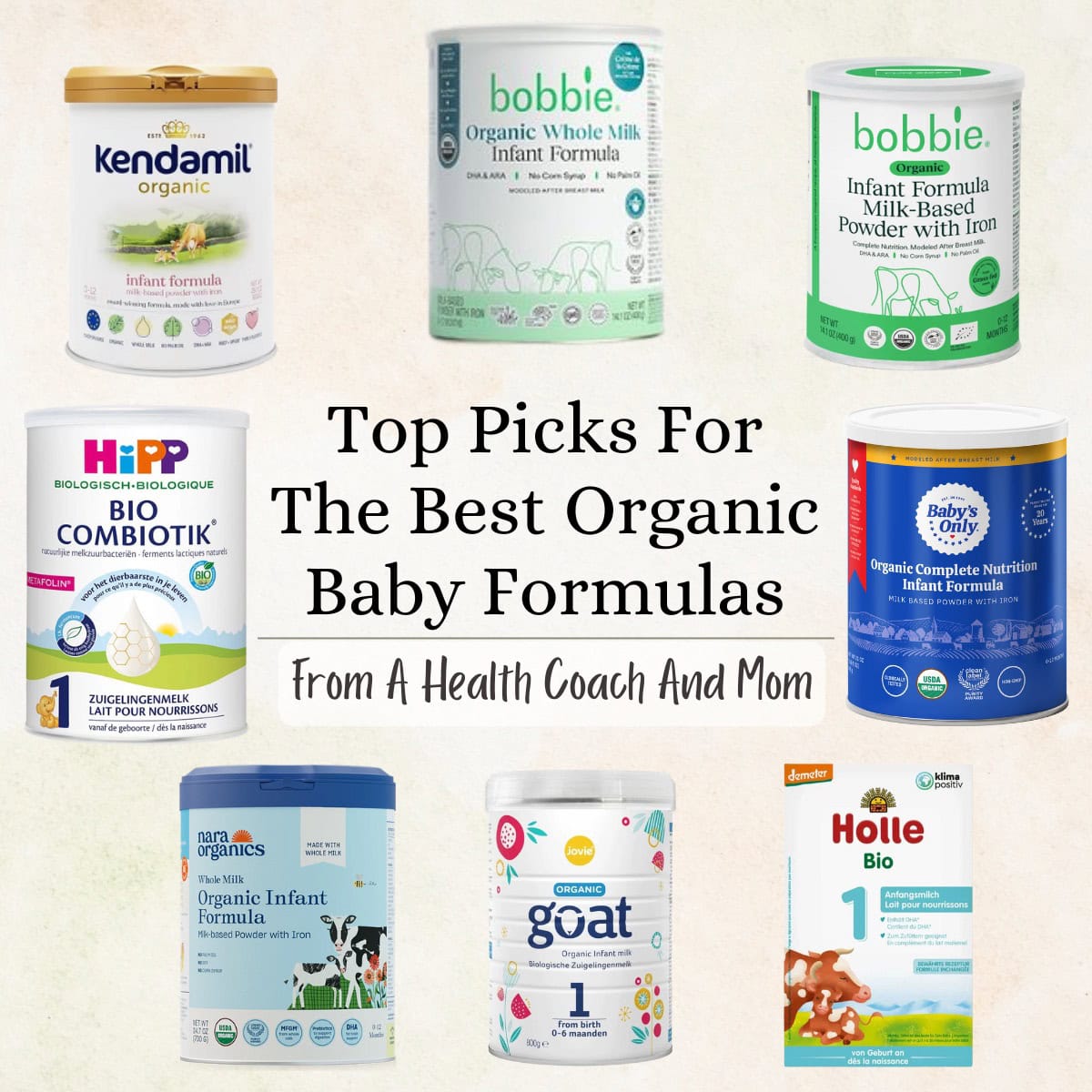
Table of Contents
hide
A Quick Note On Feeding
I strongly believe that FED is best. Whether you breastfeed for a year, six months, or not at all doesn’t make you a better or worse parent. I nursed my daughter for eight months before switching to formula, and it was one of the hardest decisions I made as a new mom. With my son, I supplemented from two months onwards because he was eating way more than I could produce! Both kids are healthy and thriving.
If you need formula, don’t feel guilty about it. Your baby needs you happy and healthy more than anything else.
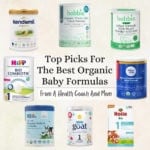
Top Picks: Best Organic Baby Formulas
Here’s my at-a-glance view of the top organic formulas for different needs:
- Best USDA Organic And EU Organic Formula: Bobbie Organic Infant Formula
- Best Overall Organic Formula: HiPP Dutch
- Best Whole Milk Formula (US Made): Bobbie Organic Whole Milk Infant Formula
- Best Whole Milk Formula (Made In Europe): Nara Organics
- Best For Breastfed Babies: Kendamil Organic
- Best Goat Milk Formula: Jovie Goat
- Best Budget-Friendly Organic Formula: Baby’s Only Organic A2 Infant Formula
- Best European Formula (Budget): Holle PRE & Holle Stage 1
- Best Hypoallergenic Formula: HiPP HA
Disclaimer & Methodology
This guide is based on over 200 hours of research including peer reviewed studies, consultations with pediatricians and dietitians, collecting feedback from thousands of parents, and personal experience with my two kids. I’m a board-certified health coach and certified nutritionist, and this post has been medically reviewed by Katie Drakeford, MA, RD, CSP, LD, CLC (see my about page for more info about Katie). My recommendations are not a substitute for professional medical advice. Always consult your pediatrician before starting or switching formulas.
This post contains affiliate links, which means I may earn a small commission if you purchase through my links at no extra cost to you. I only recommend products I’ve personally researched or used with my own children.
What To Look For In Organic Baby Formula
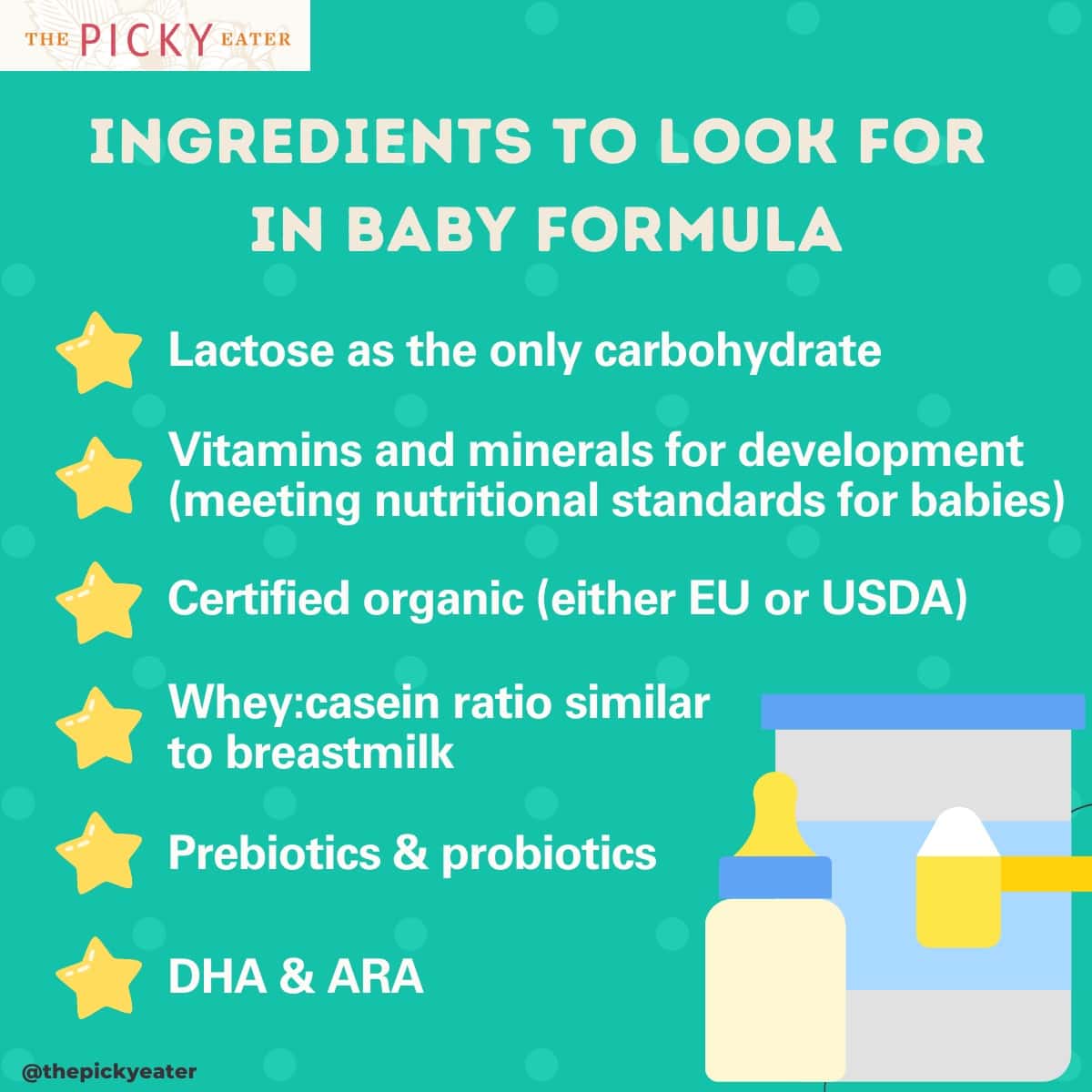
Before we get into specific brands, here’s what I prioritize when choosing formula:
✅ Certified Organic (USDA or EU certified)
✅ No added sugars, sucrose, syrup solids, or maltodextrin (lactose should be the main carbohydrate)
✅ Contains DHA and ARA for brain and eye development
✅ Includes prebiotics and probiotics when possible (Learn More: Prebiotics For Kids)
✅ 60:40 whey-to-casein ratio (mimics mature breast milk)
✅ No hexane-extracted DHA (or undetectable after extraction)
✅ Palm oil-free (or uses sustainable palm oil, learn more: Palm Oil In Baby Formula)
✅ Non-GMO
✅ No Carrageenan
✅ Good parent reviews for tolerance and mixing
The 8 Best Organic Baby Formulas
1. HiPP Dutch – Best Overall Organic Formula

What It Is: EU-certified organic formula with a complete nutritional profile
Age Range: 0-6 months (Stage 1), 6+ months (Stage 2)
Why I Love It: HiPP Dutch is one of my top picks when it comes to organic baby formula. It has a whey-to-casein ratio that mimics breast milk, contains both prebiotics and probiotics, and includes DHA and ARA for brain development. The formula is free from GMOs, added sugars, starch, soy, and synthetic preservatives.
I tested HiPP Dutch with my daughter when she was four months old, and she took to it immediately (my son did too when he was born!) The powder mixes easily (even at 3 a.m. when you’re half asleep), and I didn’t notice any increase in spit-up or fussiness. The container is also easier to use than some European brands since it comes in an airtight can instead of a foil-lined box.
The one downside is that HiPP uses hexane to extract DHA and ARA. However, when I spoke to their team, they claimed that all hexane is removed and undetectable in the final product. Given Europe’s strict testing standards, I feel comfortable with this.
Also Good:
- HiPP UK Stage 1 ($36.99-$42.99): Similar to HiPP Dutch but more affordable. Contains prebiotics (but no probiotics) and comes in a box instead of a can. Great budget-friendly European option.
- HiPP PRE Germany ($28.99-$37.99): Designed for babies 0-3 months. Contains both prebiotics and probiotics. More affordable than HiPP Dutch and comes in a box.
Price: $42.99-$48.99 per 28.2oz container (depending on quantity purchased)
Where To Buy: Organic’s Best, Baby Milk Bar, Bottles & Burps
| Pros | Cons |
|---|---|
| Mimics breast milk composition | Contains palm oil |
| Contains prebiotics and probiotics | Uses hexane extraction (though removed) |
| EU Organic certified, non-GMO | Not available in US stores (online only) |
| No added sugars or maltodextrin | |
| Easy-to-use container | |
| Contains DHA & ARA |
2. Bobbie – Best US-Made Organic Formula
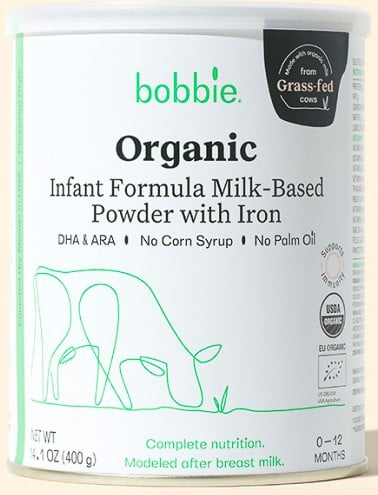
What It Is: USDA organic, European-style formula made in the US
Options: Organic Infant Formula (skim milk), Organic Whole Milk Infant Formula, Grass Fed Whole Milk (Not Organic)
Age Range: 0-12 months
Why I Love It: Bobbie is the best organic formula made in the US, and it’s the only American brand that meets EU standards for DHA content. Made with milk from Organic Valley pasture-raised cows, this formula is as close as you can get to European quality without importing. Bobbie was created by a mom, Laura Modi, who developed Bobbie after feeling frustrated over a lack of clean formula options for her baby.
Bobbie offers three infant formulas: their Original Organic Infant Formula (made with organic skim milk), their Grass Fed Whole Milk Formula (not organic, made with whole milk) and their newer Organic Whole Milk Infant Formula (made with organic whole milk). The whole milk version has the highest milk fat content of any formula Bobbie makes, with less added vegetable oils since whole milk naturally contains more fat.
I love that Bobbie doesn’t use hexane to extract DHA (though they do use it for ARA extraction, but it’s undetectable in the final product). Both formulas have a 60:40 whey-to-casein ratio, are modeled after breast milk, and are completely free of palm oil, soy oil, corn syrup, and maltodextrin. And I know I can trust their formula, especially because they were awarded the Clean Label Purity Project award.
When my nephew transitioned from breastfeeding after 8 months, Bobbie’s Original formula was what worked best for him. He didn’t have any digestive issues, and I know we all felt good that he was getting grass-fed organic nutrition. I’ve heard from other moms who prefer the Whole Milk version for their babies.
The only thing missing is prebiotics and probiotics, which you’ll need to supplement separately if you want them. (Learn more: Best Probiotics For Kids). Honestly, if Bobbie included prebiotics and probiotics in their formula, they would be my #1 pick overall too!
Price: $23.40 per 14.1oz can (subscription), $26.49 at Target
Where To Buy: Bobbie website, Target stores nationwide
| Pros | Cons |
|---|---|
| USDA Organic certified, FDA regulated | No prebiotics |
| Made in the US, available at Target | No probiotics |
| 60:40 whey:casein ratio | |
| Meets EU DHA standards | |
| No palm oil, soy oil, corn syrup, or maltodextrin | |
| Lactose is the only carbohydrate | |
| Affordable compared to European formulas | |
| Clean Label Purity Award and Pesticide Free certified | |
| Three options: original (skim milk), grass fed, and whole milk formula |
3. Nara Organics – Best Whole Milk Formula Made In Europe
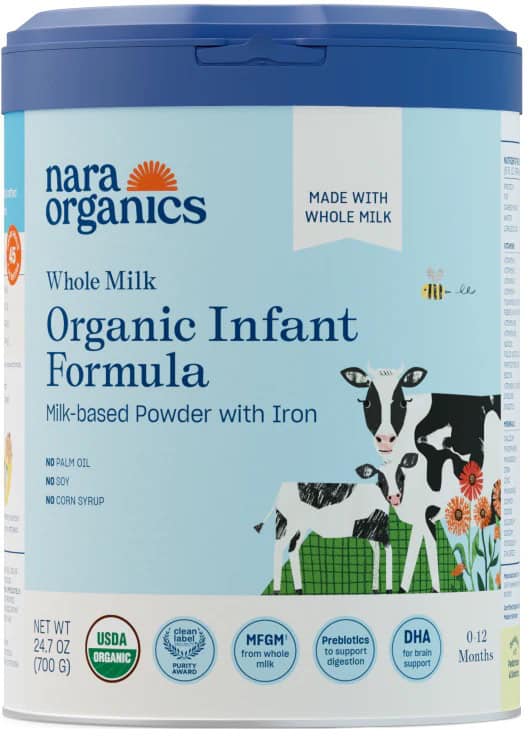
What It Is: USDA organic whole milk formula, made in Germany
Age Range: 0-12 months
Why I Love It: Nara Organics is a brand-new formula that just launched in 2025 and it is the first and only USDA-certified organic formula made with whole milk and no skim milk. Nara has the highest percentage of milk fat of any formula sold in the US, which means less added vegetable oils. The founder, Esther Hallam, created this formula after struggling to find a clean organic option when her daughter was born.
Made in a state-of-the-art facility in Germany and meeting both EU and US safety standards, Nara underwent a large-scale clinical trial with infants to demonstrate safety and efficacy. The formula includes naturally occurring MFGM (milk fat globule membrane), prebiotics (GOS), and EU-required levels of DHA and ARA for brain development.
What sets Nara apart is the focus on whole milk fats. The formula uses organic whole milk as the primary fat source, then adds a small amount of organic plant-based oils (coconut, sunflower, rapeseed) for essential fatty acids. It’s completely free of palm oil, soy, corn syrup, maltodextrin, and GMOs.
Nara was awarded the Clean Label Purity Award, which means it’s been rigorously tested for contaminants like heavy metals and pesticides. The formula has a 60:40 whey-to-casein ratio (just like mature breast milk) and uses lactose as the only carbohydrate.
Price: $45 per 24.7 oz can, $40.50 per can for 4-can subscription
Where to buy: Nara.com, Target.com
| Pros | Cons |
|---|---|
| USDA Organic certified, FDA regulated | Brand new (launched 2025), so less long-term parent reviews |
| 60:40 whey:casein ratio | Mainly available online (limited availability in stores) |
| Meets EU standards, made in Germany | No probiotics |
| No palm oil, soy, corn syrup, or maltodextrin | |
| Lactose is the only carbohydrate | |
| Contains MFGM, prebiotics, DHA, and ARA | |
| Clean Label Purity Project Award | |
| Highest milk fat percentage of any formula |
4. Kendamil Organic – Best European Whole Milk Formula
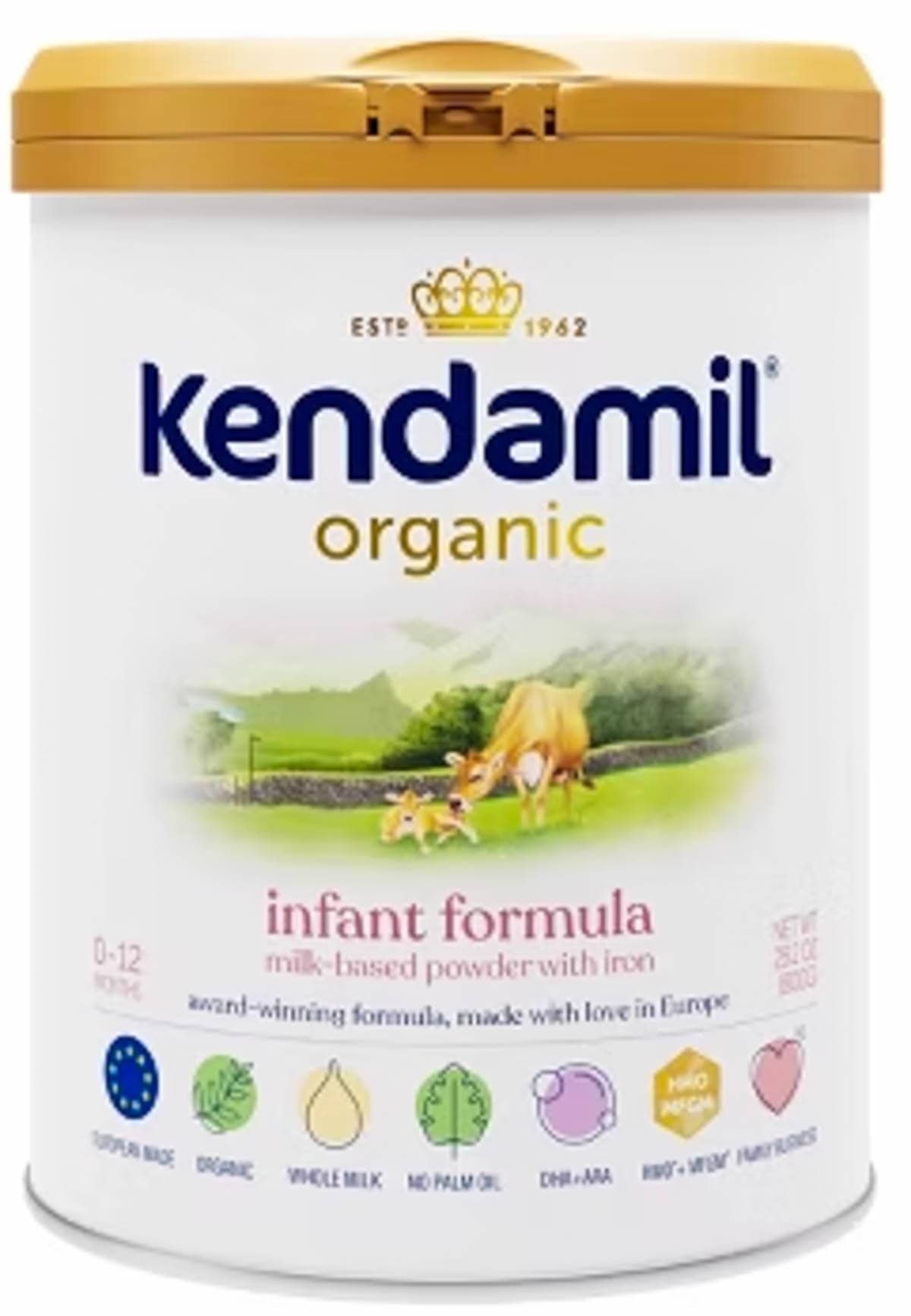
What It Is: UK organic formula made with whole milk
Age Range: 0-6 months (Stage 1), 6+ months (Stage 2)
Kendamil is similar to Nara Organics and Bobbie’s Whole Milk formula because it’s made organic whole milk instead of skim milk, which means less added vegetable oils. It contains HMOs (human milk oligosaccharides), a prebiotic that supports immune health, and includes DHA and ARA.
The formula is completely free of palm oil and soy oil, and uses coconut oil as one of the main fat sources. Parents consistently mention that Kendamil smells sweet and tastes good, making it one of the best options for picky breastfed babies who are resistant to formula.
I recommended Kendamil to many parents during the formula shortage in 2022, and heard good feedback that it mixed well and most babies took to it without fussiness.
The formula doesn’t contain probiotics, so you’d need to add those separately if you want them. It also contains taurine, l-carnitine, and nucleotides, but Kendamil doesn’t use chemical solvents to extract these nutrients.
Price: $42.49 for a 28.2oz container at Target, $41.13 with subscription – $52.99 per 28oz container online
Where To Buy: Target, Bottles & Burps, Organic’s Best
| Pros | Cons |
|---|---|
| Made with organic whole milk | No probiotics |
| Lactose is the only carbohydrate | |
| Contains HMOs for immune support | |
| No palm oil or soy oil | |
| Contains prebiotics, DHA, ARA (non-hexane extracted) | |
| Available online and at Target | |
| Clean Label Purity Project Award | |
| Highest milk fat percentage of any formula |
5. Jovie Goat – Best Goat Milk Formula
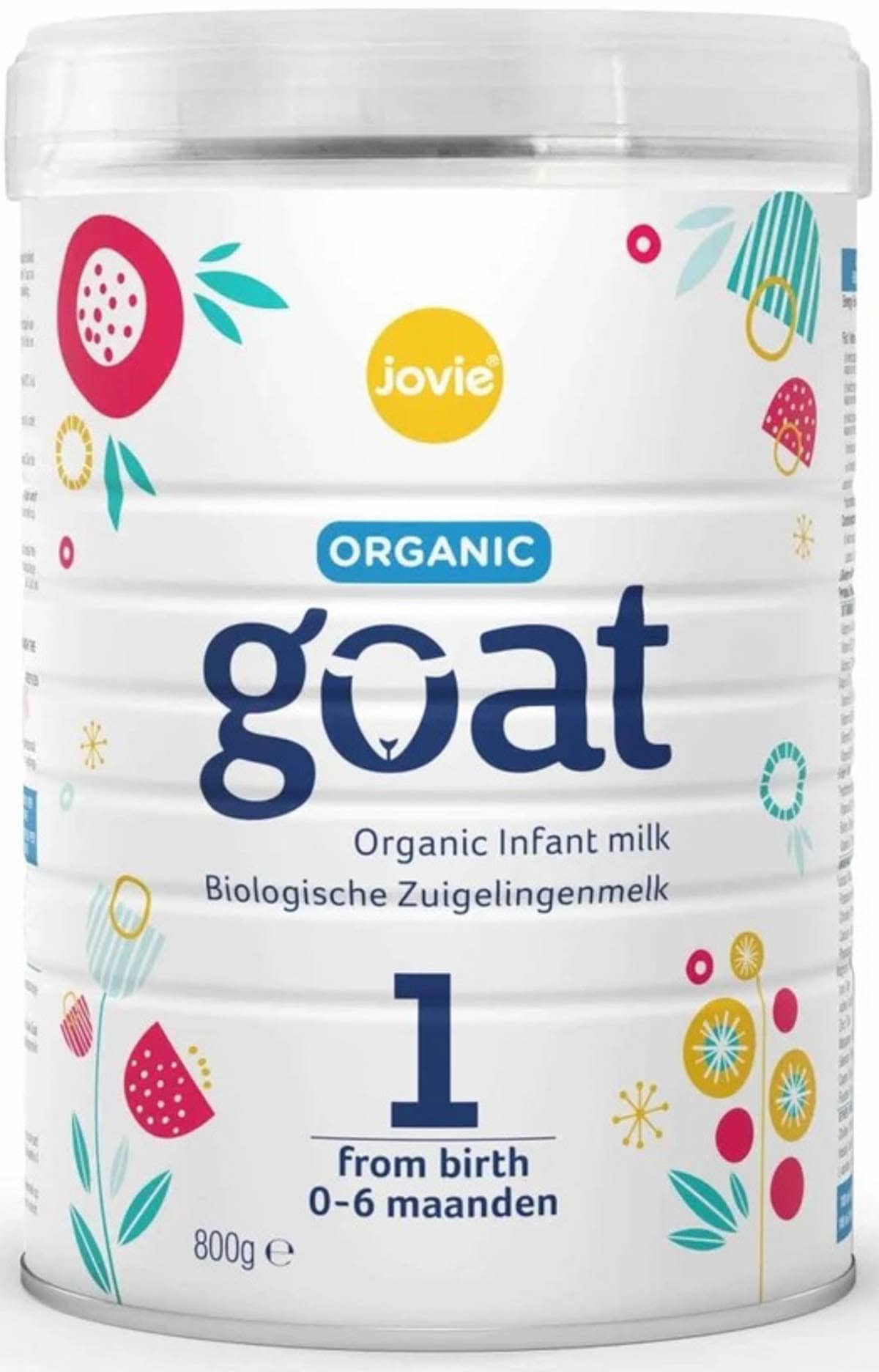
What It Is: EU organic goat milk infant formula
Age Range: 0-6 months (Stage 1), 6+ months (Stage 2)
Why I Love It: Jovie is the best goat milk formula available, and it’s a great option for babies who have trouble digesting cow’s milk. Made with organic whole A2 goat milk, this formula is easier on sensitive tummies since goat milk contains only A2 protein (versus both A1 and A2 in cow’s milk).
The ingredients are 100% organic and non-GMO, with added prebiotics and a whey-to-casein ratio similar to breast milk. Jovie is also free of glucose syrup solids, maltodextrin, palm oil, and soy oil.
I recommended Jovie to a friend whose baby was having constant spit-up and gas on cow’s milk formula. Within three days of switching to Jovie, her baby was sleeping better and much less fussy.
One thing to note: Jovie uses fish oil for DHA, so it’s not vegetarian-friendly. It also doesn’t contain probiotics. (Learn More: Jovie Formula Review).
Price: $56.99-$64.99 per 28.2oz container (depending on number ordered)
Where To Buy: Organic’s Best, Baby Milk Bar
| Pros | Cons |
|---|---|
| Made with A2 organic whole goat milk | No probiotics |
| EU Organic certified | Expensive |
| No palm oil or soy oil | Not vegetarian (contains fish oil) |
| Contains prebiotics | |
| Contains DHA/ARA | |
| Can be easier to digest than cow’s milk | |
| No added sugars |
6. Baby’s Only Organic – Best Budget-Friendly US Formula
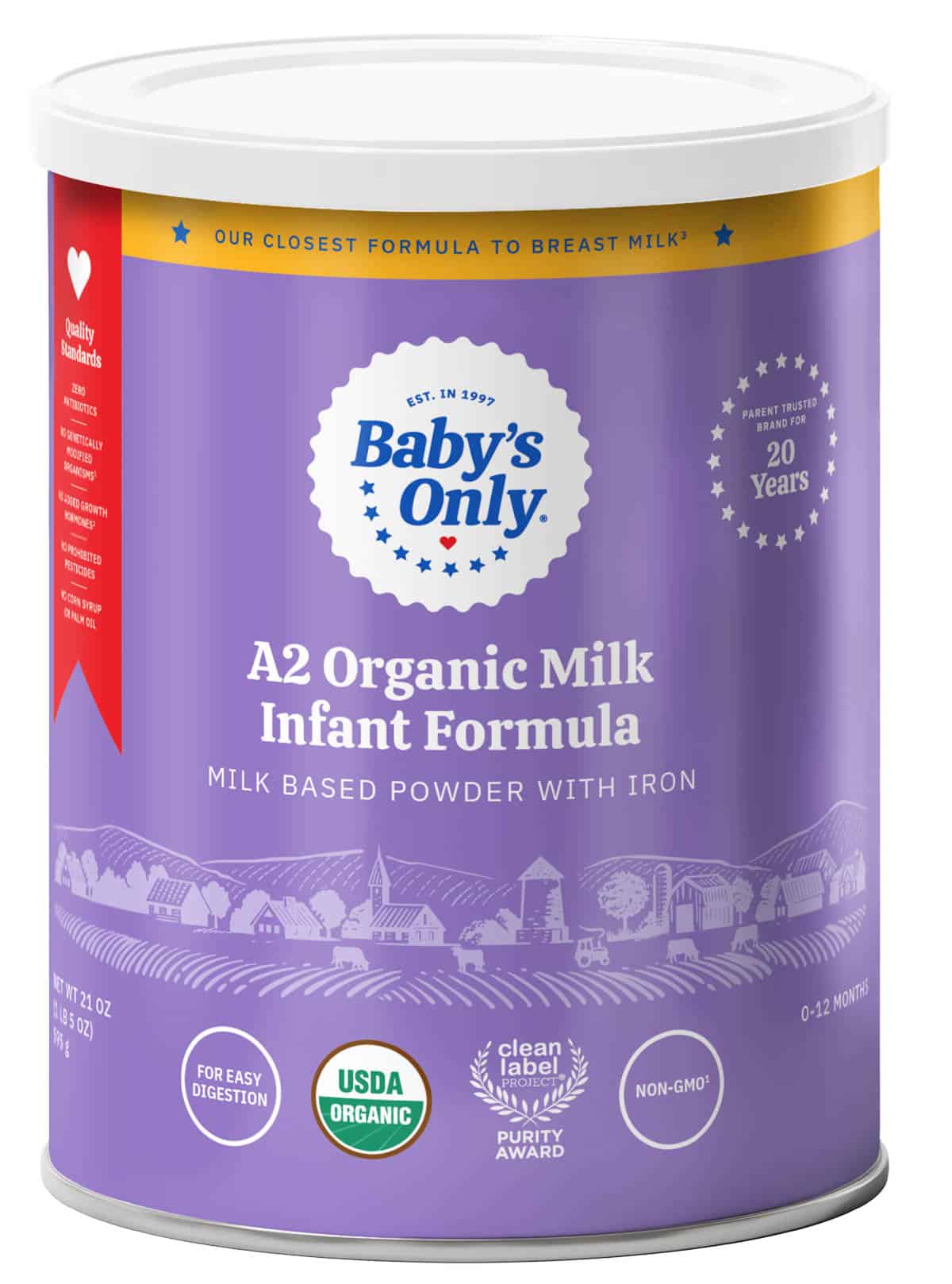
What It Is: USDA organic formula available in US stores
Age Range: 0-12 months (infant formula) and 12+ months (toddler formula)
Why I Love It: Baby’s Only Organic is the most affordable USDA organic formula you can buy in the US. It’s made with organic A2 milk, is non-GMO, and is Clean Label Purity project certified. The formula contains no palm oil, no corn syrup, and no glucose syrup solids.
Baby’s Only is free of syrup solids and added sugars, and while it doesn’t contain DHA, ARA, prebiotics or probiotics, I like Baby’s Only for parents who want organic nutrition on a budget. The formula has full-fat nutrition and a simple ingredients list. It’s been a trusted brand for over 20 years and is widely available both online and in stores.
Price: $30 per 21oz can
Where to buy: Amazon, natural grocery stores like Sprouts
| Pros | Cons |
|---|---|
| Affordable organic option | No probiotics |
| No palm oil | No DHA or ARA |
| Clean Label Purity Project certified | No prebiotics |
| Contains prebiotics | |
| Available in stores and online |
7. Holle PRE – Best Budget European Formula
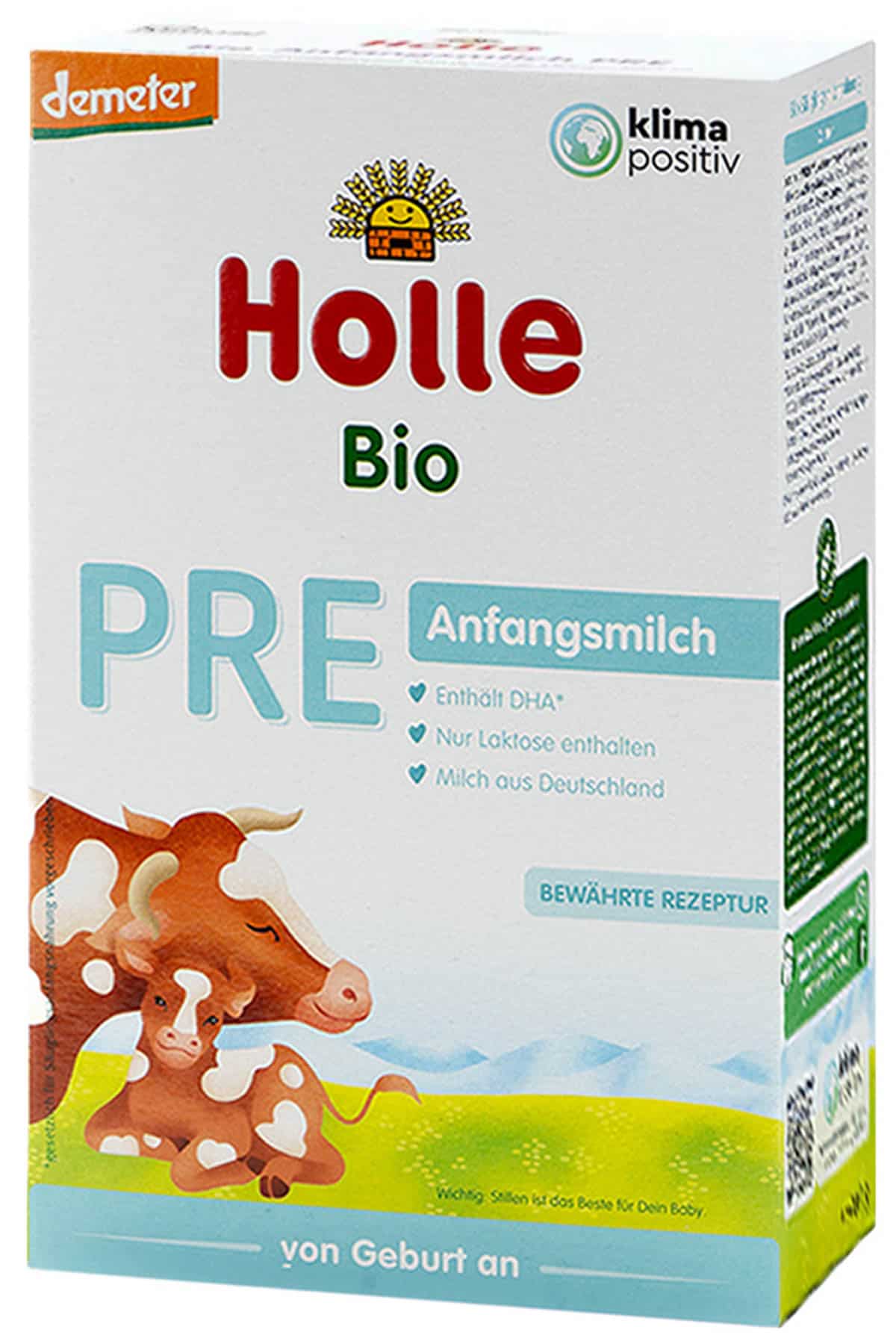
What It Is: Demeter biodynamic certified organic formula from Germany
Age Range: [PRE] 0-3 months, [Stage 1] 0-6 months, [Stage 2] 6+months
Why I Love It: Holle PRE is one of the most affordable European formulas, and it carries a Demeter biodynamic certification, which is even stricter than regular organic standards. This ensures the highest animal welfare standards and commitment to sustainability.
The formula is simple and clean, with organic ingredients and no added maltodextrin (though Stage 2 does contain some). Holle PRE now includes DHA and ARA, which wasn’t always the case with older formulations.
I like Holle PRE for parents who want to supplement with their own probiotics and prebiotics. The formula doesn’t include these, so you have full control over what you’re adding.
One limitation is that Holle PRE is designed for babies 0-6 months (ideally 0-3 months). After that, you’ll need to switch to Stage 1 or Stage 2. Additionally Holle (across all stages) doesn’t have a whey:casein ratio that matches breastmilk, so that might cause digestive discomfort in some babies
Price: $21.85-$27.49 per 400 gram box
Where To Buy: Organic’s Best, Baby Milk Bar, Bottles & Burps
Also Good:
- Holle Goat Stage 1 ($25.71-$33.99): Made with organic A2 goat milk. Bioland certified. Good option for babies sensitive to cow’s milk, though the whey-to-casein ratio doesn’t mimic breast milk, which can be constipating for some babies. Contains maltodextrin.
- Holle Bio Stage 1 ($21.85-$27.49): Similar to Holle PRE but for ages 0-6 months. Demeter certified. Contains DHA and ARA. Includes maltodextrin (unlike Holle PRE).
| Pros | Cons |
|---|---|
| Affordable European formula | No probiotics |
| Demeter biodynamic certified | No prebiotics |
| EU Organic certified | Stage 1 & 2 contains maltodextrin |
| Contains DHA and ARA | Whey:casein ratio doesn’t match mature breastmilk |
| No maltodextrin in PRE stage |
8. HiPP HA – Best Hypoallergenic Formula
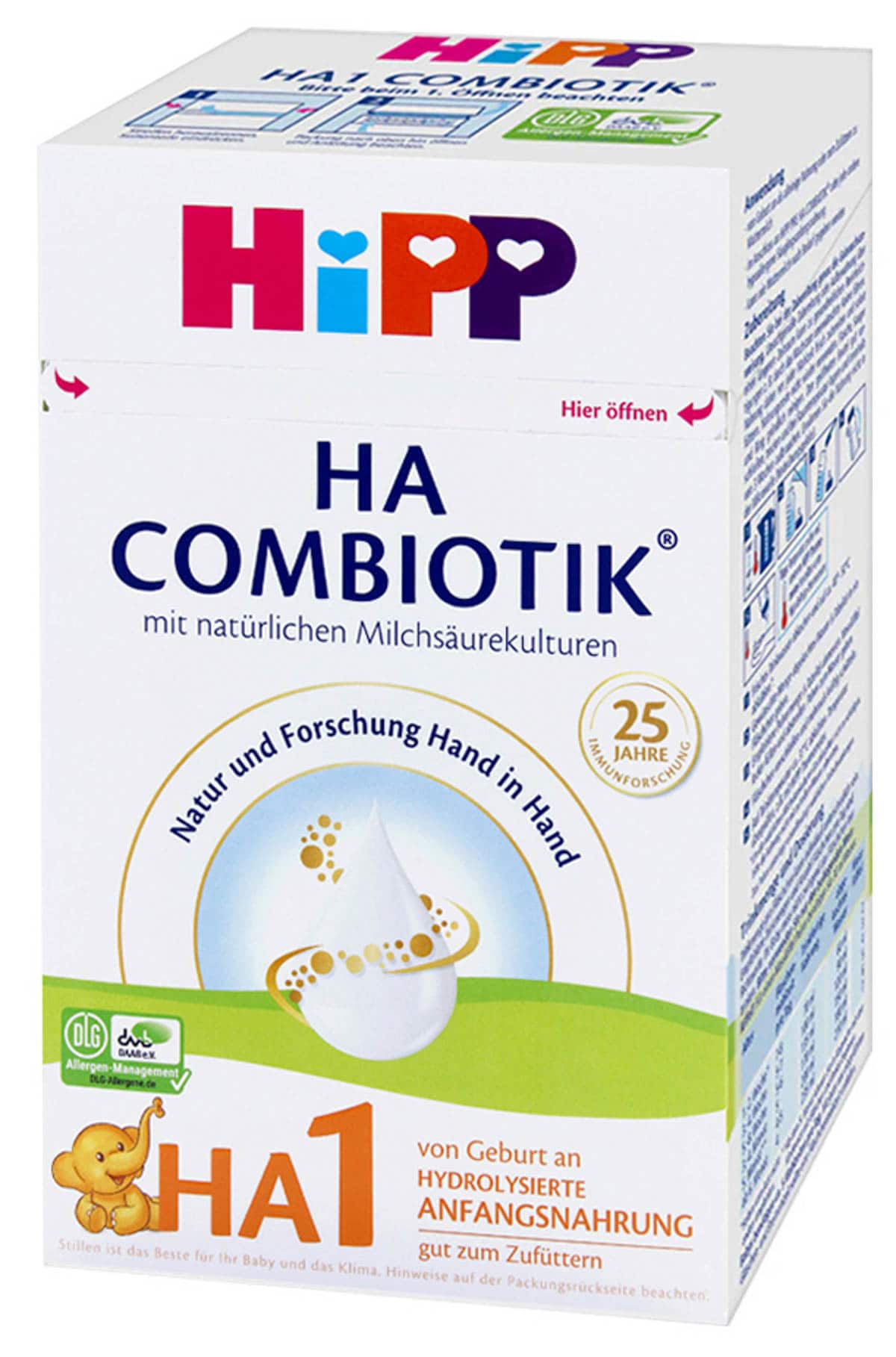
What It Is: European hypoallergenic formula for cow’s milk sensitivities
Age Range: 0-3 months (Stage PRE), 0-6 months (Stage 1), 6+ months (Stage 2)
HiPP HA is the best option if your baby has a cow’s milk protein sensitivity (but not a full allergy). The formula contains extensively hydrolyzed protein (86-87% broken down), which is easier for sensitive tummies to digest.
It’s 100% whey with no casein, and includes prebiotics, probiotics, DHA, and ARA. The lactose content is the same as regular formula, so if your baby has severe lactose intolerance, this may not work.
A friend of mine switched to HiPP HA after her baby had constant gas and fussiness on regular formula. Within a week, her baby was sleeping through the night and much happier overall.
While HiPP HA isn’t technically certified organic (because the hydrolyzed protein requires more processing), all other ingredients are organic.
Price: $31.71-$42.99 per 600 gram container
Where To Buy: Organic’s Best, Baby Milk Bar
Also Good:
- HiPP Comfort ($30.85-$42.99): Meant to relieve gas, fussiness, and digestive discomfort, HiPP Comfort is even more broken down than HiPP HA. Contains extensively hydrolyzed protein, (86-87% broken down), 100% whey (no casein), reduced lactose content and modified fats.
- HiPP AR ($30.85-$40.99): Meant to ease reflux in infants, HiPP AR contains locust bean gum that thickens the formula slightly to prevent reflux and/or reduce spit up.
| Pros | Cons |
|---|---|
| Hydrolyzed protein for easier digestion | Not fully organic |
| No casein (100% whey) | Regular lactose content (not suitable for severe lactose intolerance) |
| Contains prebiotics | May not work for diagnosed cow’s milk protein allergy |
| Contains probiotics | |
| Includes DHA and ARA | |
| No added sugars |
Organic Baby Formula Comparison Chart
Here’s a quick side-by-side comparison of all the formulas featured in this guide:
| Formula Brand | Type Of Milk | Pre-biotics | Pro-biotics | DHA & ARA | Palm Oil? | Soy Oil? | Malto-dextrin | Price Per Can |
|---|---|---|---|---|---|---|---|---|
| HiPP Dutch | Organic Skim Milk, Whey | ✓ | ✓ | ✓ | Yes | No | No | $42.99 – $48.99 |
| Bobbie Original | Organic Skim Milk, Whey | No | No | ✓ | No | No | No | $25 |
| Bobbie Whole Milk | Organic Whole Milk, Skim Milk, Whey | No | No | ✓ | No | No | No | $28 |
| Nara Organics | Organic Whole Milk | ✓ (GOS) | No | ✓ | No | No | No | $45 |
| Kendamil Organic | Organic Whole Milk, Skim Milk, Whey | ✓ (HMOs) | No | ✓ | No | No | No | $41.13 – $52.99 |
| Jovie Goat | Organic Whole Goat Milk | ✓ | No | ✓ | No | No | No | $56.99 – $64.99 |
| Baby’s Only Organic | Organic Grass-Fed Milk, Skim Milk, Whey | ✓ | No | ✓ (DHA only) | No | No | No | $30 |
| Holle PRE | Organic Whole Milk, Whey | No | No | ✓ | Yes | No | No | $21.85 – $27.49 |
| HiPP HA | Hydro-lyzed Whey (No Casein) | ✓ | ✓ | ✓ | Yes | No | No | $31.71 – $42.99 |
| HiPP UK | Organic Skim Milk, Whey | ✓ | No | ✓ | Yes | No | No | $36.99 – $42.99 |
| HiPP PRE Germany | Organic Skim Milk, Whey | ✓ | ✓ | ✓ | Yes | No | No | $28.99 – $37.99 |
| Holle Goat | Organic Goat Milk | No | No | ✓ | Yes | No | Yes | $25.71 – $33.99 |
| Holle Bio Stage 1 | Organic Skim Milk, Whey | No | No | ✓ | Yes | No | Yes | $21.85 – $27.49 |
Key: ✓ = Contains this ingredient/feature; No = does not contain; Yes = contains
Notes:
- All formulas listed are certified organic (USDA or EU)
- All formulas are non-GMO
- All formulas use lactose as the primary carbohydrate (no corn syrup solids)
- DHA extraction methods vary by brand (some use hexane extraction with undetectable residue, others use fish oil or algae)
European vs. American Baby Formula
You’ll notice that many of my top picks are European formulas. Here’s why:
European formulas have stricter standards:
- No corn syrup solids or processed sugars allowed
- Minimum 30% of calories must come from lactose
- No synthetic nutrients extracted with chemical solvents
- More transparent testing for trace contaminants
- Required DHA in all formulas (not required in US)
US formulas are improving: Brands like Bobbie are now meeting EU standards while being made in the US. This gives you European-quality nutrition with the convenience of buying at Target.
Both EU and US organic formulas must be 95% organic and free from growth hormones, GMOs, and antibiotics. The main difference is that Europe regulates more strictly when it comes to added ingredients and testing standards.
All US-based formulas are regulated by the FDA, and all European formulas are regulated by the European Commission, which also certifies formulas as organic. Additionally, Europe has designations that are “beyond organic” like “Demeter” which essentially means biodynamic farming on top of organic farming.
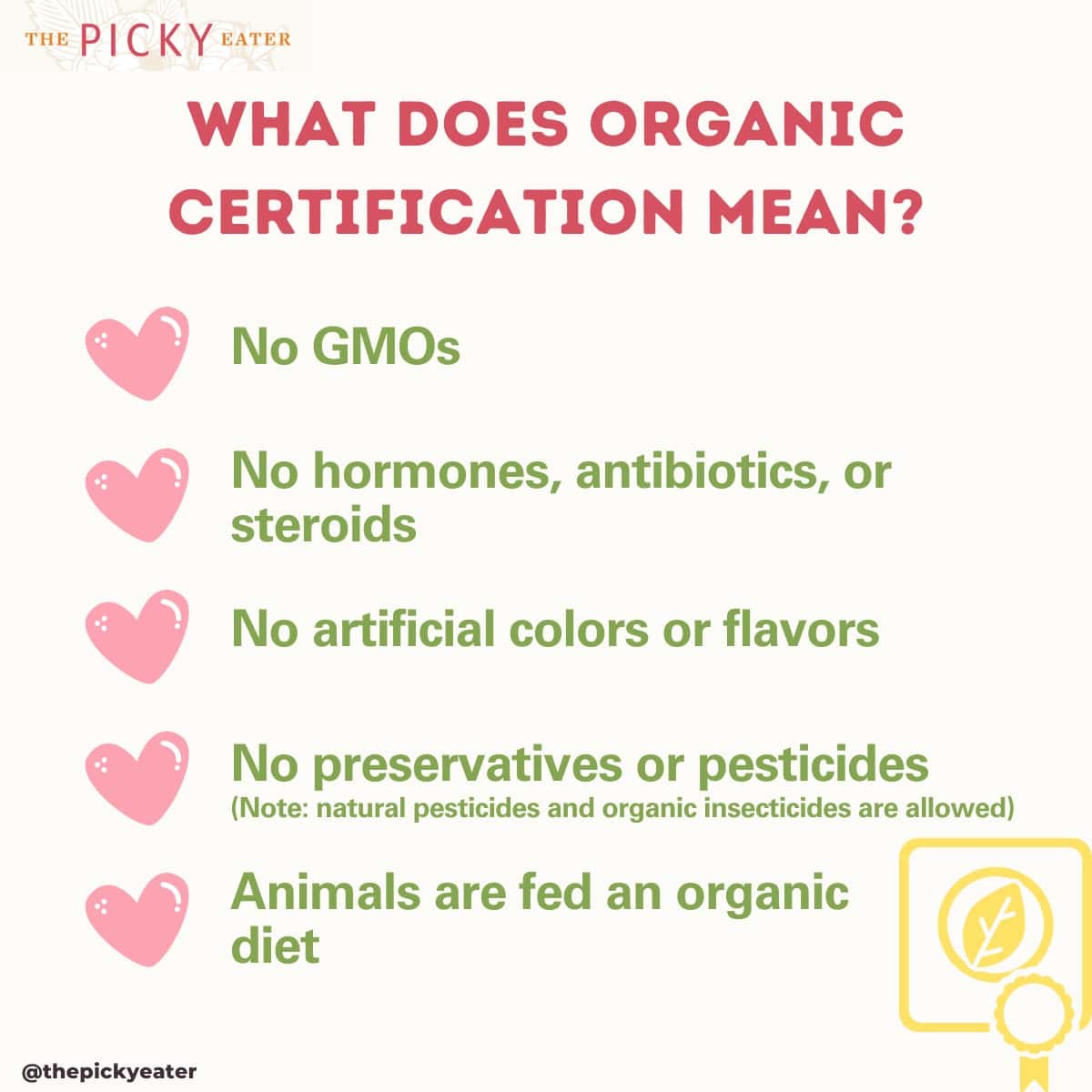
A note on organic labeling: Certified organic does not mean the same thing as “made with organic ingredients.” If a package has the label “made with organic ingredients,” it means that only 70% of the ingredients are organic, not 95%. (source).
Understanding Formula Stages (European Formulas)
European formulas come in stages to match your baby’s changing nutritional needs:
- Stage PRE/1 (0-6 months): Gentlest formula, often 100% lactose-based, less iron since babies have iron stores until 6 months
- Stage 2 (6-10 months): More iron, adjusted vitamins and minerals for growing babies
- Stage 3 (10-12+ months): Designed to supplement solid foods
US formulas typically have one stage for 0-12 months, then a separate toddler formula for 12+ months.
What About Palm Oil And Hexane?
I have heard from so many parents that two of the most common ingredients that concern parents are palm oil and hexane-extracted DHA.
Palm Oil: Palm oil is added to mimic palmitic acid in breast milk, but it can cause digestive issues in some babies. It reacts with calcium in the gut and may lead to constipation or harder stools. Formulas like Bobbie, Kendamil, and Jovie are palm oil-free, which I prefer.
Hexane-Extracted DHA: Hexane is a petroleum-based solvent used to extract DHA and ARA from algae. While this sounds scary, the hexane is removed after extraction and should be undetectable in European formulas due to strict testing.
If this concerns you, I recommend choosing formulas that use non-hexane extracted DHA (like Bobbie or Kendamil).
Best Supplements For Baby Formula
I have gotten a lot of questions about what to supplement with if your baby is on a formula that doesn’t have DHA added, what probiotic to use, or what to do if your baby is getting some breast milk along with their formula (in which case you need to add Vitamin D). Here’s what I recommend:
Best Vitamin D Drops: Bobbie Vitamin D Drops (USDA organic, vegan, Clean Label certified, only 3 drops per day)
Best Probiotic Drops: Bobbie Probiotic Drops (1 billion live cultures, can be mixed into anything, helps with colic and crying)
Best Prebiotics: BeginHealth (for infants 0-12 months, no artificial flavors or stabilizers)
Best DHA Supplement: Nordic Naturals Baby’s DHA (pure, no preservatives, includes Vitamin D)
Ingredients To Avoid In Baby Formula
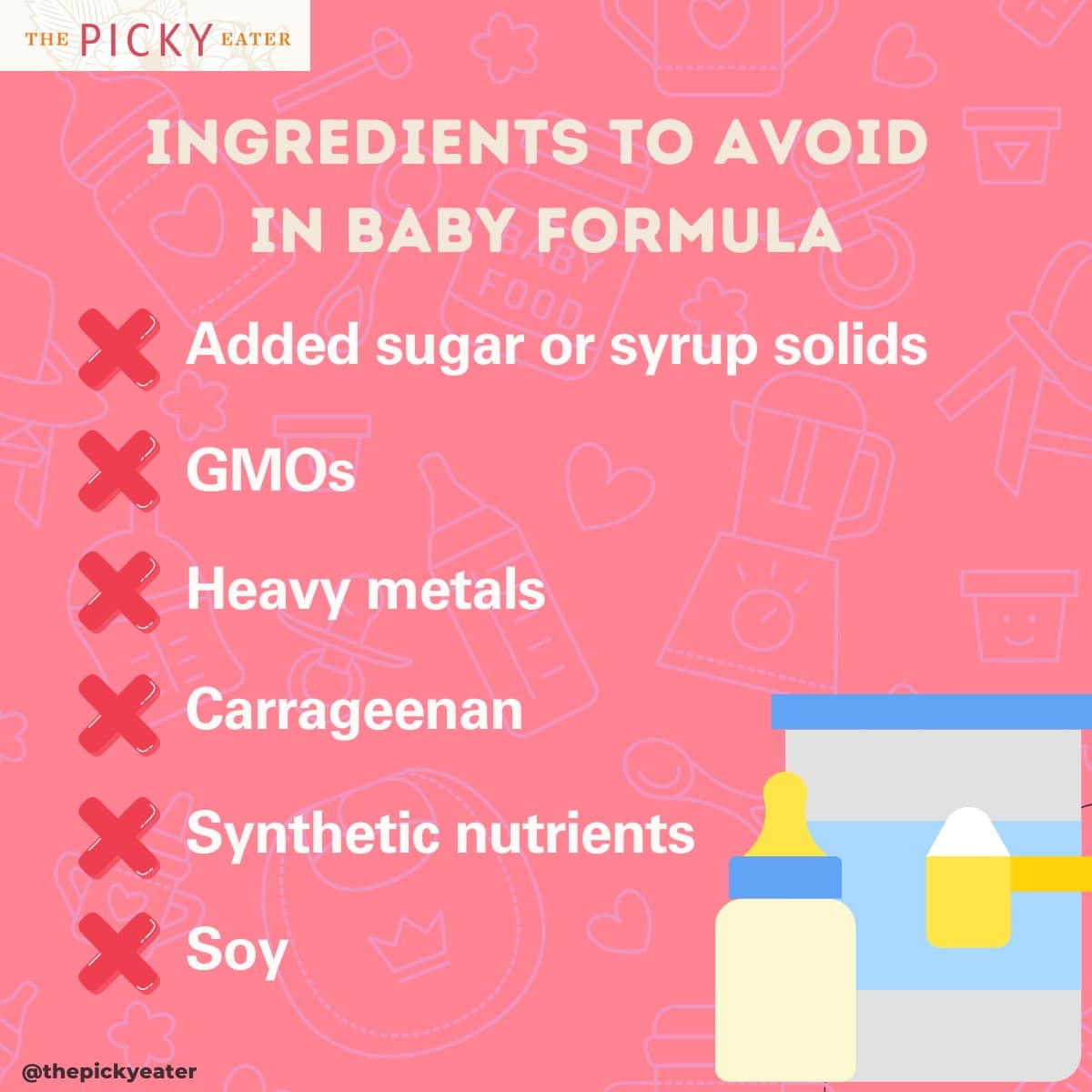
Here are the ingredients that I recommend avoiding in baby formula, whenever possible:
❌ Corn Syrup Solids/Maltodextrin: Cheaper alternatives to lactose that provide empty calories without nutritional benefit.
❌ GMOs: May contain trace pesticides.
❌ Hexane-Extracted DHA/ARA: While DHA and ARA are important for brain development, some are extracted using hexane (a neurotoxic solvent). Look for formulas with non-hexane extracted versions or algae-based DHA.
❌ Carrageenan: Added as a stabilizer in ready-to-feed formulas; linked to intestinal inflammation and banned in EU.
❌ Palm Oil: Can bind with calcium in baby’s gut, causing digestive issues and harder stools.
❌ Soy Protein: May contain phytoestrogens that may not be suitable for infants. Always consult your pediatrician before using soy formula. (Source: Check out this study about soy).
FAQs
What is the closest formula to breast milk?
Any formula with a 60:40 whey-to-casein ratio and key vitamins and minerals is very close to breast milk. HiPP Dutch, Bobbie, Kendamil, and Nara Organics all mimic breast milk composition.
Is organic formula really better?
Organic formulas are free from antibiotics, chemical fertilizers, hormones, and pesticides. While research doesn’t show huge long-term health advantages, many parents (including myself) prefer organic for peace of mind. If you can afford it, it’s worth the investment.
However, not all families may be able to choose organic formula, in which case I firmly believe that fed is best, and you should choose the formula that works for your budget and your baby. Other considerations such as price, or needing a hypoallergenic formula (which by definition will not be organic due to the hydrolyzed proteins), or availability should also be kept in mind when choosing a formula.
How long is baby formula good for?
Most formulas need to be used within one month of opening. Unopened formula is typically good for 6-12 months (check the expiration date on the container).
Can you mix formulas?
Technically yes, but this can be tricky. If you want to mix formulas (to transition between brands or because your baby does well with a blend), consult your pediatrician first to make sure you’re following correct mixing instructions.
How do I know which baby formula to choose?
Here are some steps to help you make an informed choice when deciding which is the right formula for your baby:
1) Talk to your pediatrician first – they can provide recommendations based on your baby’s specific needs.
2) Determine the type of formula – cow’s milk, goat’s milk, hypoallergenic, vegan, etc. based on your baby’s age and any allergies or dietary restrictions.
3) Consider the ingredients list and choose formulas that have no sugar or syrup solids added, are non GMO and/or organic, contain DHA/ARA, and meet your baby’s nutritional requirements.
4) Consider cost & budget! Always choose a formula that meets your budget constraints.
What if my baby doesn’t like the formula I chose?
Not every baby likes every formula. Some formulas can cause constipation or upset stomach in certain babies while keeping others perfectly happy. If you try a formula and it doesn’t work after 4-6 weeks, it’s ok to switch to something else.
Other Helpful Resources
I have specific guides for each type of formula, if you’re looking for more detailed information! Here are my guides to the best goat milk formula, the best hypoallergenic formula, the best toddler formula, and the best vegan baby formula.
If you’re choosing a European formula, I also have translated instructions and guides for each one! Here they are: HiPP Dutch, HiPP PRE Germany, Holle PRE, Holle Bio, Holle Goat
Final Thoughts
Choosing the right formula for your baby is a personal decision, and there’s no one-size-fits-all answer. What works for one baby might not work for another, and that’s completely normal. If you try the formulas I recommend and they don’t work for your baby, that is ok!
If you can afford organic European formulas like HiPP or Kendamil, or European style options like Bobbie, those are your best bets. And if you’re on a tight budget, just try to find a formula free of syrup solids, maltodextrin and added starches.
The most important thing is that your baby is fed, healthy, and happy. Whether you breastfeed, formula feed, or do a combination of both doesn’t define you as a parent.
You’re doing an amazing job. Trust your instincts, consult your pediatrician, and know that you’re making the best choice for your family. I hope this post helped you find the right baby formula for you and your little one!









Hi! Do you happen to know if the tin can that comes with the Dutch version of Hipp is made from aluminum or steel? Just curious if the use of tin reduces the aluminum issue that was previously raised by the 2013 study.
thanks!
Lisa
Hi Lisa! Yes absolutely – it’s supposed to be steel and is also supposed to reduce the aluminum issue. If you order it and it is an aluminum can, let me know because that would be contrary to what I’ve heard. Thanks and hope that helps!
Hi Anjali, I have been trying to find the hexane derived ARA ingredient on the stage 2 hipp organic packs but i cant find it. Is it disguised under a different name?
Also would you happen to know where the Holle Leb can be purchased in the UK/ or a webiste that delivers to the UK? Thanks x
Hi Farah! Great question! I think HiPP actually recently updated their ingredients list for Stage 2 — because I don’t see the ARA on their ingredients list anymore either (which is good news!) Thanks for pointing that out. As for a place that delivers to the UK for Holle Leb – I think https://www.organicbabyfood24.de/holle-lebenswert-formula delivers to the UK! Hope that helps!
Thanks Anjali! With regards to holle leb, the stage 2 contains maltodextrin where as stage 1 does not.. Which one would you say is the safer option now when comparing the hipp stage 2 to holle leb stage 2 in your opinion?
I am actually going to start with stage 1 milk, but i would rather continue with the same brand in the long run just incase baby doesnt like the taste or has a recation if i change the milk after 6 months, hence im trying
To decide which one will be better in the long run.
PS Your post is amazing. I have learnt so much in the space of 2 days!
Awww thanks so much Farah! I’m so glad this post has been helpful! Regarding the difference between Holle Leb Stage 2 and HiPP Stage 2, I’d still go with Leb Stage 2 (I’d pick maltodextrin over soy). Hope that helps! Don’t hesitate to reach out if you have any other questions!
Hi! Thank you so much for this great post. I have a 3 week old baby, he was born a premie and I haven’t been able to get my milk supply in very much. I want to switch him from the premie similac formula the doc has had him in since it looks like breastfeeding will be off the table now, but was curious your thoughts on formula for that young. I would like to stick with something easier to get, but from a concenience and price side (though I would love to do the hipp or holle) so I we going to to the baby’s only whey but it looks like it’s for ages 1 and up. Thoughts on what I could look into for my little one? Thank you so much!
Hi Elle! No problem – I’m so glad this post is helpful! And congrats on becoming a new mama! 🙂 For Baby’s Only with Whey – they market it as a toddler formula, but Baby’s Only says that it can be given to infants as well. That being said, I would ask your pediatrician if they’re comfortable with that before giving it to your 3 week old, given that your baby is so young. Another good option is Plum Organic’s formula, which is for infants. Or you can buy Holle in bulk – which, if you buy it in bulk is only a couple dollars more expensive (per box of formula) than Baby’s Only with Whey. Hope that helps! Let me know if you have any other questions!
I appreciate this post so much. It’s very difficult to decide on a formula, especially if you feel guilty about having to supplement at all. I had problems finding thorough cost comparisons and estimated costs for the first year per formula, so I did some math to figure it out on my own. If you are interested in adding this information to your post, I’d be happy to share it with you. Let me know. Thanks,
Anna
Hi Anna! I’m so glad this post was helpful to you! I’d love to see the information you collected about costs — go ahead and email it to me at: pickyeats@gmail.com. Thanks so much for sharing!
Just wanted to say thank you. I really appreciate the complete and up-to-date information you provided here.
Of course! So glad it’s helpful Caralyn!
Great post! I have a question in regards to Hipp or Holle american versions. You are recommending the European versions which are quite expensive. If you couldn’t afford the European versions would you still pick American Hipp or Holle as #1 choice? Thank you!!!
Hi Justyna! Good question — unfortunately there are no HiPP and Holle American versions – they are only sold in the UK so there are only European versions of them! (There’s the UK version, German, and Dutch).
Thank you for your help! I decided to still breastfeed him until he turns 1 (which will be next month!) and then give him organic whole milk. But I can still BF him after 1yr and combine with whole milk right? Im so happy I reached my goal to EBF 1 yr!
Hi Yvanna! No problem at all! That makes sense 🙂 And yes, you can still BF after 1 year and combine it with whole milk. Congrats on EBF for a year – that’s amazing!
Thank you so much for the reply and information. That has put my mind at rest. Thank you.
So happy to hear that Bridgette! Don’t hesitate to reach out if you have any other questions or concerns!
My son and his partner wanted to give their daughter the best start they could and opted for breastfeeding but wanted to supplement this with formula. After spending hours searching they found Holle Organic. After using it for a week, my son was horrified when he picked up the packet and read the ingredients. Fluoride. Why? Why put that in baby’s formula? It’s a poison. VERY disappointed and now have a bin full of very expensive Holle.
Hi Bridgette! I have contacted Holle about this in the past and they have stated that Holle does NOT have fluoride added. The reference to fluoride in the list of nutrients in the formulas is a declaration of fluoride trace content. It’s there because it’s what naturally occurs in the milk derived from the biodynamically/organically raised cows that supply the milk to produce the baby formula. Fresh milk naturally contains traces of fluoride, as will most foods – just like many other trace elements. The UK has much more stringent guidelines for declaring trace ingredients than the US does, and that’s why fluoride is listed. So you don’t have to worry about fluoride being an ingredient IN the formula – it’s not – and it is perfectly safe to give your granddaughter! Hope that helps, let me know if you have any other questions or concerns!
Hello, do you have any comment on the new Enfamil Enspire? Thanks! I found your article to be one of the most informative I could find.
Hi Chad! From an ingredients perspective, Enfamil Enspire isn’t bad in the sense that they use lactose as the carbohydrate (no glucose syrup solids which is great!) I don’t know how they source their DHA/ARA and whether it’s extracted using hexane, but my main issue honestly is that the ingredients are not organic. Given all of the pesticides/hormones fed to non-organic farm animals, I think it’s really important that baby formula is organic. And often times the organic formulas are not really more expensive than the non-organic ones! I’d recommend browsing Organic Munchkin’s formula options and picking the one that will work best for you and your family. Hope that helps, let me know if you have any other questions!
Hi Anjali,
Was hoping you would know the answer to this, but I just noticed that the second ingredient listed in the HIPP Stage 2 formulas is vegetable oils, where as the Stage 1 formulas list whey as the 2nd ingredient. Does that mean Stage 1 uses less vegetable oils, and does that make Stage 2 inferior to Stage 1?
thanks!
Lisa
Hi Lisa! Good question! The reason Stage 2 has a different order of ingredients than Stage 1 is because HiPP creates Stage 2 for babies 6 months or older (vs. Stage 1 which is for babies 0-6 months old). Babies who are older than 6 months have different nutritional needs than babies who are younger than 6 months. For example – you’ll notice that the quantities of vitamins/minerals between Stage 1 and 2 are different as well – for the same reason. Stage 1 is great for babies 0-6 months old, and Stage 2 is great for babies 6-12 months old! Neither one is inferior to the other 🙂 Hope that helps! Let me know if you have any other questions!
Thanks for the reply. What are the benefits of vegetable oils? Just curious why it’s listed 2nd.
Hi Lisa! Vegetable oils are important because babies need healthy fats – lots of it – to help them grow and for brain development! The oils contain essential omega-3 fatty acids, which are critical for brain and nerve cell development. Hope that helps!
Babys Only says its made for toddlers….woukd u still recommend after weaning a 6-month year old? And thank u for updating ur blog woth info about HIPP. We were thinking of buying that from the UK, but with those added ingredients I think we may try Babys Only.
Hi Gennine! So yes, Baby’s Only does say it’s made for Toddlers but it can also be used as an infant formula according to the company. I think it should be fine for a 6 month old, but I’d also just check with your pediatrician to make sure they’re comfortable with it too. I’d recommend Baby’s Only with Whey vs. the regular Baby’s Only formula. Hope that helps! Let me know if you have any other questions!
Thank you so much for creating this blog and updating it! It helps us mothers who want the best for our babies. My baby is 11 months and still breastfeeding (no formula). I want to start weaning him off breastmilk and want to try a formula. My eye is on Hipp. My question though, is there another version of Hipp formula for older babies like 12+ months? Which would be suitable for my baby? If so, which one? Or should I just buy the regular one but then I read in the description it’s only up to 6mo. Thank you for your help!
Hi Yvanna! If your baby is already 11 months and you’re going to wean him by the time he’s 12 months, you don’t really need to switch to formula at all! You can just give your baby organic whole milk once he’s 12 months old. If you start weaning now and you don’t have enough breastmilk, then you will want to supplement with formula for 1 month (until he turns 1 year old). And in that case, you should buy HiPP’s follow on milk here. Hope that helps! Let me know if you have any other questions!
Is there a phone number to contact Organic Munchkin? I mistakenly overordered Lebenswert and I want to change my order, but do not see any contact phone number in their website. Thank you.
Hi Sameer! I only have the personal cell phone number of the owner of Organic Munchkin (which I’m not at liberty to give out 🙂 ), but I do know if you contact them via this link, they will get back to you asap. Hope that helps, let me know if you run into any issues contacting them! Thanks!
Thanks Anjali. I contacted twice using the email address but could not get their reply, and they already shipped it.
Hi Sameer! So sorry to hear that – I’ll contact you via email and will give you their info and I’ll also reach out to them myself. You’ll hear from me shortly! 🙂
Hi Sameer! I just sent you an email as well but wanted to provide an update here: I just heard back from the owner of Organic Munchkin and he never got an email from you — so there may have been a technical issue either on your end or on their end. He said their contact form is working though – because he has received hundreds of emails through his form every day in the past week. So it may have just been an issue with your order! :/ He said that he could see your order in the system and could see that it shipped, but he has no record of an email associated with your order. Unfortunately Organic Munchkin doesn’t accept returns of their baby formulas because they have to protect the integrity of their inventory (accepting returns after losing “chain of custody” on the products just wouldn’t be safe). So sorry about that but it sounds like an innocent technical glitch. Let me know if there is anything else I can help with!
Thank you very much, Anjali for your effort to contact them about the issue. I used their email address info@organicmunchkin.com to contact them.
Anyway, they already shipped it. I decide to go with Hipp (although my son liked Lebenswert taste better, I liked Hipp because it has DHA also). Now, I have extra Lebenswert which I overordered and I don’t want to waste it. Can I mix Hipp with Lebensert? Or, is it a bad idea to mix two formulas?
Hi Sameer! Ah ok that’s helpful – that email address should have worked! Not sure what happened. But yes I agree you should definitely use the Leb – no point in wasting it – it’s still a great option for your son! I wouldn’t recommend mixing HiPP and Leb – but what you can do is alternate the bottles of them. So, for example, if your son drinks 4 bottles of formula a day – you could do 2 HiPP and 2 Leb, or 1 HiPP and 3 Leb – depending on how much of each you have. Hope that helps! Let me know if you have any other questions!
We noticed that Hipp formula contains calcium carbonate (sheetrock) that our bodies do not recognize as the calcium bodies need. Why do they use it, or are they playing on peoples ignorance?
Hi Del! Thanks for reaching out! Calcium carbonate is actually the most widely used and common calcium supplement. It’s not sheetrock (I think you might be thinking of Gypsum). The only issues you might face with calcium carbonate is that it can be constipating if it’s taken in too high of a quantity compared to the other types of calcium, and it’s best absorbed by the body when taken with food. But in formula that’s not an issue because formula is food 🙂 All of the top organic formulas use calcium carbonate: HiPP, Holle, Topfer, BabyLove, etc. This article from the Mayo Clinic is a good read on the different types of calcium supplements out there and why calcium carbonate is nothing to be concerned about. Hope that helps! Let me know if you have any other questions!
What do you feel about babys only lactorelief? My baby has reflux
Hi Kat! Baby’s Only Lactorelief is an ok option for lactose sensitive babies. It’s not bad but the first ingredient is brown rice syrup which isn’t ideal. But honestly none of the allergy friendly formulas are great because they all end up with more thickeners/syrup solids/etc. than the milk-based versions. MyOrganicFormula has a bunch of lactose-sensitive/allergy friendly/reflux friendly options that are better than Baby’s Only in my opinion! I’d recommend choosing one of the formulas from this page. Hope that helps!