



Best Organic Baby Formula (2026 Guide)
This post may contain affiliate links. As an Amazon Associate, I earn from qualifying purchases. Please read my disclosure.When I was researching formula for my kids, I spent weeks reading labels in the baby aisle and scrolling through ingredient lists online at 2 a.m. I wanted organic, but I also needed to understand what that actually meant. Was European formula really better? Did I need goat milk? What about all those scary ingredients I kept reading about?
The truth is, choosing formula felt overwhelming. But after consulting with pediatricians, reviewing over 65 different brands, and testing formulas with both my kids, I’ve narrowed down the cleanest, highest-quality organic options available today.
This guide will help you find the best organic baby formula for your little one without the confusion or endless research. Whether you’re supplementing, exclusively formula feeding, or transitioning from breastfeeding, you’ll find a safe, nutritious option here.
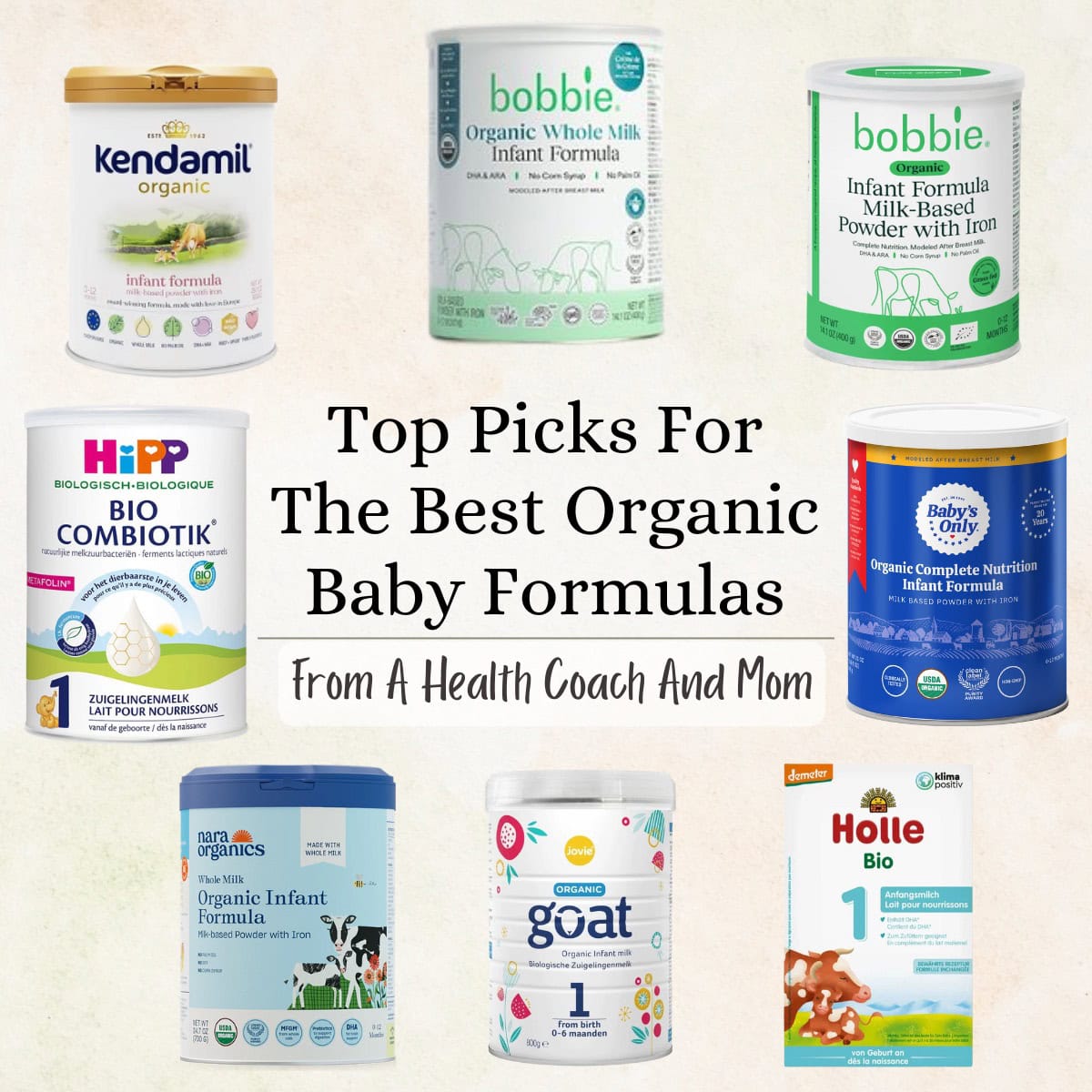
Table of Contents
hide
A Quick Note On Feeding
I strongly believe that FED is best. Whether you breastfeed for a year, six months, or not at all doesn’t make you a better or worse parent. I nursed my daughter for eight months before switching to formula, and it was one of the hardest decisions I made as a new mom. With my son, I supplemented from two months onwards because he was eating way more than I could produce! Both kids are healthy and thriving.
If you need formula, don’t feel guilty about it. Your baby needs you happy and healthy more than anything else.
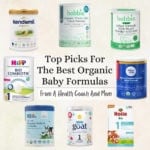
Top Picks: Best Organic Baby Formulas
Here’s my at-a-glance view of the top organic formulas for different needs:
- Best USDA Organic And EU Organic Formula: Bobbie Organic Infant Formula
- Best Overall Organic Formula: HiPP Dutch
- Best Whole Milk Formula (US Made): Bobbie Organic Whole Milk Infant Formula
- Best Whole Milk Formula (Made In Europe): Nara Organics
- Best For Breastfed Babies: Kendamil Organic
- Best Goat Milk Formula: Jovie Goat
- Best Budget-Friendly Organic Formula: Baby’s Only Organic A2 Infant Formula
- Best European Formula (Budget): Holle PRE & Holle Stage 1
- Best Hypoallergenic Formula: HiPP HA
Disclaimer & Methodology
This guide is based on over 200 hours of research including peer reviewed studies, consultations with pediatricians and dietitians, collecting feedback from thousands of parents, and personal experience with my two kids. I’m a board-certified health coach and certified nutritionist, and this post has been medically reviewed by Katie Drakeford, MA, RD, CSP, LD, CLC (see my about page for more info about Katie). My recommendations are not a substitute for professional medical advice. Always consult your pediatrician before starting or switching formulas.
This post contains affiliate links, which means I may earn a small commission if you purchase through my links at no extra cost to you. I only recommend products I’ve personally researched or used with my own children.
What To Look For In Organic Baby Formula
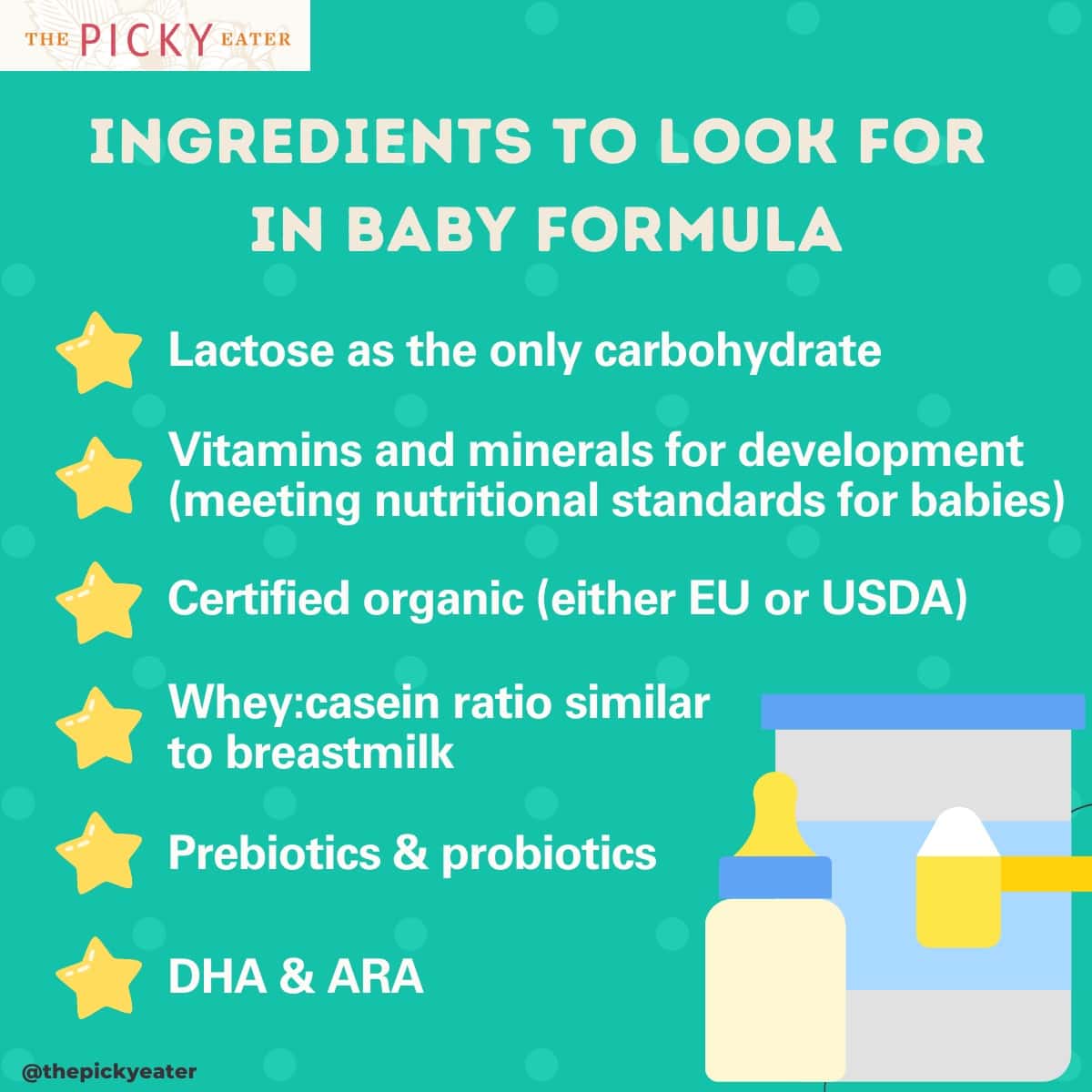
Before we get into specific brands, here’s what I prioritize when choosing formula:
✅ Certified Organic (USDA or EU certified)
✅ No added sugars, sucrose, syrup solids, or maltodextrin (lactose should be the main carbohydrate)
✅ Contains DHA and ARA for brain and eye development
✅ Includes prebiotics and probiotics when possible (Learn More: Prebiotics For Kids)
✅ 60:40 whey-to-casein ratio (mimics mature breast milk)
✅ No hexane-extracted DHA (or undetectable after extraction)
✅ Palm oil-free (or uses sustainable palm oil, learn more: Palm Oil In Baby Formula)
✅ Non-GMO
✅ No Carrageenan
✅ Good parent reviews for tolerance and mixing
The 8 Best Organic Baby Formulas
1. HiPP Dutch – Best Overall Organic Formula

What It Is: EU-certified organic formula with a complete nutritional profile
Age Range: 0-6 months (Stage 1), 6+ months (Stage 2)
Why I Love It: HiPP Dutch is one of my top picks when it comes to organic baby formula. It has a whey-to-casein ratio that mimics breast milk, contains both prebiotics and probiotics, and includes DHA and ARA for brain development. The formula is free from GMOs, added sugars, starch, soy, and synthetic preservatives.
I tested HiPP Dutch with my daughter when she was four months old, and she took to it immediately (my son did too when he was born!) The powder mixes easily (even at 3 a.m. when you’re half asleep), and I didn’t notice any increase in spit-up or fussiness. The container is also easier to use than some European brands since it comes in an airtight can instead of a foil-lined box.
The one downside is that HiPP uses hexane to extract DHA and ARA. However, when I spoke to their team, they claimed that all hexane is removed and undetectable in the final product. Given Europe’s strict testing standards, I feel comfortable with this.
Also Good:
- HiPP UK Stage 1 ($36.99-$42.99): Similar to HiPP Dutch but more affordable. Contains prebiotics (but no probiotics) and comes in a box instead of a can. Great budget-friendly European option.
- HiPP PRE Germany ($28.99-$37.99): Designed for babies 0-3 months. Contains both prebiotics and probiotics. More affordable than HiPP Dutch and comes in a box.
Price: $42.99-$48.99 per 28.2oz container (depending on quantity purchased)
Where To Buy: Organic’s Best, Baby Milk Bar, Bottles & Burps
| Pros | Cons |
|---|---|
| Mimics breast milk composition | Contains palm oil |
| Contains prebiotics and probiotics | Uses hexane extraction (though removed) |
| EU Organic certified, non-GMO | Not available in US stores (online only) |
| No added sugars or maltodextrin | |
| Easy-to-use container | |
| Contains DHA & ARA |
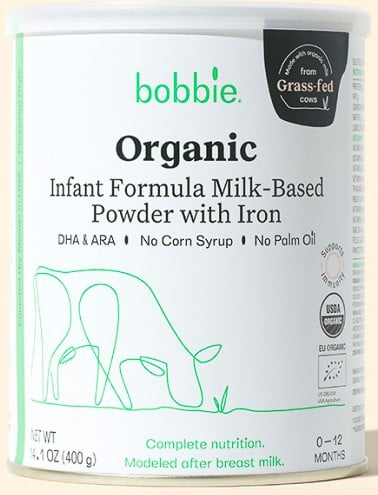
2. Bobbie – Best US-Made Organic Formula
What It Is: USDA organic, European-style formula made in the US
Options: Organic Infant Formula (skim milk), Organic Whole Milk Infant Formula, Grass Fed Whole Milk (Not Organic)
Age Range: 0-12 months
Why I Love It: Bobbie is the best organic formula made in the US, and it’s the only American brand that meets EU standards for DHA content. Made with milk from Organic Valley pasture-raised cows, this formula is as close as you can get to European quality without importing. Bobbie was created by a mom, Laura Modi, who developed Bobbie after feeling frustrated over a lack of clean formula options for her baby.
Bobbie offers three infant formulas: their Original Organic Infant Formula (made with organic skim milk), their Grass Fed Whole Milk Formula (not organic, made with whole milk) and their newer Organic Whole Milk Infant Formula (made with organic whole milk). The whole milk version has the highest milk fat content of any formula Bobbie makes, with less added vegetable oils since whole milk naturally contains more fat.
I love that Bobbie doesn’t use hexane to extract DHA (though they do use it for ARA extraction, but it’s undetectable in the final product). Both formulas have a 60:40 whey-to-casein ratio, are modeled after breast milk, and are completely free of palm oil, soy oil, corn syrup, and maltodextrin. And I know I can trust their formula, especially because they were awarded the Clean Label Purity Project award.
When my nephew transitioned from breastfeeding after 8 months, Bobbie’s Original formula was what worked best for him. He didn’t have any digestive issues, and I know we all felt good that he was getting grass-fed organic nutrition. I’ve heard from other moms who prefer the Whole Milk version for their babies.
The only thing missing is prebiotics and probiotics, which you’ll need to supplement separately if you want them. (Learn more: Best Probiotics For Kids). Honestly, if Bobbie included prebiotics and probiotics in their formula, they would be my #1 pick overall too!
Price: $23.40 per 14.1oz can (subscription), $26.49 at Target
Where To Buy: Bobbie website, Target stores nationwide
| Pros | Cons |
|---|---|
| USDA Organic certified, FDA regulated | No prebiotics |
| Made in the US, available at Target | No probiotics |
| 60:40 whey:casein ratio | |
| Meets EU DHA standards | |
| No palm oil, soy oil, corn syrup, or maltodextrin | |
| Lactose is the only carbohydrate | |
| Affordable compared to European formulas | |
| Clean Label Purity Award and Pesticide Free certified | |
| Three options: original (skim milk), grass fed, and whole milk formula |
3. Nara Organics – Best Whole Milk Formula Made In Europe
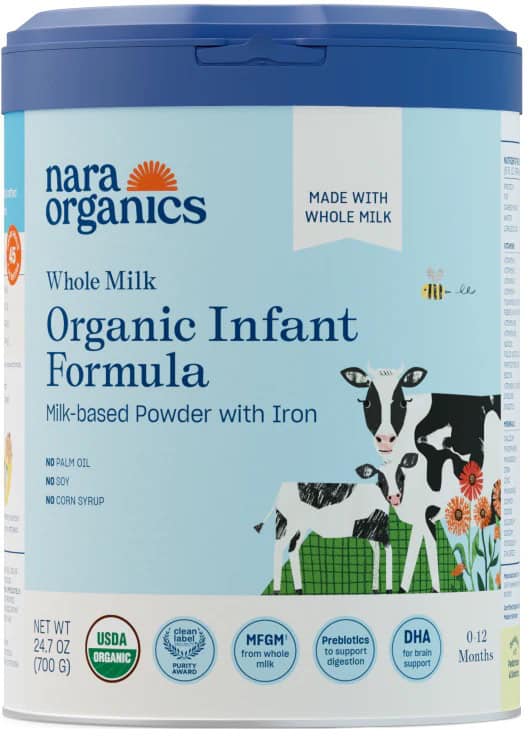
What It Is: USDA organic whole milk formula, made in Germany
Age Range: 0-12 months
Why I Love It: Nara Organics is a brand-new formula that just launched in 2025 and it is the first and only USDA-certified organic formula made with whole milk and no skim milk. Nara has the highest percentage of milk fat of any formula sold in the US, which means less added vegetable oils. The founder, Esther Hallam, created this formula after struggling to find a clean organic option when her daughter was born.
Made in a state-of-the-art facility in Germany and meeting both EU and US safety standards, Nara underwent a large-scale clinical trial with infants to demonstrate safety and efficacy. The formula includes naturally occurring MFGM (milk fat globule membrane), prebiotics (GOS), and EU-required levels of DHA and ARA for brain development.
What sets Nara apart is the focus on whole milk fats. The formula uses organic whole milk as the primary fat source, then adds a small amount of organic plant-based oils (coconut, sunflower, rapeseed) for essential fatty acids. It’s completely free of palm oil, soy, corn syrup, maltodextrin, and GMOs.
Nara was awarded the Clean Label Purity Award, which means it’s been rigorously tested for contaminants like heavy metals and pesticides. The formula has a 60:40 whey-to-casein ratio (just like mature breast milk) and uses lactose as the only carbohydrate.
Price: $45 per 24.7 oz can, $40.50 per can for 4-can subscription
Where to buy: Nara.com, Target.com
| Pros | Cons |
|---|---|
| USDA Organic certified, FDA regulated | Brand new (launched 2025), so less long-term parent reviews |
| 60:40 whey:casein ratio | Mainly available online (limited availability in stores) |
| Meets EU standards, made in Germany | No probiotics |
| No palm oil, soy, corn syrup, or maltodextrin | |
| Lactose is the only carbohydrate | |
| Contains MFGM, prebiotics, DHA, and ARA | |
| Clean Label Purity Project Award | |
| Highest milk fat percentage of any formula |
4. Kendamil Organic – Best European Whole Milk Formula
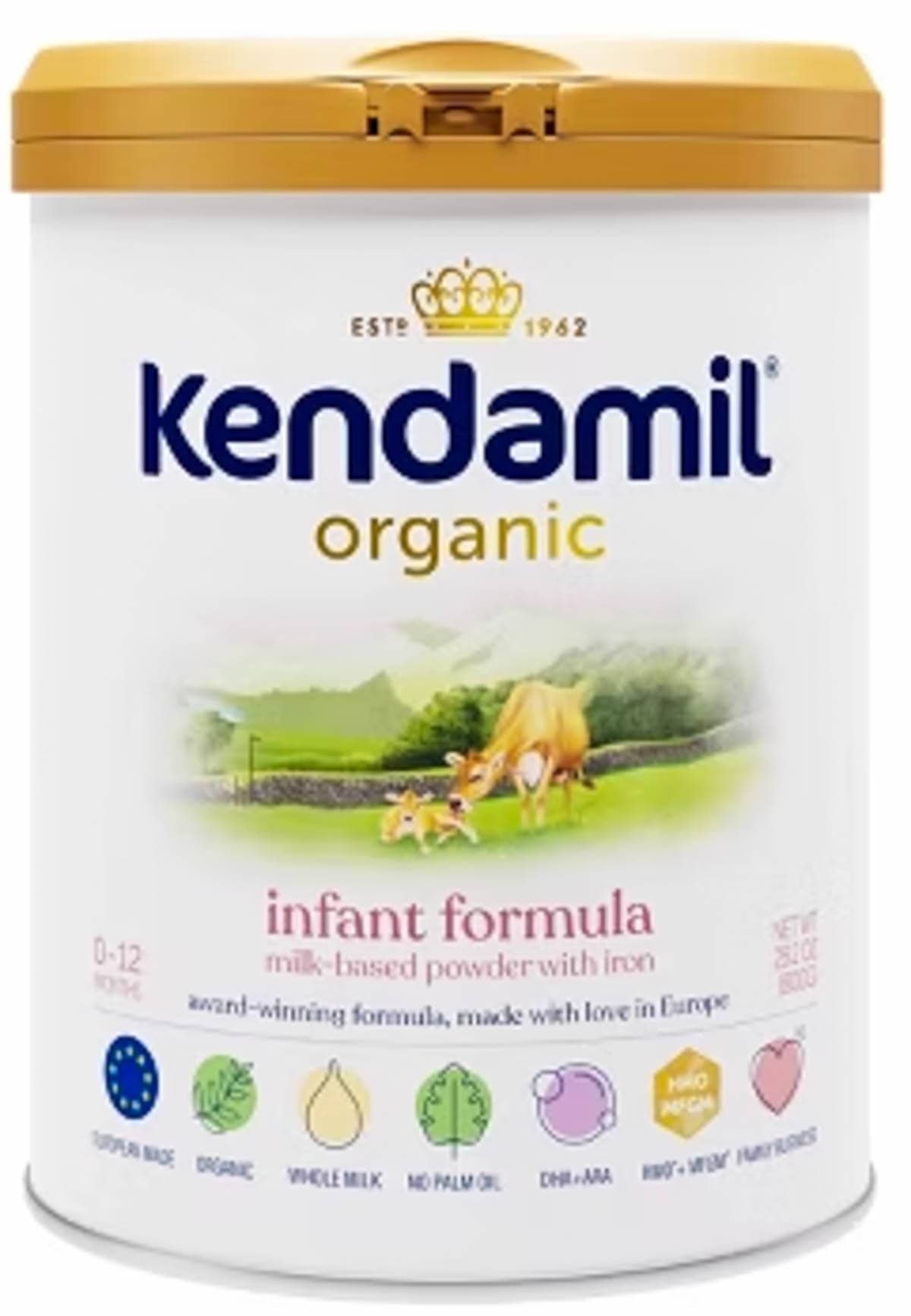
What It Is: UK organic formula made with whole milk
Age Range: 0-6 months (Stage 1), 6+ months (Stage 2)
Kendamil is similar to Nara Organics and Bobbie’s Whole Milk formula because it’s made organic whole milk instead of skim milk, which means less added vegetable oils. It contains HMOs (human milk oligosaccharides), a prebiotic that supports immune health, and includes DHA and ARA.
The formula is completely free of palm oil and soy oil, and uses coconut oil as one of the main fat sources. Parents consistently mention that Kendamil smells sweet and tastes good, making it one of the best options for picky breastfed babies who are resistant to formula.
I recommended Kendamil to many parents during the formula shortage in 2022, and heard good feedback that it mixed well and most babies took to it without fussiness.
The formula doesn’t contain probiotics, so you’d need to add those separately if you want them. It also contains taurine, l-carnitine, and nucleotides, but Kendamil doesn’t use chemical solvents to extract these nutrients.
Price: $42.49 for a 28.2oz container at Target, $41.13 with subscription – $52.99 per 28oz container online
Where To Buy: Target, Bottles & Burps, Organic’s Best
| Pros | Cons |
|---|---|
| Made with organic whole milk | No probiotics |
| Lactose is the only carbohydrate | |
| Contains HMOs for immune support | |
| No palm oil or soy oil | |
| Contains prebiotics, DHA, ARA (non-hexane extracted) | |
| Available online and at Target | |
| Clean Label Purity Project Award | |
| Highest milk fat percentage of any formula |
5. Jovie Goat – Best Goat Milk Formula
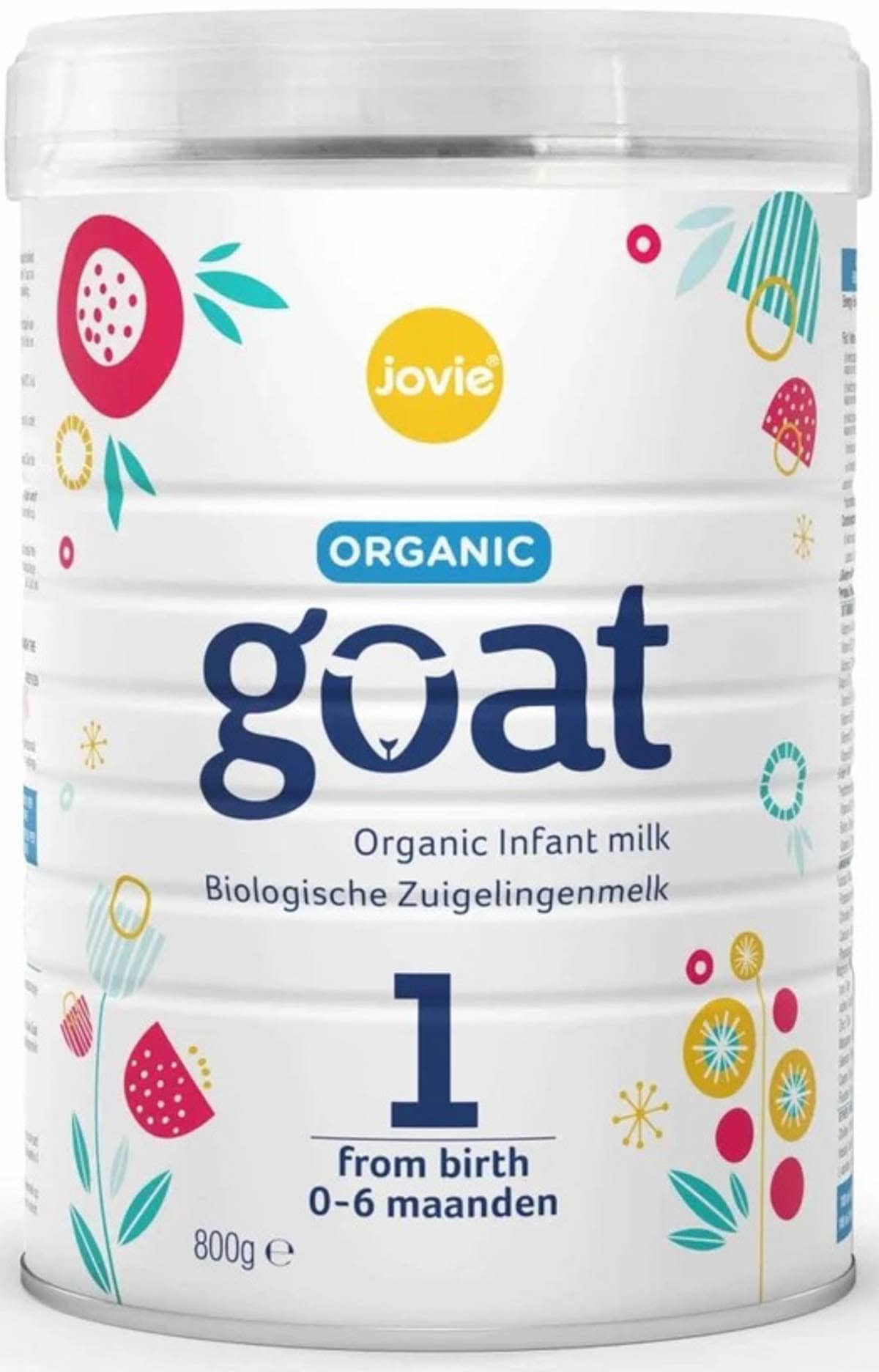
What It Is: EU organic goat milk infant formula
Age Range: 0-6 months (Stage 1), 6+ months (Stage 2)
Why I Love It: Jovie is the best goat milk formula available, and it’s a great option for babies who have trouble digesting cow’s milk. Made with organic whole A2 goat milk, this formula is easier on sensitive tummies since goat milk contains only A2 protein (versus both A1 and A2 in cow’s milk).
The ingredients are 100% organic and non-GMO, with added prebiotics and a whey-to-casein ratio similar to breast milk. Jovie is also free of glucose syrup solids, maltodextrin, palm oil, and soy oil.
I recommended Jovie to a friend whose baby was having constant spit-up and gas on cow’s milk formula. Within three days of switching to Jovie, her baby was sleeping better and much less fussy.
One thing to note: Jovie uses fish oil for DHA, so it’s not vegetarian-friendly. It also doesn’t contain probiotics. (Learn More: Jovie Formula Review).
Price: $56.99-$64.99 per 28.2oz container (depending on number ordered)
Where To Buy: Organic’s Best, Baby Milk Bar
| Pros | Cons |
|---|---|
| Made with A2 organic whole goat milk | No probiotics |
| EU Organic certified | Expensive |
| No palm oil or soy oil | Not vegetarian (contains fish oil) |
| Contains prebiotics | |
| Contains DHA/ARA | |
| Can be easier to digest than cow’s milk | |
| No added sugars |
6. Baby’s Only Organic – Best Budget-Friendly US Formula
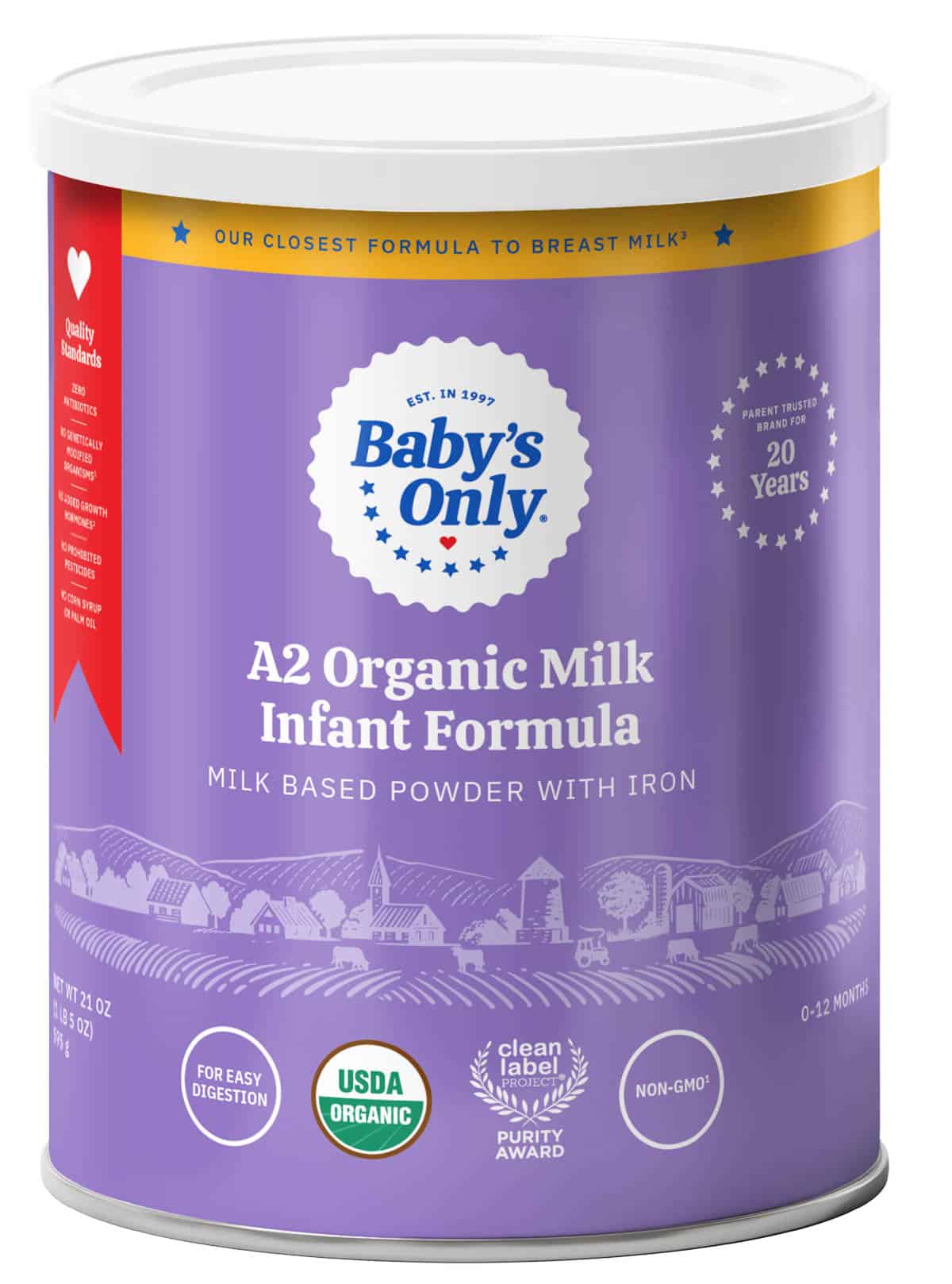
What It Is: USDA organic formula available in US stores
Age Range: 0-12 months (infant formula) and 12+ months (toddler formula)
Why I Love It: Baby’s Only Organic is the most affordable USDA organic formula you can buy in the US. It’s made with organic A2 milk, is non-GMO, and is Clean Label Purity project certified. The formula contains no palm oil, no corn syrup, and no glucose syrup solids.
Baby’s Only is free of syrup solids and added sugars, and while it doesn’t contain DHA, ARA, prebiotics or probiotics, I like Baby’s Only for parents who want organic nutrition on a budget. The formula has full-fat nutrition and a simple ingredients list. It’s been a trusted brand for over 20 years and is widely available both online and in stores.
Price: $30 per 21oz can
Where to buy: Amazon, natural grocery stores like Sprouts
| Pros | Cons |
|---|---|
| Affordable organic option | No probiotics |
| No palm oil | No DHA or ARA |
| Clean Label Purity Project certified | No prebiotics |
| Contains prebiotics | |
| Available in stores and online |
7. Holle PRE – Best Budget European Formula
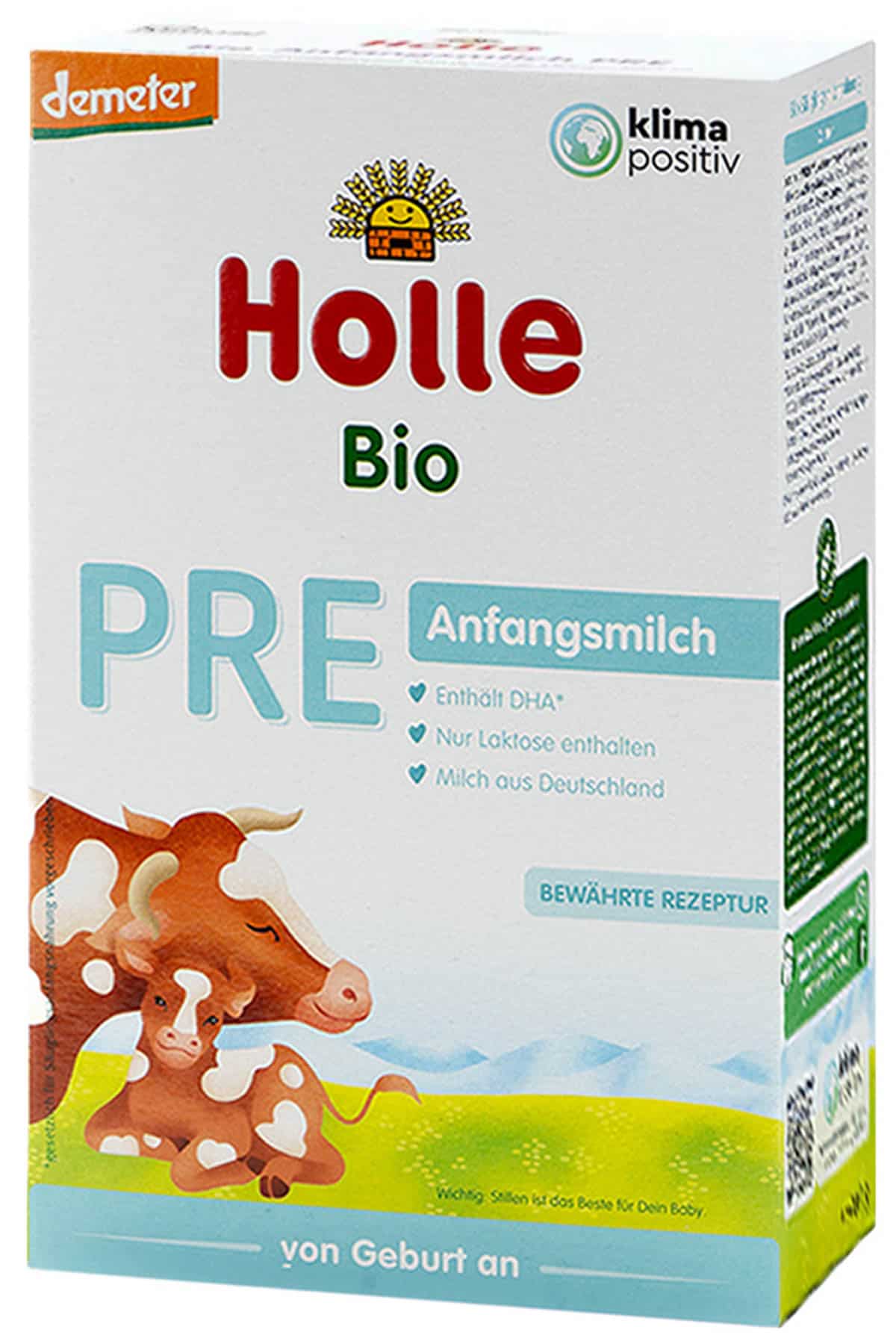
What It Is: Demeter biodynamic certified organic formula from Germany
Age Range: [PRE] 0-3 months, [Stage 1] 0-6 months, [Stage 2] 6+months
Why I Love It: Holle PRE is one of the most affordable European formulas, and it carries a Demeter biodynamic certification, which is even stricter than regular organic standards. This ensures the highest animal welfare standards and commitment to sustainability.
The formula is simple and clean, with organic ingredients and no added maltodextrin (though Stage 2 does contain some). Holle PRE now includes DHA and ARA, which wasn’t always the case with older formulations.
I like Holle PRE for parents who want to supplement with their own probiotics and prebiotics. The formula doesn’t include these, so you have full control over what you’re adding.
One limitation is that Holle PRE is designed for babies 0-6 months (ideally 0-3 months). After that, you’ll need to switch to Stage 1 or Stage 2. Additionally Holle (across all stages) doesn’t have a whey:casein ratio that matches breastmilk, so that might cause digestive discomfort in some babies
Price: $21.85-$27.49 per 400 gram box
Where To Buy: Organic’s Best, Baby Milk Bar, Bottles & Burps
Also Good:
- Holle Goat Stage 1 ($25.71-$33.99): Made with organic A2 goat milk. Bioland certified. Good option for babies sensitive to cow’s milk, though the whey-to-casein ratio doesn’t mimic breast milk, which can be constipating for some babies. Contains maltodextrin.
- Holle Bio Stage 1 ($21.85-$27.49): Similar to Holle PRE but for ages 0-6 months. Demeter certified. Contains DHA and ARA. Includes maltodextrin (unlike Holle PRE).
| Pros | Cons |
|---|---|
| Affordable European formula | No probiotics |
| Demeter biodynamic certified | No prebiotics |
| EU Organic certified | Stage 1 & 2 contains maltodextrin |
| Contains DHA and ARA | Whey:casein ratio doesn’t match mature breastmilk |
| No maltodextrin in PRE stage |
8. HiPP HA – Best Hypoallergenic Formula
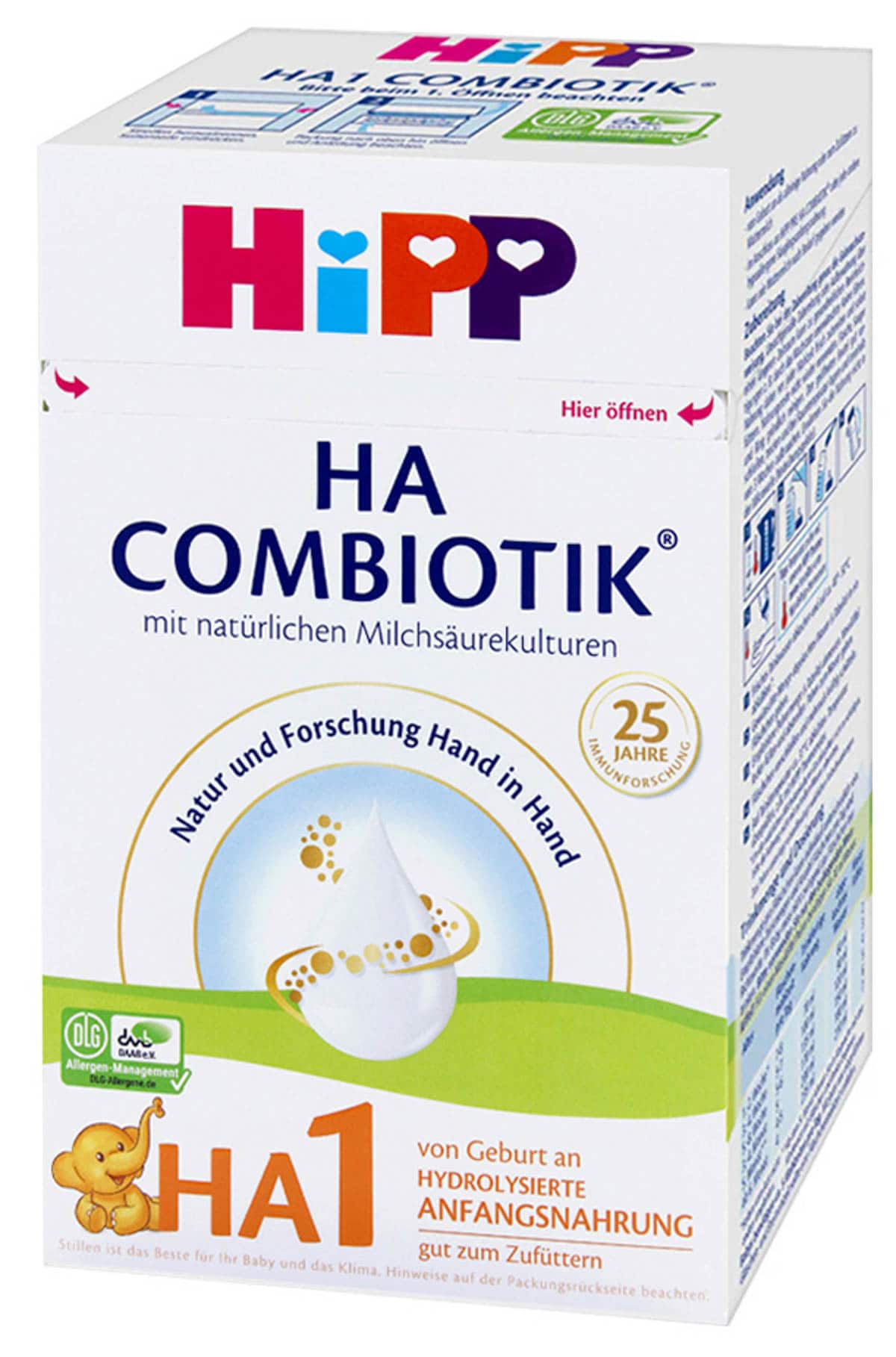
What It Is: European hypoallergenic formula for cow’s milk sensitivities
Age Range: 0-3 months (Stage PRE), 0-6 months (Stage 1), 6+ months (Stage 2)
HiPP HA is the best option if your baby has a cow’s milk protein sensitivity (but not a full allergy). The formula contains extensively hydrolyzed protein (86-87% broken down), which is easier for sensitive tummies to digest.
It’s 100% whey with no casein, and includes prebiotics, probiotics, DHA, and ARA. The lactose content is the same as regular formula, so if your baby has severe lactose intolerance, this may not work.
A friend of mine switched to HiPP HA after her baby had constant gas and fussiness on regular formula. Within a week, her baby was sleeping through the night and much happier overall.
While HiPP HA isn’t technically certified organic (because the hydrolyzed protein requires more processing), all other ingredients are organic.
Price: $31.71-$42.99 per 600 gram container
Where To Buy: Organic’s Best, Baby Milk Bar
Also Good:
- HiPP Comfort ($30.85-$42.99): Meant to relieve gas, fussiness, and digestive discomfort, HiPP Comfort is even more broken down than HiPP HA. Contains extensively hydrolyzed protein, (86-87% broken down), 100% whey (no casein), reduced lactose content and modified fats.
- HiPP AR ($30.85-$40.99): Meant to ease reflux in infants, HiPP AR contains locust bean gum that thickens the formula slightly to prevent reflux and/or reduce spit up.
| Pros | Cons |
|---|---|
| Hydrolyzed protein for easier digestion | Not fully organic |
| No casein (100% whey) | Regular lactose content (not suitable for severe lactose intolerance) |
| Contains prebiotics | May not work for diagnosed cow’s milk protein allergy |
| Contains probiotics | |
| Includes DHA and ARA | |
| No added sugars |
Organic Baby Formula Comparison Chart
Here’s a quick side-by-side comparison of all the formulas featured in this guide:
| Formula Brand | Type Of Milk | Pre-biotics | Pro-biotics | DHA & ARA | Palm Oil? | Soy Oil? | Malto-dextrin | Price Per Can |
|---|---|---|---|---|---|---|---|---|
| HiPP Dutch | Organic Skim Milk, Whey | ✓ | ✓ | ✓ | Yes | No | No | $42.99 – $48.99 |
| Bobbie Original | Organic Skim Milk, Whey | No | No | ✓ | No | No | No | $25 |
| Bobbie Whole Milk | Organic Whole Milk, Skim Milk, Whey | No | No | ✓ | No | No | No | $28 |
| Nara Organics | Organic Whole Milk | ✓ (GOS) | No | ✓ | No | No | No | $45 |
| Kendamil Organic | Organic Whole Milk, Skim Milk, Whey | ✓ (HMOs) | No | ✓ | No | No | No | $41.13 – $52.99 |
| Jovie Goat | Organic Whole Goat Milk | ✓ | No | ✓ | No | No | No | $56.99 – $64.99 |
| Baby’s Only Organic | Organic Grass-Fed Milk, Skim Milk, Whey | ✓ | No | ✓ (DHA only) | No | No | No | $30 |
| Holle PRE | Organic Whole Milk, Whey | No | No | ✓ | Yes | No | No | $21.85 – $27.49 |
| HiPP HA | Hydro-lyzed Whey (No Casein) | ✓ | ✓ | ✓ | Yes | No | No | $31.71 – $42.99 |
| HiPP UK | Organic Skim Milk, Whey | ✓ | No | ✓ | Yes | No | No | $36.99 – $42.99 |
| HiPP PRE Germany | Organic Skim Milk, Whey | ✓ | ✓ | ✓ | Yes | No | No | $28.99 – $37.99 |
| Holle Goat | Organic Goat Milk | No | No | ✓ | Yes | No | Yes | $25.71 – $33.99 |
| Holle Bio Stage 1 | Organic Skim Milk, Whey | No | No | ✓ | Yes | No | Yes | $21.85 – $27.49 |
Key: ✓ = Contains this ingredient/feature; No = does not contain; Yes = contains
Notes:
- All formulas listed are certified organic (USDA or EU)
- All formulas are non-GMO
- All formulas use lactose as the primary carbohydrate (no corn syrup solids)
- DHA extraction methods vary by brand (some use hexane extraction with undetectable residue, others use fish oil or algae)
European vs. American Baby Formula
You’ll notice that many of my top picks are European formulas. Here’s why:
European formulas have stricter standards:
- No corn syrup solids or processed sugars allowed
- Minimum 30% of calories must come from lactose
- No synthetic nutrients extracted with chemical solvents
- More transparent testing for trace contaminants
- Required DHA in all formulas (not required in US)
US formulas are improving: Brands like Bobbie are now meeting EU standards while being made in the US. This gives you European-quality nutrition with the convenience of buying at Target.
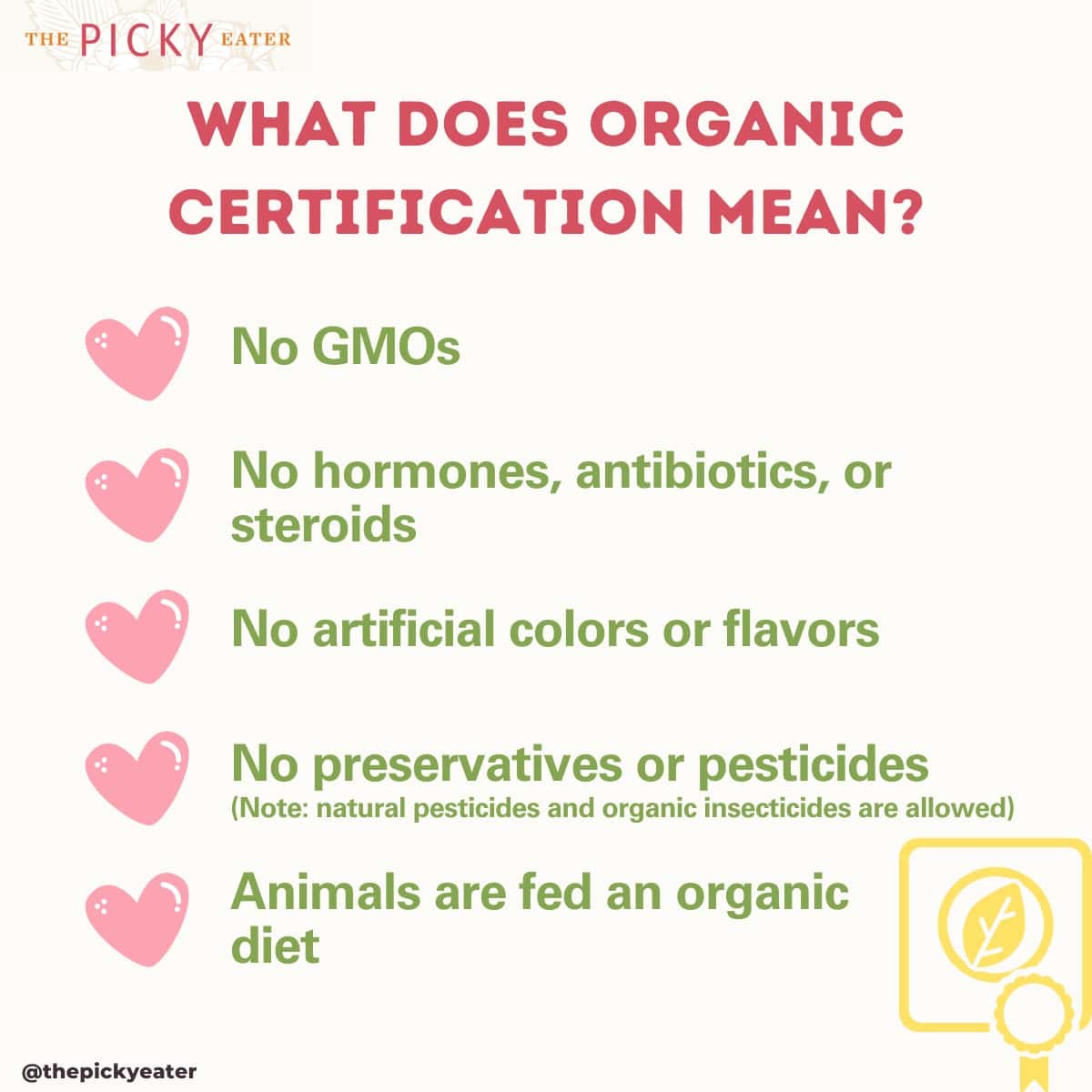
Both EU and US organic formulas must be 95% organic and free from growth hormones, GMOs, and antibiotics. The main difference is that Europe regulates more strictly when it comes to added ingredients and testing standards.
All US-based formulas are regulated by the FDA, and all European formulas are regulated by the European Commission, which also certifies formulas as organic. Additionally, Europe has designations that are “beyond organic” like “Demeter” which essentially means biodynamic farming on top of organic farming.
A note on organic labeling: Certified organic does not mean the same thing as “made with organic ingredients.” If a package has the label “made with organic ingredients,” it means that only 70% of the ingredients are organic, not 95%. (source).
Understanding Formula Stages (European Formulas)
European formulas come in stages to match your baby’s changing nutritional needs:
- Stage PRE/1 (0-6 months): Gentlest formula, often 100% lactose-based, less iron since babies have iron stores until 6 months
- Stage 2 (6-10 months): More iron, adjusted vitamins and minerals for growing babies
- Stage 3 (10-12+ months): Designed to supplement solid foods
US formulas typically have one stage for 0-12 months, then a separate toddler formula for 12+ months.
What About Palm Oil And Hexane?
I have heard from so many parents that two of the most common ingredients that concern parents are palm oil and hexane-extracted DHA.
Palm Oil: Palm oil is added to mimic palmitic acid in breast milk, but it can cause digestive issues in some babies. It reacts with calcium in the gut and may lead to constipation or harder stools. Formulas like Bobbie, Kendamil, and Jovie are palm oil-free, which I prefer.
Hexane-Extracted DHA: Hexane is a petroleum-based solvent used to extract DHA and ARA from algae. While this sounds scary, the hexane is removed after extraction and should be undetectable in European formulas due to strict testing.
If this concerns you, I recommend choosing formulas that use non-hexane extracted DHA (like Bobbie or Kendamil).
Best Supplements For Baby Formula
I have gotten a lot of questions about what to supplement with if your baby is on a formula that doesn’t have DHA added, what probiotic to use, or what to do if your baby is getting some breast milk along with their formula (in which case you need to add Vitamin D). Here’s what I recommend:
Best Vitamin D Drops: Bobbie Vitamin D Drops (USDA organic, vegan, Clean Label certified, only 3 drops per day)
Best Probiotic Drops: Bobbie Probiotic Drops (1 billion live cultures, can be mixed into anything, helps with colic and crying)
Best Prebiotics: BeginHealth (for infants 0-12 months, no artificial flavors or stabilizers)
Best DHA Supplement: Nordic Naturals Baby’s DHA (pure, no preservatives, includes Vitamin D)
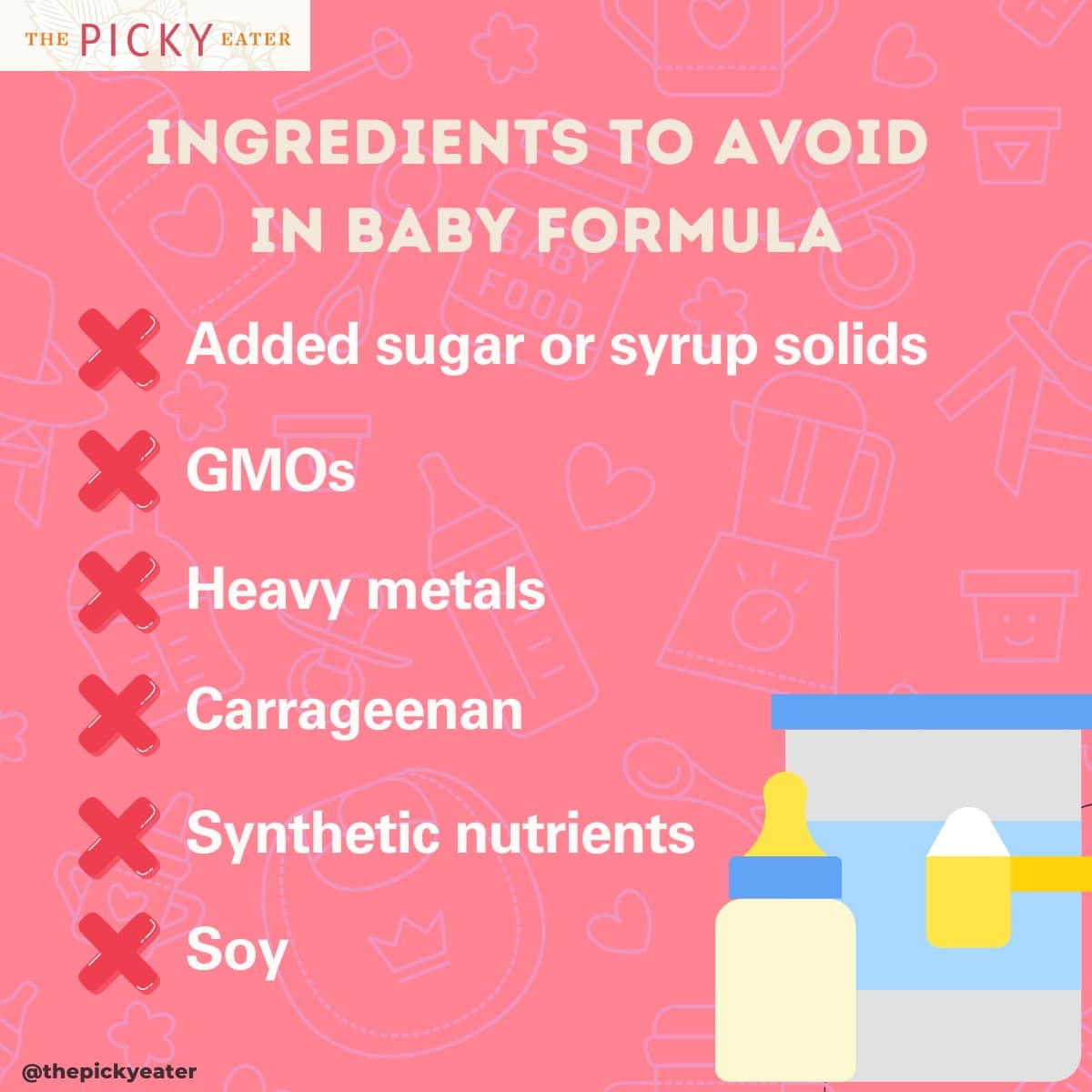
Ingredients To Avoid In Baby Formula
Here are the ingredients that I recommend avoiding in baby formula, whenever possible:
❌ Corn Syrup Solids/Maltodextrin: Cheaper alternatives to lactose that provide empty calories without nutritional benefit.
❌ GMOs: May contain trace pesticides.
❌ Hexane-Extracted DHA/ARA: While DHA and ARA are important for brain development, some are extracted using hexane (a neurotoxic solvent). Look for formulas with non-hexane extracted versions or algae-based DHA.
❌ Carrageenan: Added as a stabilizer in ready-to-feed formulas; linked to intestinal inflammation and banned in EU.
❌ Palm Oil: Can bind with calcium in baby’s gut, causing digestive issues and harder stools.
❌ Soy Protein: May contain phytoestrogens that may not be suitable for infants. Always consult your pediatrician before using soy formula. (Source: Check out this study about soy).
FAQs
What is the closest formula to breast milk?
Any formula with a 60:40 whey-to-casein ratio and key vitamins and minerals is very close to breast milk. HiPP Dutch, Bobbie, Kendamil, and Nara Organics all mimic breast milk composition.
Is organic formula really better?
Organic formulas are free from antibiotics, chemical fertilizers, hormones, and pesticides. While research doesn’t show huge long-term health advantages, many parents (including myself) prefer organic for peace of mind. If you can afford it, it’s worth the investment.
However, not all families may be able to choose organic formula, in which case I firmly believe that fed is best, and you should choose the formula that works for your budget and your baby. Other considerations such as price, or needing a hypoallergenic formula (which by definition will not be organic due to the hydrolyzed proteins), or availability should also be kept in mind when choosing a formula.
How long is baby formula good for?
Most formulas need to be used within one month of opening. Unopened formula is typically good for 6-12 months (check the expiration date on the container).
Can you mix formulas?
Technically yes, but this can be tricky. If you want to mix formulas (to transition between brands or because your baby does well with a blend), consult your pediatrician first to make sure you’re following correct mixing instructions.
How do I know which baby formula to choose?
Here are some steps to help you make an informed choice when deciding which is the right formula for your baby:
1) Talk to your pediatrician first – they can provide recommendations based on your baby’s specific needs.
2) Determine the type of formula – cow’s milk, goat’s milk, hypoallergenic, vegan, etc. based on your baby’s age and any allergies or dietary restrictions.
3) Consider the ingredients list and choose formulas that have no sugar or syrup solids added, are non GMO and/or organic, contain DHA/ARA, and meet your baby’s nutritional requirements.
4) Consider cost & budget! Always choose a formula that meets your budget constraints.
What if my baby doesn’t like the formula I chose?
Not every baby likes every formula. Some formulas can cause constipation or upset stomach in certain babies while keeping others perfectly happy. If you try a formula and it doesn’t work after 4-6 weeks, it’s ok to switch to something else.
Other Helpful Resources
I have specific guides for each type of formula, if you’re looking for more detailed information! Here are my guides to the best goat milk formula, the best hypoallergenic formula, the best toddler formula, and the best vegan baby formula.
If you’re choosing a European formula, I also have translated instructions and guides for each one! Here they are: HiPP Dutch, HiPP PRE Germany, Holle PRE, Holle Bio, Holle Goat
Final Thoughts
Choosing the right formula for your baby is a personal decision, and there’s no one-size-fits-all answer. What works for one baby might not work for another, and that’s completely normal. If you try the formulas I recommend and they don’t work for your baby, that is ok!
If you can afford organic European formulas like HiPP or Kendamil, or European style options like Bobbie, those are your best bets. And if you’re on a tight budget, just try to find a formula free of syrup solids, maltodextrin and added starches.
The most important thing is that your baby is fed, healthy, and happy. Whether you breastfeed, formula feed, or do a combination of both doesn’t define you as a parent.
You’re doing an amazing job. Trust your instincts, consult your pediatrician, and know that you’re making the best choice for your family. I hope this post helped you find the right baby formula for you and your little one!











I must say that Holle formula is the best organic formula that we have found and our daughter loves it. Not only it is organic, it tastes great too. We order our formula directly from Germany and are very satisfied with https://www.organicbabyfood24.de
Thanks for the tip Thera! I have added Organic Baby Food to our list of distributors in the post!
Hello,
If I am getting Hipp Bio, and it’s being shipped from Europe, what guarantees would I have that are not irradiated? Irradiation of baby food seems vicious and dangerous. anyone knows about this?
Thank you,
pedram
Hi Pedram! Are you asking about, if the formula is shipped from Europe, whether it’s an issue if it passes through the x-ray machines at the airport? Regarding passing formula through security screenings (x-rays at the airport) – it shouldn’t be a problem. The airport security screenings have such low dose radiation that it shouldn’t alter or affect the formula. (e.g. if you are traveling with an infant and bringing formula or breastmilk with you, it will have to pass through the security screening x-rays and it is fine). So I wouldn’t worry about it – but if you’re super concerned just check with your doctor! Hope that helps!
We used Earth’s best on our kids. As a Doctor I did a lot of research and found it to to be most natural. Also it was the easiest to mix and easiest on our kid’s digestive system.
Thanks for sharing your experience Kam! Glad Earth’s Best worked for your little ones!
Thanks for your reply!!!!!!
I’ve been having so much stress lately hoping to find as much positive comments as possible on Holle and i was curious whether this product is popular in its own country and I do find it quite surprising that nobody knows about Holle. I will have to ask my friend about OKO test tomorrow cause like u said I couldn’t understand their web or their translation.
I first fed my son Enfamil A+ ready to feed for about 3 weeks and lately he had really stinky gas and he only poo once every other day and he cries a lot at night time so I thought I’m gona give Enfamil Gentlease a try, but thank god I’ve tried it before giving it to him, this product tastes so gross, it smells funny and it’s bitter.
So my husband and I have decide Changing to Organic formula. My son’s only 6 weeks and he’s been on Holle for about 2 days, he seems more chill but still cries at night although his cries are definitely less intense. His poops have changed from really stinky brown poo (once a day or once every other day) to mustard color and odourless poop (3 times small amount today) his farts doesn’t stink as well. But is it true that it’s better if their fart and poop stinks tho?
You’re right about no formula is perfect, I wish my milk supply could’ve reached my son’s drinking demand 🙁 I guess I’ll have to trust my instinct and stick for Holle for a few weeks to observe.
Thanks for much for the article 🙂
Hi Cecilia! So your baby’s poop, in an ideal world, should resemble that of breastfed babies (that’s what organic formula with clean ingredients will give you). So you want a mustard color + odorless poop – that is perfect. Breastfed babies have yellow poop and it doesn’t smell. I know it’s counterintuitive, but farts/poop that doesn’t smell in babies that haven’t started solids yet is actually what you want! Formula fed babies will sometimes have poop that smells because the formula has a lot of waste that the baby can’t use, but the organic/super clean formulas will have the least amount of waste and therefore the least amount of poopy smell! Babies’ poop will only start to smell (and should start to smell) once they start eating solids. I hope that helps! It sounds like Holle is working better for your baby. At 6 weeks, it’s very common for them to cry at night. He’s still adjusting to the outside world and his digestive system is still very immature — so gas/etc. is common at that age too. I’d just watch to see how he does over the next few weeks, my guess is his gas should start to dissipate and his sleep should improve 🙂 Keep me posted and let me know if there is anything else I can do to help!
Hi Cecilia!
I totally know Holle and love it! In fact i have now my own online shop and sell it now also in the UK. Together wit a lot of other organic, clean and non toxic products for your little one.
Have a look here: https://littlegreenhome.co.uk/index.php/catalogsearch/result/?q=holle
Thanks for the tip Sadaf!
Although I feed my son Holle as well, I do find it a bit strange that nobody have heard about Holle in Germany (at least all of my German friends and their friends don’t)
And my German friend have helped me looked into this product on OKO test and that’s what she got: Öko-test says:
Organic Infant Formula 1 ended up in last place among the organic products . an increased fat content of pollutants were detected ( daily tolerance amount exceeded by 2.7 times )and chlorate with increased values . You should also determine spores of sulfite-reducing clostridia . This could indicate a lack of hygiene at the production site .
I’m so confused with all these positive comments on google but I am missing positive comments from the Germans themselves!
I’m getting really stressed out with choosing the best formula for my son.
Hi Cecilia! That is so strange! What formula do your friends in Germany recommend if they haven’t heard of Holle? I looked up Holle on Öko-test and honestly I couldn’t understand the English translation of what they were saying. Like “Organic Infant Formula 1 ended up in last place among the organic products.” What does that mean? Which organic products? What were they testing for? And which pollutants were they looking at (and what are the levels they found)? All of this was honestly unclear to me. You might want to see if you can contact Öko-test and get more details, to find out what exactly they found and when (and whether Holle made changes based on what they found). Also, if you’re worried about Holle you could always try HiPP! Or one of the US based formulas (Baby’s Only with Whey, Honest Co, etc.). No formula is going to be perfect, but any of these options are definitely better than what’s available in the mainstream US market right now. I hope that helps! Please let me know if you have any other questions!
How much DHA is in the HIPP Organic?
We unfortunately have to formula feed, and want to supplement with Nordic Natural’s Baby DHA. But we also don’t want to overdo it if the HIPP Organic has a large amount already. I assume the HIPP has the bare minimum amount, but I haven’t been able to find out how much it has! Let alone compare it to the levels found in Breast Milk.
Thank you
Hi Shan! According to HiPP Organic’s nutritional info page, a 100ml feed of their First Infant Milk (made up of 13.3g powder and 90ml water) contains 3.6g Fat, of which 1.2g is Saturated Fat, 0.7g is Polyunsaturated fat, 12.6mg comes from AA, and 7.2mg comes from DHA. I don’t know how that compares to breast milk, but depending on how much your baby is drinking each day, you can calculate how much AA and DHA you might need to supplement with! Hope that helps!
Hi Anjali –
Did you give Layla stage 2 of HIPP when she turned 6 months? I have to order more formula and noticed you can get stage 2 Hipp suitable for 6 months and up.
Thanks!
Vanisha
Hi Vanisha! Yup I got the stage 2 follow on milk after Layla turned 6 months. Technically, I started her on that when she was about 8 months because I had some of the stage 1 formula left over — so I finished that first, and then switched to the follow on milk. Hope that helps!
I struggled so hard with breastfeeding my son once he reached 5-6 months old, my milk supply just completely deteriorated! I was so worried and scared that I was going to have to give him formula that I know if full of GMO’s and a lot of other things that I can’t even pronounce. After researching the Honest Company’s Formula and finding out that it was also full of a lot of things I didn’t like I can across Holle and decided to give it a try. My son took to it right away and I never had any problems with it except locating a supplier here in the U.S. after importing it directly from Germany and having to wait almost a month just to have it delivered . I thought other mom’s are probably going thru the frustrations I am, so I decided to import it in bulk and make it available to other moms here in the states via my website http://www.naturalbabyorganics.com On my website you can also find useful information and directions, there is also a contact form in case you have any questions.
I’m so sorry to hear that you had a hard time nursing but you are not alone! I’m glad you were able to find Holle and that it worked for your son. Thanks so much for sharing your story and providing another resource for getting Holle in the US! That’s so great!
What about the concern of high levels of arsenic in the organic brown rice syrup? I used to buy baby’s only, but the study they did on arsenic a few years ago scared me away. Now, new baby needs a transition formula…thanks for your info! The EU brand sounds worth the money, it’s only a small amount of time that they are on it.
Hi Sarah! I totally hear you on the arsenic concerns, and honestly I haven’t found anything really conclusive on that one way or the other. Baby’s Only with Whey doesn’t have brown rice syrup – so that’s a good option if you’re buying in the US. Otherwise yes, if you can afford it I would definitely recommend going with either HiPP or Holle – it is worth the money if you have the means to buy it! Hope that helps!
Hi Anjali,
Thanks for all this great info. I just had a question for you on the Baby’s Only formula. It’s labeled for Toddlers, so is it ok to give to infants? I have 3 month olds, and we’ve been giving them Holle 1, but want something with DHA already baked in. I know HIPP has it, but the $ is of course a factor because we have twins! And apologies if this has been addressed already. -George
Hi George! Great question! Baby’s Only is supposed to be totally fine for infants and toddlers (even though it is labeled a toddler formula). Hope that helps!
Thanks for clearing that up!
No problem! 🙂
Thank you so much for this incredibly informative post and for your continuing research and information!
My daughter is 14 weeks and my milk supply has been significantly drying up this past week, and today I’ve had almost nothing. I am so sad because I tried everything and worked so hard to keep my supply up but it has been a struggle from the beginning to be honest with you. I have a very small frame and I’m not sure if that has anything to do with it. Also, we did IVF because my hormone levels were not sufficient on their own to keep me pregnant so maybe that is a factor too.
Anyway, I have a few questions. I started supplementing at night with Baby’s Only LactoRelief a few days ago because I needed to get my hands on something quickly. Whilst she is doing very well with it, I would prefer to switch to Holle or Hipp. Anytime I eat dairy though, we have major projectile vomiting issues. Like, right the way across the room and a huge puddle on the floor, to the point where I wonder if she’s even digesting anything at all. So if she has this kind of a reaction to dairy in breast milk, is she likely to have the same reaction with Hip/Holle or is it different when it is in formula? I would like to place a big order, but am nervous in case she doesn’t tolerate it.
Also, I see the information about boiling water and using mineral water. Is one better than the other? And does the type of mineral water make a difference? Evian, Voss, Fiji? Once opened, does the rest of the bottle need to be discarded, or will it keep for later use?
Thank you so much in advance!
Hi Emma! Thanks so much for sharing your experience – I’m so sorry your milk supply has been low and decreasing – that can be so frustrating and upsetting!! I remember when my milk supply dropped I got really down so I completely understand where you’re coming from. So regarding your baby’s potential lactose issues — if she’s having an issue with your breastmilk (when you eat dairy), most likely she will have an issue with dairy based formulas. One option would be to try Baby’s Only with Whey (since you can buy just one carton of it in the US) and see if she has digestive issues with it. If she doesn’t then she’ll probably be fine with Holle or HiPP, but if she has digestive issues with the Baby’s Only with Whey formula, I wouldn’t buy the Holle or HiPP. Regarding the type of water you use – I’ve heard that any type of water is fine (filtered, bottled, boiled). For Layla, we did boiled water when she was very young, and eventually switched to filtered/bottled water as she got older. If I used bottled water and didn’t finish all of it, I just kept it in the fridge until we needed it again and it was fine for Layla. But I’d double check with your pediatrician to see what they recommend as well! Hope that helps and hang in there! You are doing great mama! 🙂
Hi,
This post is so reassuring since I just gave birth and have low milk supply…I decided to choose baby’s only whey protein to formula feed my newborn baby after reading this blog and researched ingredients myself. But my husband is still hesitant about using baby’s only and asked me repeatedly to switch to other “commercially available” brands…this makes me stressful as i don’t want to introduce other “non-organic” formula to my baby just because one is designed for newborn and the other intended for toddlers…
What is your opinion on using baby’s only whey protein as newborn infant formula? Or do you know where I can find moms who has tried baby’s only whey protein on their newborn and has had great results?
Hi Chan! Thank you so much for reaching out! I’m glad this post was helpful, and I’m so sorry to hear about your milk supply issues. That can be really hard to deal with. But just know that you are doing the best you can for your baby and that is all that matters! Regarding Baby’s Only with Whey — it’s labeled as a “toddler” formula but it can be used as an infant formula. To help your husband get comfortable with it, I’d recommend both of you talking to your pediatrician about the formula — your pediatrician should be able to ease any worries he has so you can stick with it 🙂 You can also call Baby’s Only and they should confirm that their formula does well for infants, and they may be able to point you to resources to see how babies on the formula do longer term (results wise). Hope that helps! Let me know how it goes and let me know if you have any other questions!
The Baby’s Only with whey left my baby VERY gassy and constipated. Can’t afford to move to the HiPP/Holle….any feedback on if the honest brand has shown any constipation? How long should I wait it out before switching? Would the Baby’s Only with DHA/ARA be an option?
Hi Shannon! I’m so sorry to hear that your baby had tummy troubles with Baby’s Only with Whey (you’re not alone, other babies have had that issue with this formula!) I don’t know much about the honest company’s formula and how babies do on it (since I used HiPP for Layla) – but I think it’s worth a shot to try the Honest Company formula and see how it goes! The regular Baby’s Only formula I think also can cause tummy troubles for babies — more so than the Whey version. Hope that helps! Let me know if you have any other questions and I hope your baby feels better on a different formula!
Hi, Shannon, I always buy Holle formula from http://www.biologish24.com, they ship directly from Germany by DHL, it takes about 3 weeks, you can buy 20 boxes or 28 and it will be $11 per box with shipping included (the Lebenswert formula) and about $13 a box for the Holle formula.
They always arrive in perfect condition and perfectly packaged.
Actually I think that the USA suppliers buy directly from them, since they are the cheapest and the only pharmacy who send the formulas to USA.
Thanks for the tip Yolanda! Super helpful! 🙂
My son is doing awesome on Lebenswert 1. I’ve seen a few different US sellers mentioned and wanted to offer another source as this particular product is often sold out. We order from http://www.purelylovedorganics.com. I’ve tried ordering from a couple of the mentioned sites and purely loved organics has the best prices that ive seen. Anyway, great read and thanks for letting me share:)
Thank you for the tip Kim!! I’ve added Purely Loved Organics to the list of retailers in the post. So glad you liked this post too!
Nice article. Very helpful for FTM like me trying to pick the best formula for my infant. I do want to start baby only whey protein version but the toddler only and comments about stressful for infant tummy are discouraging. No not sure. But do want to move to better option than enfamil newborn which he is on
Thanks Sangita! If you’re worried about Baby’s Only With Whey, you can always try the Honest Company formula if you want to stick to a US based formula, or you can order Holle or HiPP from Europe! Hope that helps!
This has helped me a great deal. Thank u
So happy to hear that Alia!