




Best Multivitamins For Kids (2026 Guide)
This post may contain affiliate links. As an Amazon Associate, I earn from qualifying purchases. Please read my disclosure.Looking for the best multivitamin for your child? After testing over 50 brands as a health coach and nutritionist, I narrowed it down to the top 10 and my best overall pick. Here’s everything I learned about choosing safe, effective vitamins for kids, including what to look for, what to avoid, which vitamins I use for my own kids, and how to know if your child needs vitamins as part of their daily routine.
My Journey Finding the Right Vitamins For My Kids
When my daughter turned 5, she went through a picky phase where she started really limiting the fruits & veggies she wanted to eat, and I started worrying she wasn’t getting enough nutrients.
I asked her pediatrician about multivitamins, and she told me something that surprised me: most healthy kids don’t actually need them. Kids eating a reasonably balanced diet get all the vitamins and minerals they need from food, even picky eaters.
But she also said a multivitamin acts like insurance. It fills nutritional gaps on days when your child refuses anything green. For extremely picky eaters, kids on restrictive diets (vegan, vegetarian, or due to allergies), or kids with certain medical conditions, a multivitamin can be genuinely important.
Because we are fully plant-based, and to supplement my kids’ pickiest phases, I decided to give both kids a daily multivitamin once they turned 5. But I spent months researching to find vitamins that were actually clean and effective rather than glorified candy.
What I discovered shocked me. Many popular kids vitamins have as much sugar as candy, contain artificial dyes, use cheap synthetic vitamins that kids can’t absorb well, and aren’t third-party tested for heavy metals or contaminants. I realized I couldn’t just grab any vitamin off the shelf.
Which is why I got to work – I tested over 50 different brands with both of my kids and tried them myself. I also looked at ingredient quality, third-party testing, how much sugar they contained, whether my kids would actually take them, and if they provided comprehensive nutrition. This guide shares everything I learned.
Table of Contents
hide
Kids Multivitamins: My Top Picks
Before I dive into my detailed list of the best children’s vitamins, here are my quick picks!
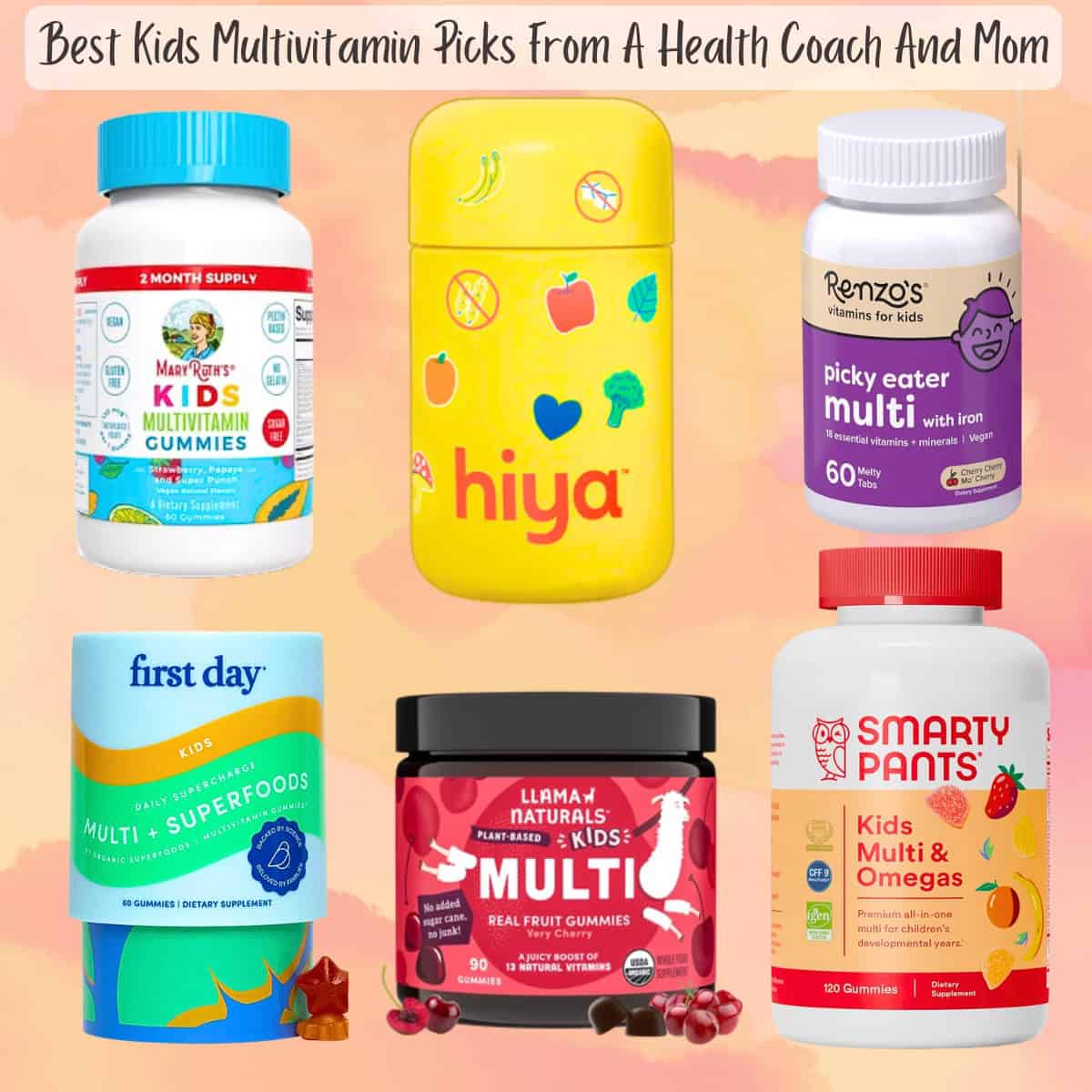
- Best Overall: Hiya Vitamins
- Best Gummy: Smarty Pants
- Best Infant: Wellements Organic Multivitamin Drops
- Best For Toddlers / Best Liquid: Mary Ruth’s Toddler Drops, Mary Ruth’s Kids Drops
- Best With Iron: Raise Them Well
- Best Without Iron: Hiya Vitamins
- Best For Picky Eaters: Renzo’s Picky Eater Multi
- Best Vegan: Llama Naturals
- Best Organic: First Day
- Best Budget Friendly: Olly (Best Mid-Range Price: Zarbee’s)
Disclaimer
As a board-certified health coach and certified nutritionist, I only recommend supplements rooted in science and evidence. The FDA doesn’t review dietary supplements before they go to market, so I prioritize products that are third-party tested by USP, NSF, or ConsumerLab.com. This post has also been medically reviewed and fact checked by Linzy Ziegelbaum, MS, RD, CDN (see my about page for more info about Linzy).
Important: Large doses of vitamins can be harmful to children. Always speak with your pediatrician before adding any supplement to your child’s diet. This information is not a substitute for professional medical advice.
Though I may receive a commission through affiliate links, I only recommend products I’ve researched thoroughly, consulted experts on, and feel comfortable giving to my kids.
Do Kids Actually Need Multivitamins?
Here’s the honest answer: probably not, but maybe yes.
The American Academy of Pediatrics states that healthy children eating a normal, well-balanced diet generally don’t need vitamin supplementation. Kids can get all necessary nutrients from whole foods.
But here’s where it gets nuanced. Your child might benefit from a multivitamin if they:
- Are extremely picky eaters who refuse entire food groups
- Follow a vegetarian or vegan diet
- Have food allergies that limit their diet
- Have been diagnosed with a medical condition affecting nutrient absorption
- Are not growing well according to growth charts
- Have been diagnosed with a vitamin deficiency by their doctor
Even if your child doesn’t fit these categories, a multivitamin can act as nutritional insurance for those days when they refuse everything except goldfish crackers and apple slices.
I give vitamins to both my kids not because they desperately need them, but because it gives me peace of mind knowing they’re covered on days when they barely eat any vegetables. My kids’ pediatrician approved this approach.
How I Tested Kids Vitamins: My Process
I tested over 50 vitamin brands with both of my kids over several months. Here’s how I evaluated each one:
Testing Protocol:
- Research phase: I reviewed ingredient lists, checked for third-party testing certifications, and compared nutritional profiles
- Taste testing: Both kids tried each vitamin and rated whether they’d actually take it daily
- Observation period: I gave each vitamin for 2 weeks and watched for any digestive issues or reactions
- Expert consultation: I discussed my findings with Linzy Ziegelbaum (MS, RD, CDN) to verify my assessments
My Non-Negotiables:
- Third-party tested (USP, NSF, ConsumerLab, or Clean Label Project)
- No artificial colors or flavors
- 4 grams of added sugar or less
- Comprehensive nutrition (at least 10+ essential vitamins and minerals)
Deal-Breakers:
- Synthetic dyes (Red #40, Yellow #6, Blue #2)
- High sugar content (5+ grams)
- No third-party testing
- Kids refused to eat it
The vitamins recommended in this guide passed all my tests and are ones I actually give to my own children or would feel comfortable recommending to friends.
Top Kids Multivitamins Compared
Here’s my ranking of how the leading brands stack up across the most important factors:
| Brand | # of Nutrients | Sugar per Serving | Form Factor | 3rd Party Tested | Organic? | Price / Serving | Age |
|---|---|---|---|---|---|---|---|
| Hiya | 15+ | 0g | Chewable tablet | ✓ (Clean Label) | ✗ Contains organic ingredients | $1.00 | 2 yrs+ |
| Smarty Pants Kids | 14 | 4g | Gummy | ✓ (Clean Label) | ✓ | $0.99 | 4 yrs+ |
| Zarbee’s | 13 | 2g | Gummy | ✗ | ✗ | $0.49 | 2 yrs+ |
| Welle-ments | 10 | 0g | Liquid | ✓ | ✓ | $0.49 | 2 months+ |
| Mary Ruth’s | 12 | 0g | Gummy or Liquid Option | ✓ (Clean Label) | ✓ | $1.00 | 1 yrs+ (different products by age) |
| Raise Them Well | 20 | 0g | Chewable tablet | ✓ | ✗ | $0.73 | 4 yrs+ |
| Renzo’s Picky Eater | 18 | 0g | Melty tab | ✗ | ✗ | $0.83 | 2 yrs+ |
| First Day | 9 | 2g | Gummy | ✓ (Clean Label) | ✓ | $1.30 | 4 yrs+ |
| Llama Naturals | 13 | 4g | Gummy | ✓ | ✓ | $0.90 | 2 yrs+ |
| Olly | 12 | 3g | Gummy | ✓ | ✗ | $0.40 | 2 yrs+ |
My Key Findings:
- Most comprehensive: Raise Them Well (20 nutrients) and Renzo’s (18 nutrients)
- Zero sugar: Hiya, Mary Ruth’s, Renzo’s
- Most affordable: L’il Critters ($0.13/serving)
- Best for young kids (2+): Hiya (chewable tablet, safe for toddlers)
- Only tablets (not gummies): Hiya, Naturelo, Renzo’s (all others are gummies)
Best Overall Multivitamins For Kids
These three brands are my top picks for most families. They balance quality, nutrition, safety, and kid approval.
Hiya Vitamins – Best Overall
My #1 pick for most kids
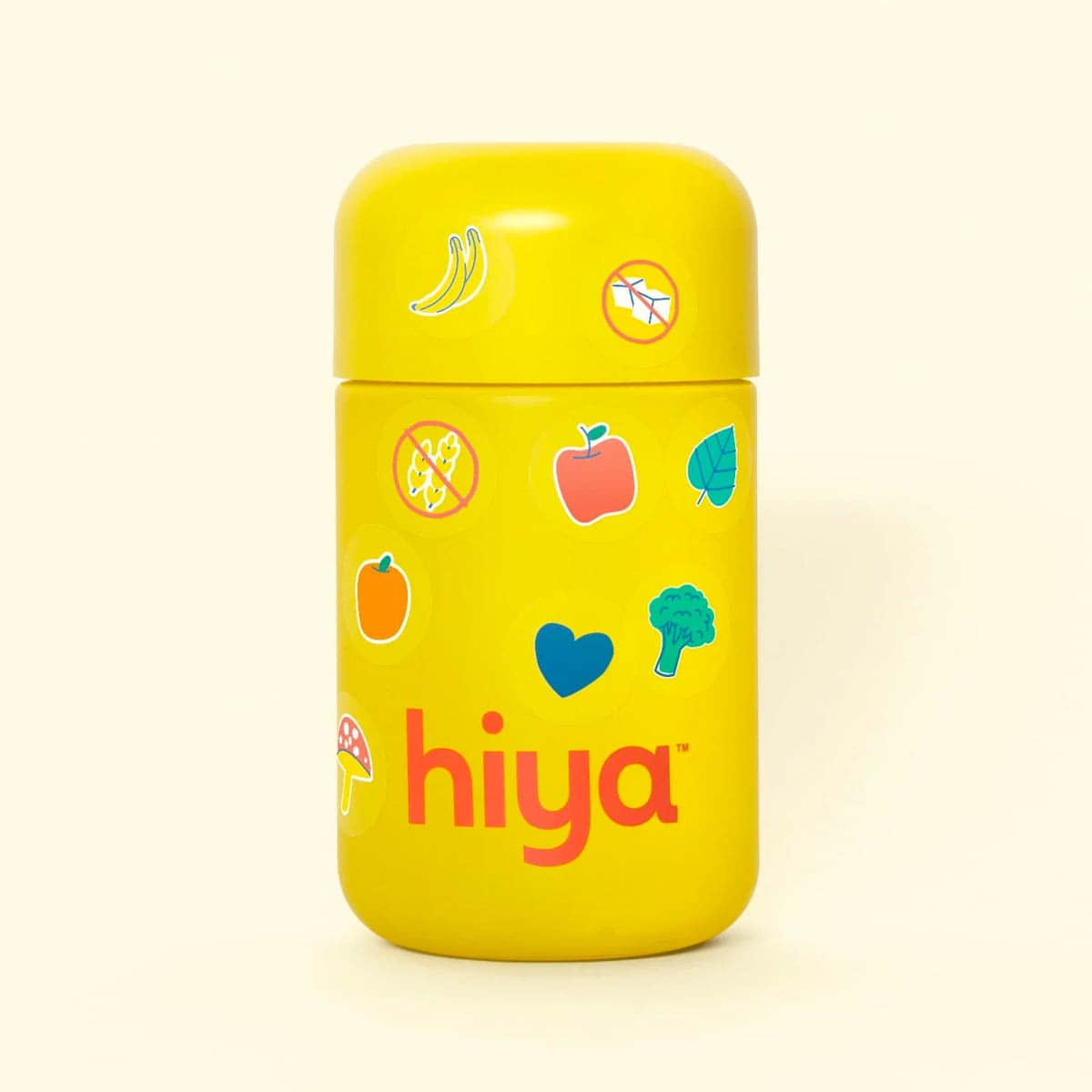
I give Hiya to both Layla and Ayan, and it’s the only vitamin they actually ask for every morning. After testing dozens of brands, Hiya won on nearly every criteria that mattered to me.
Why I love it: Hiya has 15 essential vitamins and minerals (including calcium, which most gummies can’t include), zero added sugar, no artificial anything, and is third-party tested with Clean Label Project certification. It’s one of the only chewable tablets available, which means it’s safe for kids as young as 2 and doesn’t pose the choking hazard that gummies do.
The tablets dissolve easily in the mouth, so even my picky eaters don’t complain. Hiya uses mannitol as a sweetener, which some parents avoid, but I found it acceptable since the tablets aren’t sticky like gummies and don’t contribute to cavities.
The subscription model sends a glass bottle the first month with refill pouches arriving monthly after that. This reduced packaging waste appealed to me, and the kids loved decorating their bottles with the included stickers.
What Layla and Ayan thought: Both kids said Hiya tasted “like fruity candy but not too sweet.” Layla (age 9 now) has been taking it for 4 years without complaint. For more details about Hiya, check out my Hiya vitamins review.
Cost: $30 for 30 tablets ($1/day), with discounts for multiple children
Ages: 2+
| Pros | Cons |
|---|---|
| 15 vitamins and minerals including calcium | Not organic |
| Zero added sugar | Contains mannitol |
| Third-party tested (Clean Label Project certified) | Slightly more expensive than some options |
| Chewable tablet (safe for ages 2+, not a choking hazard) | |
| Vegan and allergen-friendly | |
| Non-GMO | |
| Sustainable packaging | |
| Only 1 tablet per day |
SmartyPants Kids Multi + Probiotics – Best Gummy Option
Best if your child prefers gummies
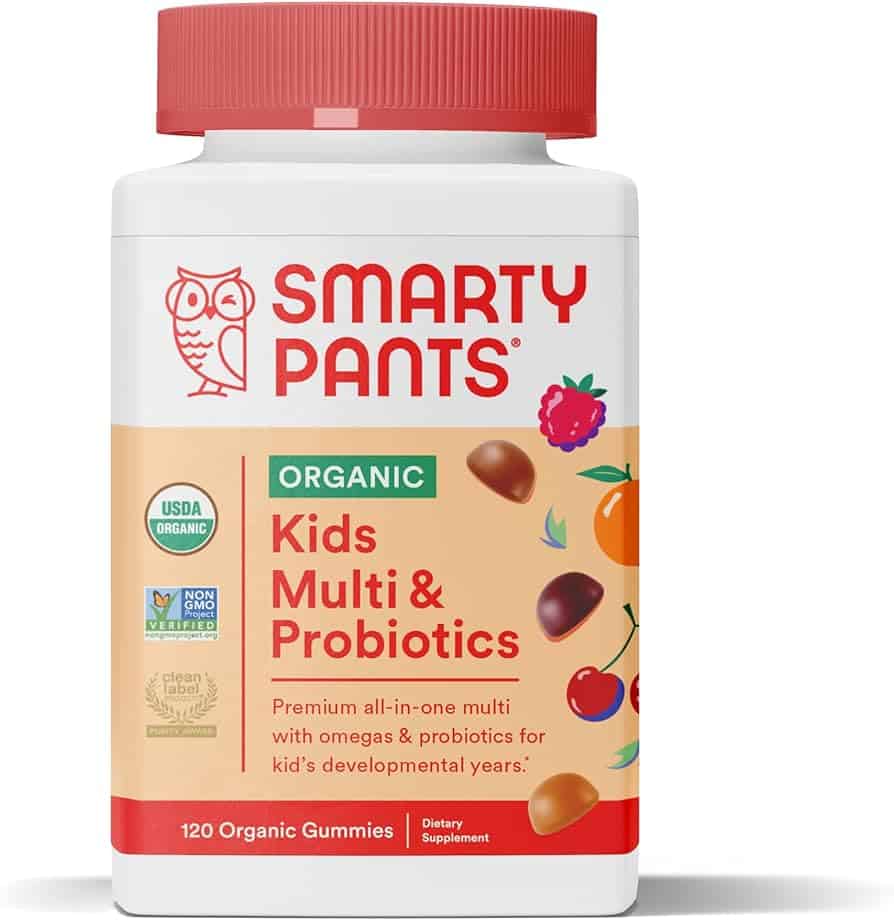
If your child is over 4 and you’re set on gummies, SmartyPants is the best option I found. It’s one of the few gummy multivitamins that’s actually organic and includes probiotics.
SmartyPants contains 14 essential nutrients plus omega-3s from flaxseed oil and 2 strains of probiotics for gut health. (Note: They also have this version made with fish oil for Omega 3s which does not include probiotics – so choose the one that fits best for your family!)
It’s USDA organic, third-party tested, and contains no artificial colors or flavors.
When I tested these with my kids years ago (before switching to Hiya), they loved the taste. The gummies have a sugary coating that kids enjoy, but that also means they contain 4 grams of added sugar per serving.
Cost: $28.45 for 120 gummies (30-day supply at 4 gummies/day = $0.95/serving)
Ages: 4+
| Pros | Cons |
|---|---|
| USDA Organic | Gummies (choking hazard for under 4, contribute to cavities) |
| Includes probiotics and omega-3s | 4g added sugar per serving |
| No gelatin (vegetarian friendly) | 4 gummies per serving |
| Third-party tested | Doesn’t include calcium or iron |
| Kid-approved taste | Slightly more expensive than some options |
| No artificial colors or flavors |
Zarbee’s Kids Complete Multivitamin + Probiotic – Best Mid-Range
Best affordable option that’s still quality
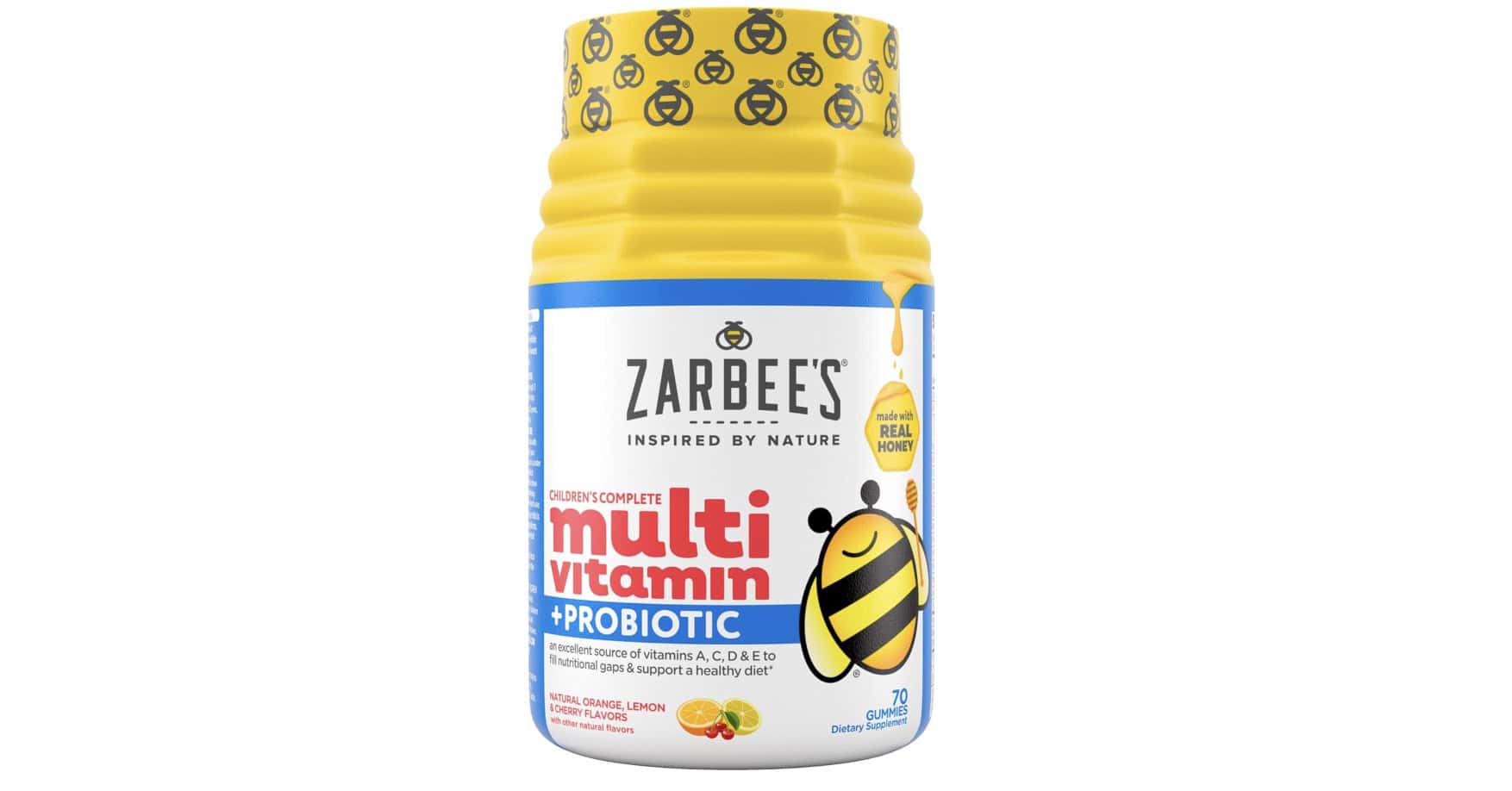
If budget is a concern, Zarbee’s offers solid nutrition at a price most families can afford, and it’s easy to find at Target, Walmart, and most drugstores.
Zarbee’s contains 13 essential vitamins plus probiotics, and is sweetened with cane sugar, honey, and fruit juice rather than artificial sweeteners. Both my kids tolerated the natural fruit flavors well when I tested them.
They’re not organic, which is why they rank below Hiya and SmartyPants on my list, but they avoid artificial dyes and flavors.
Cost: $16.99 for 70 gummies ($0.49/serving)
Ages: 2+
| Pros | Cons |
|---|---|
| Affordable & easy to find at most stores | Not organic |
| Includes probiotics | Not vegan (contains honey) |
| No artificial colors, flavors, or sweeteners | 2g sugar per serving |
Also Good: Wellvites Kids Multivitamin Gummies. Wellvites is very comparable to Zarbee’s but is slightly more expensive ($0.63/serving). It’s non-GMO, sugar-free, vegan (which Zarbee’s isn’t), gluten-free, and contains 12 essential vitamins. While it’s not organic or third-party tested, it avoids artificial sweeteners and gelatin.
Best Multivitamins By Age
Different age groups have different nutritional needs. Here are my top picks for each stage.
Wellements Baby Multivitamin Drops – Best for Infants (0-12 Months)
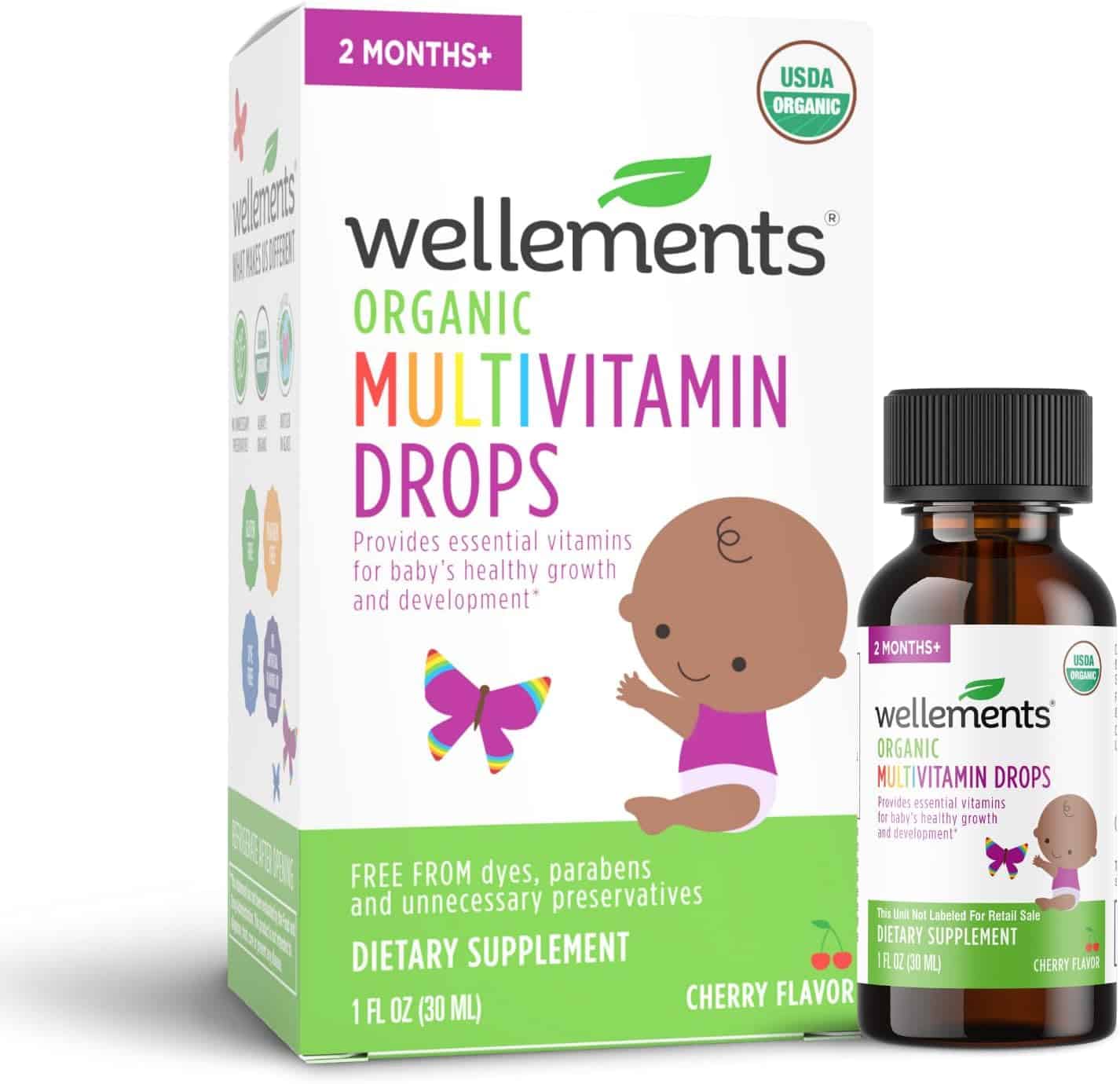
This is my top pick for an infant vitamin because it’s USDA organic, contains all essential vitamins for infants, and can be used starting at 2 months. It’s third-party tested for purity and free of the top 9 allergens.
My kids were combination fed (both formula and breastmilk) so I didn’t end up needing a vitamin for them before the age of 1. But when parents ask me for an infant vitamin recommendation, I always turn to Wellements. I also love that they’re made without artificial colors, flavors, or sweeteners, and have a mild cherry flavor that babies tolerate well.
Note: Before giving any supplement to your infant, discuss it with your pediatrician.
Cost: $14.99 for 1 oz (about 30 servings)
Ages: 2+ months
| Pros | Cons |
|---|---|
| USDA organic | Cherry flavor makes it hard to hide in food |
| Third-party tested | |
| Vegan and gluten-free | |
| No sweeteners or artificial anything | |
| Affordable |
Mary Ruth’s Toddler Multivitamin Drops – Best for Toddlers (1-3 Years)
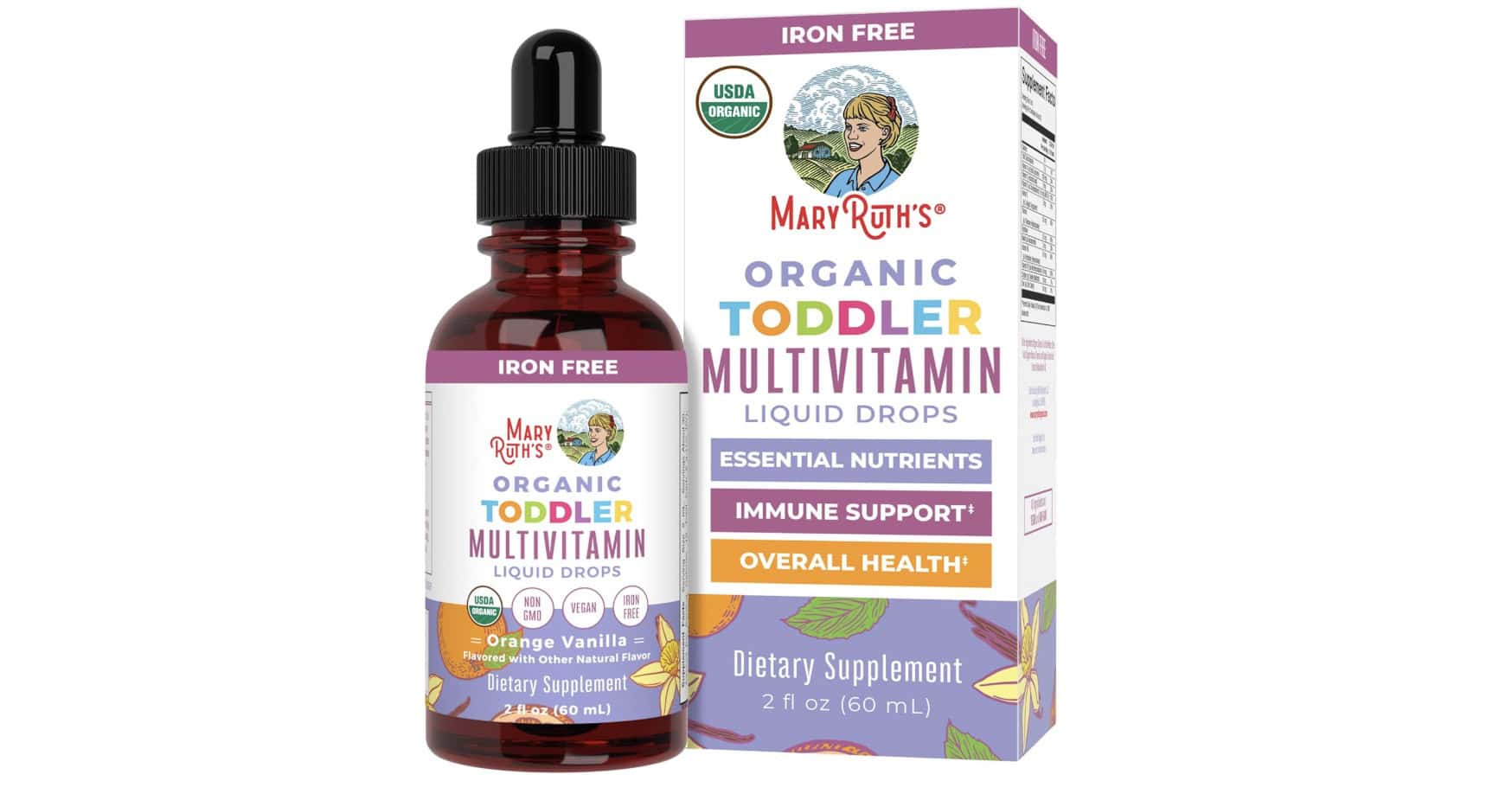
Toddlers need different nutrition than older kids, and most vitamins are formulated for ages 4+. I chose Mary Ruth’s Organic Toddler drops because they are specifically designed for ages 1-3, and have super clean ingredients.
These liquid drops are USDA organic, completely sugar-free, and packed with essential vitamins including A, C, D3, E, B-complex, zinc, and choline. The orange-vanilla flavor is mild and easy for toddlers to take.
Note: Mary Ruth’s also makes a version WITH iron if your toddler’s pediatrician recommends iron supplementation, and they make a liquid version for kids age 4+ if you want to continue with a liquid vitamin after your child turns 4.
Cost: $24.95 for 30 servings
Ages: 1-3 years
| Pros | Cons |
|---|---|
| USDA organic, non-GMO | Can only use until age 3 (need to switch vitamins after) |
| Zero added sugar | Contains stevia |
| Vegan and allergen-friendly | |
| Easy-to-administer liquid drops | |
| Orange-vanilla flavor most toddlers tolerate | |
| No artificial colors or flavors |
Alternative: SmartyPants Toddler Multi + Probiotics
If your toddler is 2-3 and prefers gummies, SmartyPants makes a toddler-specific formula with probiotics and omega-3s. It’s organic, third-party tested, and Clean Label Project certified. My kids liked it when they tried it, and I appreciate that it only has 2 grams of sugar per serving. Cost: $24.95 for 30 servings.
Best Multivitamins By Dietary Needs
Raise Them Well Children’s Chewable Multi – Best Multivitamin With Iron
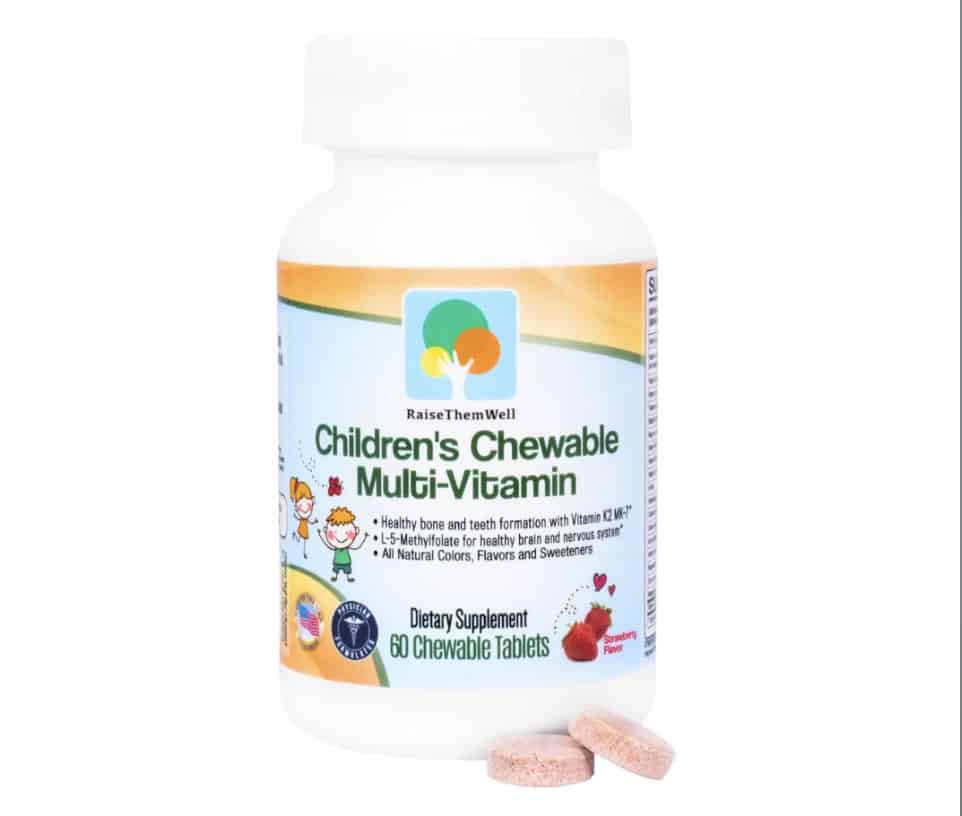
If your child needs supplemental iron (common for plant-based kids or those diagnosed with low iron), Raise Them Well is my top pick.
This chewable tablet contains methylated B vitamins (more bioavailable than standard B vitamins), is vegetarian-friendly, gluten-free, non-GMO, and third-party tested. It uses a gentle form of iron that’s easier on little stomachs and doesn’t cause constipation, my kids had no digestive issues when trying this vitamin!
Cost: $21.99 ($20.89 with subscription) for 30 servings
Ages: 4+
| Pros | Cons |
|---|---|
| Contains iron | Not organic |
| Methylated B vitamins (better absorption) | |
| Third-party tested | |
| Vegan and allergen-friendly | |
| Chewable tablet (not gummy) |
Note: If your child doesn’t need iron supplementation, Hiya (my #1 overall pick) is an excellent iron-free option with 15 vitamins and minerals, zero added sugar, and third-party testing
Renzo’s Picky Eater Multivitamin – Best For Picky Eaters
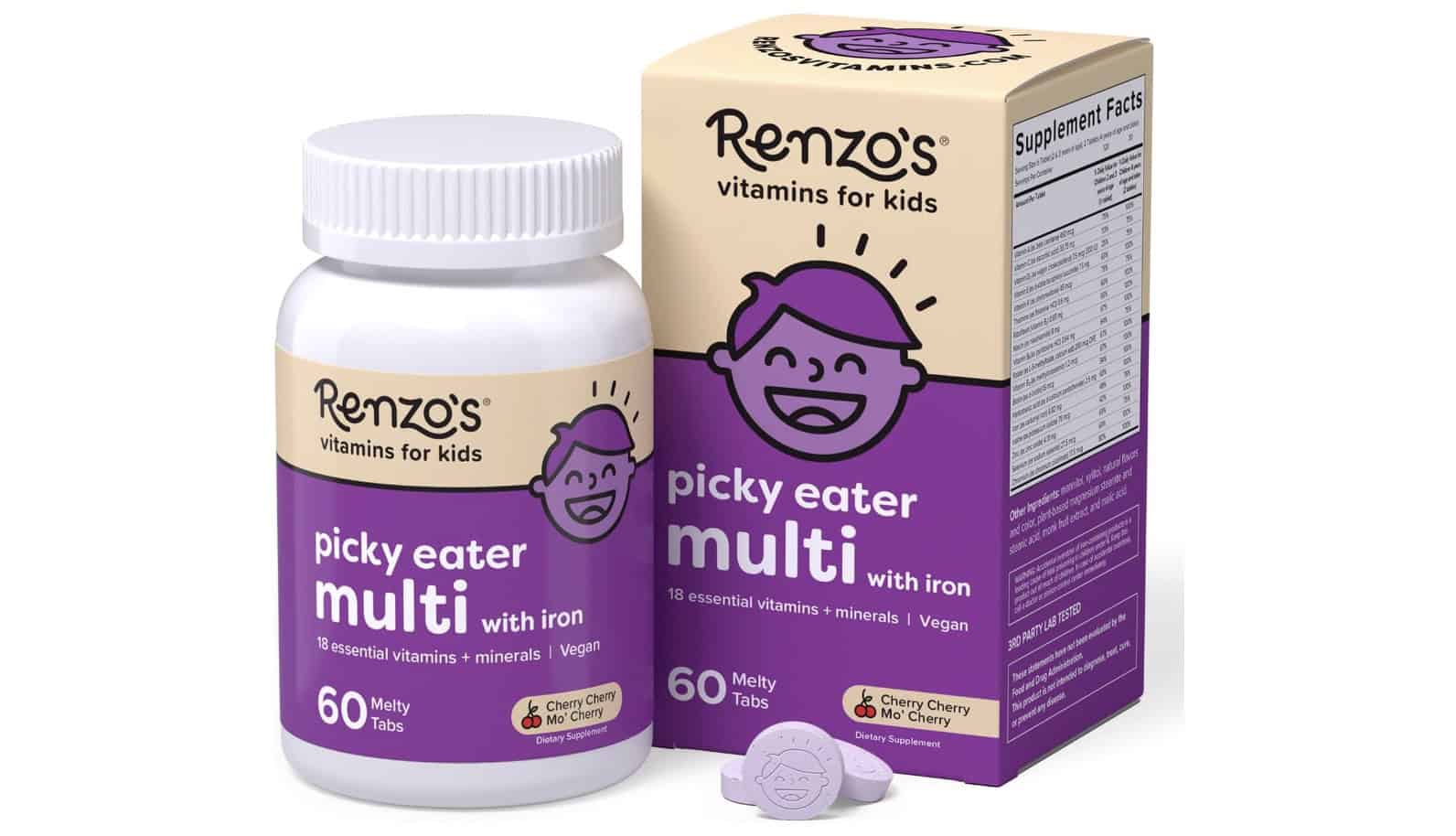
Renzo’s was specifically created by a doctor for his picky-eating son before surgery. The melty tabs dissolve on the tongue with minimal effort, which makes them perfect for kids who resist taking vitamins.
My kids liked the melty tab format, because it just sort of dissolved on their tongue and required minimal effort to “eat.”
This multivitamin contains 18 essential vitamins including iron, has zero added sugar, and is vegan.
Cost: $24.99 for 30 servings
Ages: 2+
| Pros | Cons |
|---|---|
| 18 essential vitamins (comprehensive) | Contains mannitol and xylitol (sugar alcohols) |
| Zero added sugar | Not organic |
| Melty tabs (dissolve easily, great for picky eaters) | |
| Vegan and allergen-friendly | |
| Non-GMO | |
| Includes iron |
Llama Naturals Plant-Based Multivitamin – Best Vegan Gummy
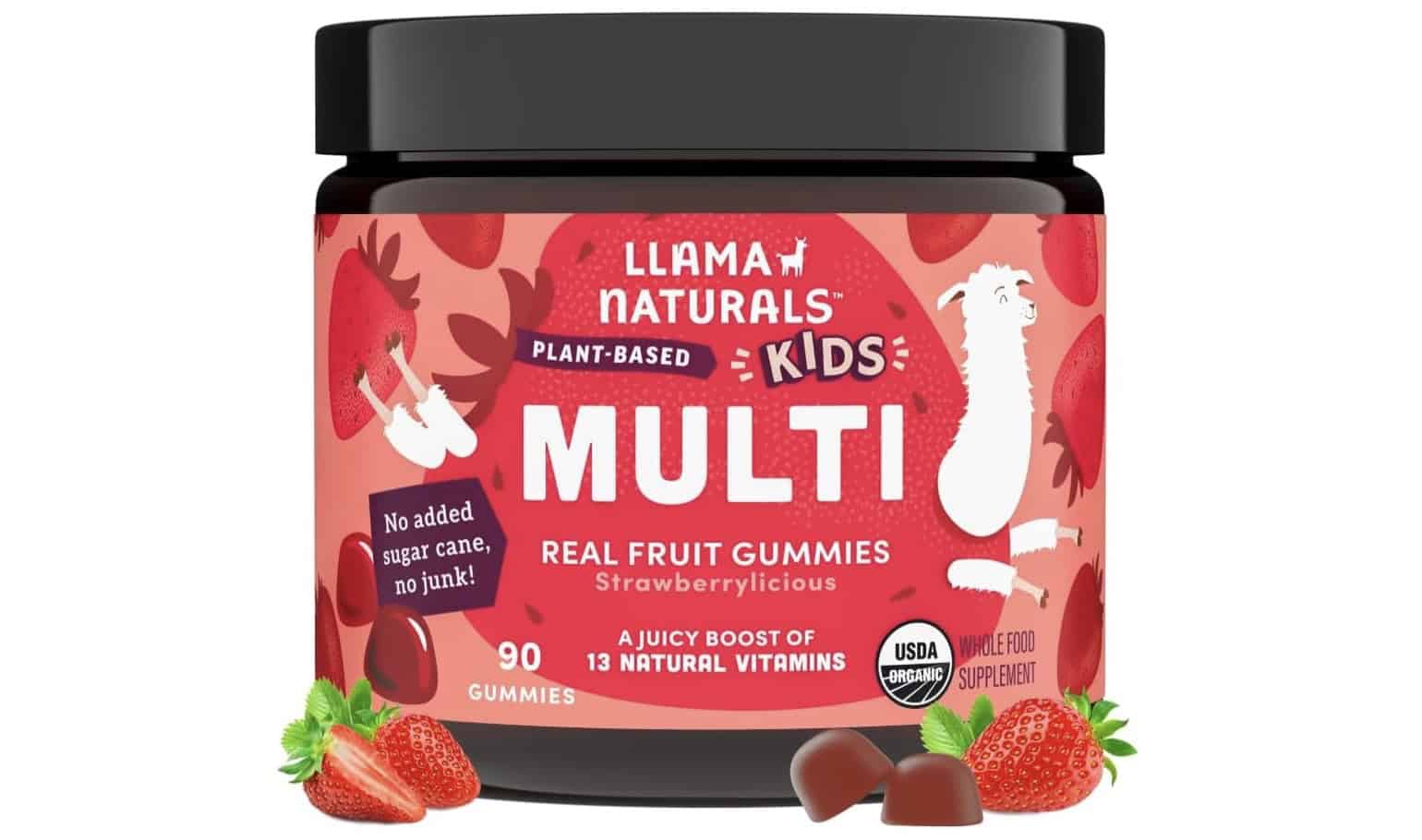
For plant-based families who are looking for a gummy, Llama Naturals is my top recommendation.
These organic gummies are made with real fruit and vegetables, contain no gelatin, and include plant-based vitamin D3 (which is hard to find).
My kids thought they tasted good – they were a little on the chewy side but both kids still liked them. The gummies contain 13 essential vitamins including vegan B12, which is critical for kids on plant-based diets.
Note: If your child doesn’t need a gummy, Hiya (my #1 overall pick) is also a great vegan option.
Cost: $26.95 for 30 servings
Ages: 2+
| Pros | Cons |
|---|---|
| Organic and plant-based | Must eat 3 gummies per serving |
| Made from whole food fruit and vegetables | 4 grams sugar (from fruit) |
| Third-party tested | |
| Allergen-friendly |
Also Good: Mary Ruth’s Organics Kids Multivitamin Gummies
For a zero-sugar vegan option, Mary Ruth’s gummies contain 12 essential nutrients, are USDA organic, vegan, gluten-free, and allergen-friendly. However, they use erythritol as a sweetener, which some research suggests may increase certain health risks.
Cost: $23.95 for 60 gummies
First Day Kids Vitamins – Best Organic Multivitamin
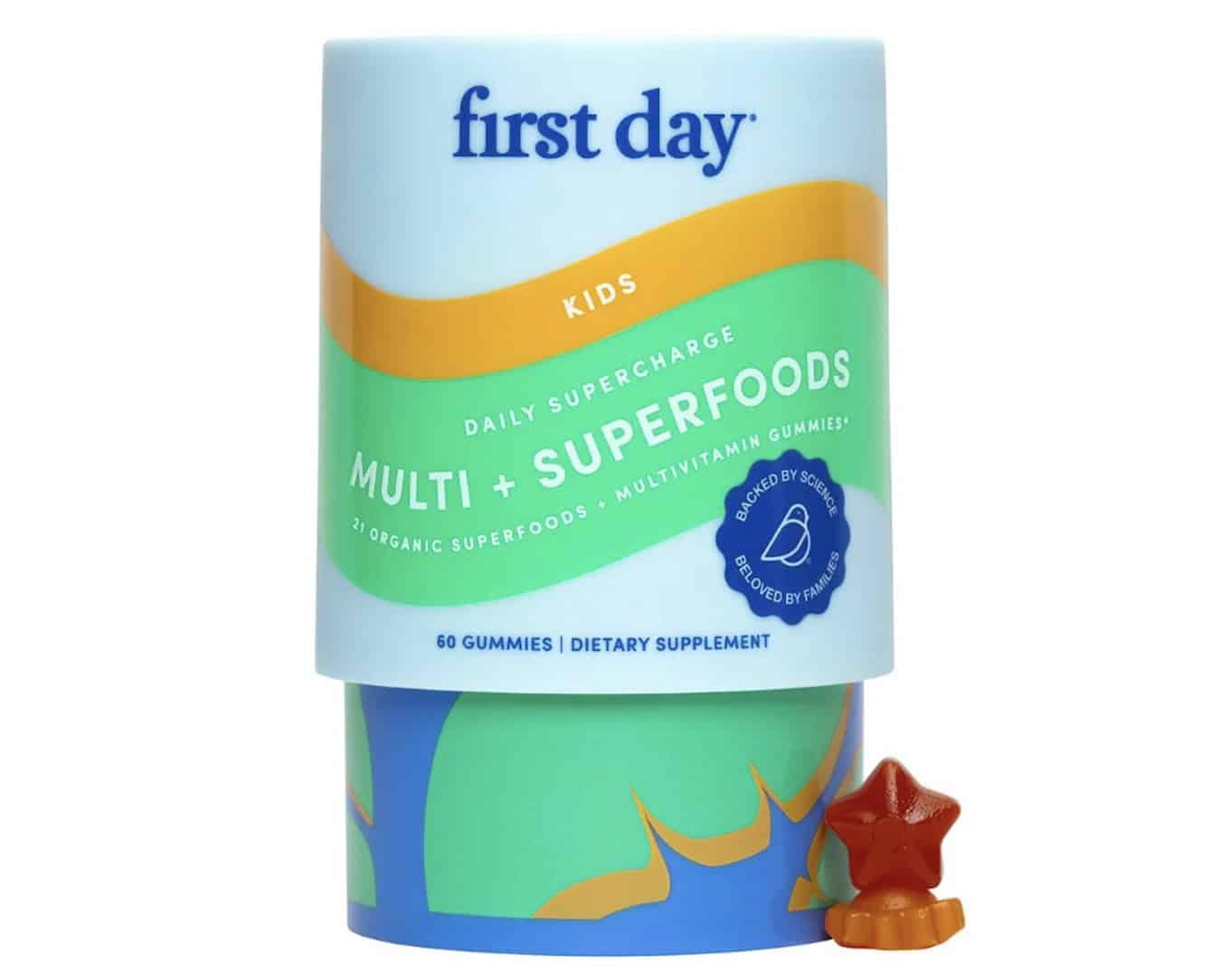
First Day is made with real organic fruits and vegetables and contains 9 key micronutrients. I typically recommend First Day to families with kids who eat reasonably well and just need a vitamin to “bridge the gap.” For extremely picky eaters, First Day may not be comprehensive enough.
My kids liked the taste of First Day when we tested it out, they said it was a little waxy but overall had no complaints! Read my complete review of First Day vitamins for more details!
Cost: $39/bottle ($30.60 with subscription, 15% off)
Ages: 4+
| Pros | Cons |
|---|---|
| USDA organic and non-GMO | Expensive |
| Made with real fruits and vegetables | 2 grams sugar per serving |
| Nothing artificial | Only 9 nutrients (less comprehensive) |
| Vegan, gluten-free | |
| Clean label project certified |
Olly Kids Multivitamin + Probiotic – Best Budget Multivitamin
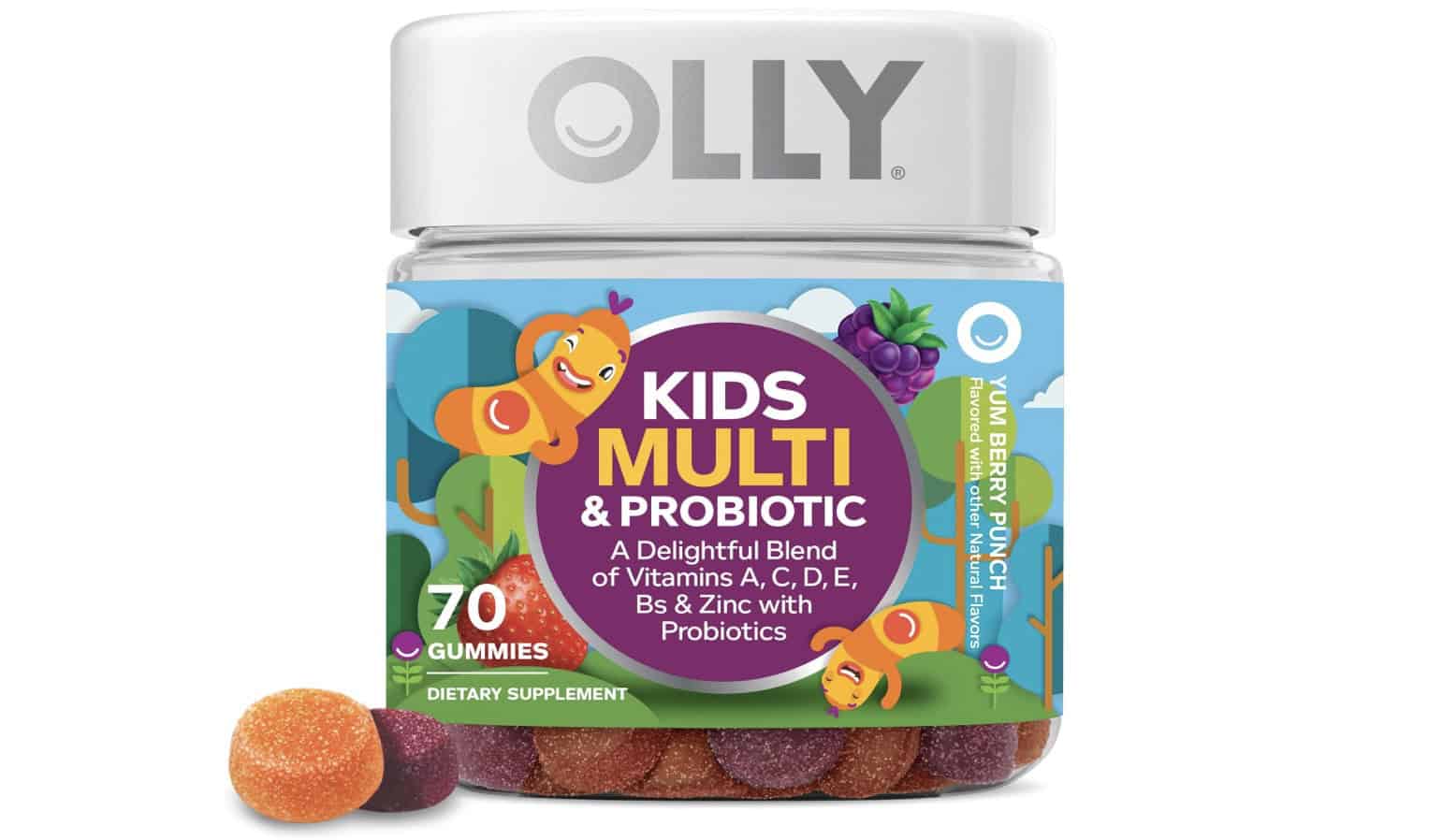
If you’re shopping at Target or Walmart and need an affordable option, Olly Kids Multi is widely available and reasonably priced. These gummies contain 12 essential vitamins plus a probiotic.
They contain 1g of added sugar, no artificial ingredients, and are third party tested. However they aren’t completely allergen-free as they are processed in a facility with allergens. They also don’t contain methylated B vitamins so they aren’t as absorbable.
Cost: $13.99 for 35 servings
| Pros | Cons |
|---|---|
| Very affordable | Not organic or Non-GMO |
| Easy to find at most stores | Not vegetarian (contains gelatin) |
| Includes probiotic | Processed in a facility with allergens |
| 3rd party tested |
Also Good: Lil’ Critters Gummy Vites. Lil’ Critters is very comparable to Olly in terms of ingredients and nutrients except that it doesn’t contain probiotics, and is not 3rd party tested which is why I ranked Olly higher. But at only $0.13 per serving, it’s the cheapest vitamin for kids that I’ve found!
What To Look For In Kids Multivitamins
When choosing a vitamin for your child, I recommend prioritizing these factors:
1. Clean Ingredients: Look for vitamins with no artificial colors, no artificial flavors, and less than 4 grams of sugar per serving. I avoid Red #40, Yellow #6, Blue #2, and other synthetic dyes
2. Third-Party Testing: Choose brands tested by USP, NSF, ConsumerLab.com, or Clean Label Project. These prove the vitamin has been independently tested for purity and safety. If you don’t see a seal, check the brand’s website to see if they mention third-party testing.
3. Sugar Content: I look for 3-4 grams of sugar or less per serving. Many kids vitamins have 5+ grams of sugar, which is as much as a small cookie.
4. Comprehensive Nutrition: Does it contain the essential vitamins and minerals kids actually need? I looked for vitamins A, C, D, E, K, B-complex, folate, calcium, iron (or iron-free options), and zinc at minimum.
5. Appropriate Nutrient Levels: While comprehensive nutrition is important, vitamins should contain no more than 100% of the daily value for each nutrient. More isn’t better and can be harmful. Your child gets nutrients from food too, so vitamins should supplement, not replace food.
6. Bioavailable Forms: I prioritized brands that use forms of vitamins that kids can actually absorb. For example, methylated B12 is more bioavailable than cyanocobalamin.
7. Age-Appropriate Format
- Infants (0-12 months): Liquid drops only
- Toddlers (1-3 years): Liquid or easy-to-eat chewable tablets
- Kids 4+: Chewable tablets or gummies (tablets are safer)
- Avoid gummies for kids under 4 – choking hazard
8. Organic/Non-GMO: While not essential, organic certification and non-GMO verification are bonuses that indicate higher quality standards.
9. Form Factor: Chewable tablets or liquid vitamins are safer than gummies for young kids (gummies are a choking hazard for children under 4). Gummies also can’t include calcium or iron due to manufacturing limitations, they’re sticky, often have added sugar, and contribute to cavities.
10. Price: Don’t be fooled by bottle price. Divide the total price by number of servings to compare. Some vitamins require 2-4 gummies per serving, making them more expensive than they appear.
11. Taste: Will your kids actually take it? I had both of my kids taste-test every vitamin. If they refused to eat it, it didn’t matter how nutritious it was.
What To Avoid In Kids Vitamins?
Here are some things to watch out for when considering other children’s vitamins brands:
- Artificial Colors and Dyes: Red #40, Yellow #6, Blue #2, and other synthetic dyes have been linked to hyperactivity and health problems in children (source). I always avoid these.
- Artificial Flavors and Sweeteners: I avoid aspartame, sucralose, and saccharin. These synthetic sweeteners are highly processed.
- Excessive Sugar: I’ve mentioned this already, but zero added sugar is ideal, less than 4 grams is acceptable.
- Sugar Alcohols (Use Caution) Sorbitol, mannitol, xylitol, and erythritol can cause digestive issues in some kids. Mannitol is generally the best tolerated.
- Carrageenan: This thickener has been linked to inflammation and digestive issues(source). Avoid it when possible.
- Maltodextrin While not unsafe, maltodextrin is highly processed and often indicates a low-quality vitamin.
- A note on gelatin: Personally, I avoid this because my family is plant-based. While this isn’t a harmful ingredient, it is derived from cow or pig bones, tendons, and ligaments, making it not suitable for anyone following a plant-based, vegan, or vegetarian diet.
- Note: I would also be wary for brands that have no third-party testing mentioned anywhere, which means that you have no way of knowing if their vitamins are contaminated with heavy metals.
Single Supplements for Kids (Brief Guide)
Sometimes your child needs a specific nutrient rather than a multivitamin. Here are my top picks for single supplements:
Iron Supplements
- Best: Hiya Iron+ for Kids – Carbonyl iron (gentle on stomachs), includes vitamin C for absorption, sugar-free, ages 2+
- Also Good: Mary Ruth’s Liquid Iron for Toddlers or Older Kids – Organic, clean ingredients, ages 1+
Vitamin D Supplements
- Best: Bobbie Vitamin D Drops – Organic, vegan, Clean Label certified, no artificial ingredients, allergen-friendly, 400 IU for infants, ages 0-12 months (and safe for older kids too).
- Also Good: Raise Them Well Vitamin D Drops (ages 0 months+), Baby D Drops (ages 0 months+) Llama Naturals Vitamin D Gummies – Plant-based D3 from lichen, vegan, ages 4+
Vitamin B12 Supplements
- Best for Vegan Kids: Live Wise Naturals B12 Drops – Methylated B12, clean ingredients, non-GMO, ages 1+
Vitamin C + Immune Support
- Best: Hiya Kids Immune Support
- Also Good: Raise Them Well Children’s Immunity (Contains With vitamin C, vitamin D, vitamin K, and zinc); Llama Naturals Vitamin C with Elderberry (Organic, includes zinc, naturally sweetened, ages 2+)
Omega-3 Supplements
- Best: Nordic Naturals Children’s DHA – High-quality fish oil, strawberry flavor, third-party tested, ages 1+
Probiotic Supplements
- Best: Hiya Probiotics – 10 billion live cultures, chewable, third-party tested, ages 2+
- For Infants: Bobbie Probiotic Drops – Organic, Clean Label certified, 1 billion live cultures, ages 0-12 months (or if you need a powdered version, I like this one from Garden of Life).
Prebiotic Supplements
- Best: BeginHealth. It contains only three ingredients: Human Milk Oligosaccharide (with a Molecular structure identical to the one found in breast milk); and Oligofructose (Chicory root fiber).
For more details on single supplements, see my complete guides to kids iron Supplements, kids probiotics, and kids immunity vitamins.
FAQs
Does my child need a multivitamin?
Most healthy kids eating a reasonably balanced diet don’t need a multivitamin. However, a multivitamin can help if your child is an extremely picky eater, follows a restrictive diet, has been diagnosed with a nutrient deficiency, or has a medical condition affecting absorption.
When should kids start taking a multivitamin?
Start a multivitamin when your pediatrician recommends it based on your child’s diet and health needs. I started giving vitamins to my kids regularly at age 5 (on and off before then) during particularly picky eating phases.
What vitamins do infants need?
Infants drinking breast milk only (or less than 32 ounces of formula per day) need vitamin D supplementation (400 IU daily). Infants drinking 32+ ounces of formula daily get adequate vitamins from formula alone.
Are vitamins FDA approved?
No, the FDA doesn’t approve dietary supplements. This is why third-party testing by USP, NSF, ConsumerLab.com, or Clean Label Project is critical to verify purity and safety.
Can kids vitamins cause constipation?
Yes, iron is a common constipation-causing ingredient. If your child experiences constipation, talk to your doctor about switching to an iron-free formula or adding a probiotic.
Why don’t most kids vitamins include calcium?
Calcium is bulky and difficult to include in kid-sized tablets or gummies. Most children get adequate calcium from dairy products, fortified plant milks, leafy greens, and other foods.
Can adults take kids vitamins?
Yes, but the nutrient levels are lower than adults need, so I would use it more as a nutrient gap supplement vs. a full / comprehensive multivitamin. Full disclosure: I take Hiya vitamins for myself because I’m only looking for a food-gap vitamin option and I love the taste!
Are gummy vitamins as effective as tablets?
Gummies can be effective but can’t include calcium or iron, may have inconsistent nutrient levels, stick to teeth causing cavities, and are choking hazards for kids under 4. Chewable tablets are safer and more comprehensive.
What’s the best multivitamin for picky eaters?
Renzo’s Picky Eater Multi has melty tabs that dissolve easily, making it ideal for resistant kids. Hiya is also excellent with chewable tablets that taste good and dissolve quickly.
Final Thoughts
I hope this helps you in navigating the world of kids’ vitamins! As you can see, there are many quality vitamin brands on the market today, with a quality option for every child’s needs.
Remember to always talk to your pediatrician before starting any supplement, and choose brands that are third-party tested to ensure safety and quality.
After testing over 50 kids multivitamins, my top recommendation is Hiya for most families. It has comprehensive nutrition (15 vitamins and minerals including calcium), zero added sugar, third-party testing, a safe chewable tablet format for kids as young as 2, and my kids actually like taking it.
For more guides, recipes, tips, and tricks, check out the Best For Kids section of my blog. And if you have questions about kids vitamins or found a great brand I missed, leave a comment below or send me a message. I respond to every question I get!

























Sorry,
I’ve found one more supplement
https://www.metabolicmaintenance.com/Vitamins-Minerals/Pediatric-Custom-VitaminMineral-Base-Powder/
I would appreciate if you take a look at these as well. I saw glycine in other ingredients. Not sure what it is,
This looks even better than the first one you sent! Glycine is just an amino acid, no issues there.
Hi! I was wondering what your thoughts are on Young Living’s MightyVites Vitamins. https://www.youngliving.com/en_US/products/kidscents-mightyvites-chewable-tablets
Thanks.
Hi Jenna! Great question! From an ingredients standpoint, the only thing I don’t love is that they use sugar alcohols to sweeten it (Erythritol). Otherwise the rest of the ingredients look good and I like that they derive the vitamins from whole foods! The only reason I wouldn’t include them on this list is that you can’t buy them online (since Young Living is an MLM, you have to go through a consultant to get it). Hope that helps, let me know if you have any other questions!
Hello Anjali! Thank you for the information, very helpful.
Could you please evaluate these
https://www.amazon.com/gp/product/B008RGIYTS/ref=ox_sc_act_title_1?smid=A370K4TA6VNKWW&psc=1
They seem very good, but I’m not sure about magnesium stearate. Thank you so much)))
Hi Srodri! These look great! I have added them to my list. I don’t have a problem with magnesium stearate – it’s in almost every single supplement I’ve seen – even the cleanest ones use it. Magnesium stearate is a magnesium salt of stearic acid. Stearic acid is a saturated fatty acid found in many foods, including animal and vegetable fats and oils. Cocoa and flaxseeds are examples of foods that contain substantial amounts of stearic acid. After magnesium stearate is broken back down into its component parts in the body, its fat is essentially the same as that of stearic acid. Some sources even claim that the magnesium part of it can be used to supply the body with this essential mineral. Magnesium stearate is the most common ingredient used in forming tablets because it’s a fabulous lubricant. It makes pills easier to swallow and move through your digestive tract. And while there are some claims that it’s a chemical and/or affects nutrient absorption – I believe those claims are unfounded because there is no actual research to back it up. Additionally, the quantity of magnesium stearate used in supplements is so minuscule that it poses little-to-no threat to people who consume them as a part of their natural health supplement regimens. You should always check with your pediatrician before starting your child on a supplement, but this is my perspective! I would give a supplement with magnesium stearate in it to my child. Hope that helps, let me know if you have any other questions!
Thanks!!!!!!!!!!!!
Anytime! 🙂
Hi! I love love love this!!! Thank you so much for taking the time to do the research and break down the different ingredients that aren’t good for our kiddos! I’ve shared this post on Facebook, a couple moms didnt know about the flintstone vitamins! My son was taking NATURELO Whole Food Vitamin Gummies for Kids – Best Chewable Gummy Multivitamin for Children – Organic Great Tasting Berry Flavor – Non-GMO – All Natural Vitamins & Minerals – 90 Gummies which seemed to be good but aren’t sold on Amazon anymore and I’m not sure where else to find them. However, I decided to go off your list, at least I think it is 🤣 I looked at so many vitamins! And got Natures Plus Animal Parade Sugar-Free Childrens Multivitamin!
Hi Brittney!! Your comment made my day!! I’m so so happy this post was helpful for you and thank you for helping to spread the word too!! I hope your son likes the Natures Plus vitamin – you’ll have to keep me posted on how he does on it! 🙂 Thanks again!
Hello Anjali! I love the wealth of info. I have 3 kids (2 girls, 9 & 12; 5’3″, 82 lb. 12 yr. old has sensory issues & ADHD and will not take adult “swallow whole” vitamins or gummies. She is also mid-puberty/no menstruation yet, and has hair shedding issues, so I think iron/biotin are important per her pediatrician. 9 year old girl @ avg. height, 52 lbs. eats no cheese/yogurt and zero signs of puberty but has anxiety. My son is 6, a picky eater, and a bit small height and weight @ 36 lbs. Slight focus issues and very high energy. Had bad tooth enamel as a baby so calcium important. We avoid all gummies for that reason and also because daughters are headed for braces in a few months.)
I have been using the following after switching from our old standby of Flintstones, and have tried many others to no avail due to their collective pickiness:
Multivitamin w/ Iron:
https://www.amazon.com/Solaray-Childrens-Chewable-Vitamins-Minerals/dp/B00020I11S/ref=sr_1_3_a_it?ie=UTF8&qid=1539447916&sr=8-3&keywords=solaray+children
Omega 3:
https://www.amazon.com/Nordic-Naturals-Omega-3-Supports-Function/dp/B0093ABMOQ/ref=sr_1_2_a_it?ie=UTF8&qid=1539448193&sr=8-2&keywords=nordic+fishies
Calcium:
https://www.amazon.com/Bluebonnet-Rainforest-Animalz-Magnesium-Frosting/dp/B004WP2EQW/ref=sr_1_2_a_it?ie=UTF8&qid=1539448335&sr=8-2&keywords=animalz+calcium
I like the Childlife calcium liquid you recommended but have yet to order it. Not sure how they will like it but I will try! Do you have any recommendations or suggestions? Thanks so very much! LOVE this blog!
Hi Jennifer! Thank you so much for sharing your experience and I’m so glad my post was helpful to you! Question for you – the three vitamins you listed and tried – have your kids been able to take them, or do they not like them? If they don’t like the ones you listed, then I’d recommend either the Premium Children’s liquid vitamin, or the MegaFoods powdered vitamin because you can mix into their food or drink and they won’t notice it at all! If you need an additional iron supplement you can use this one, which is also very easy to mix into food or drinks 🙂 And the Nordic Naturals children’s supplement is also liquid so can also be mixed into anything. I hope that helps, let me know if you have any other questions!
Thank you Anjali! I am happily almost through the 2nd bottle of Childlife Calcium Magnesium with the 2 younger kids who did not like the calcium chewables older daughter takes religiously. Thanks for the great suggestion (one takes it straight/one in his juice). To answer your questions about my picky eaters, yes, they do actually all tolerate the Solaray Children’s Chewables (black cherry flavor). https://www.vitacost.com/solaray-childrens-chewable-vitamins-minerals
***I do have a question: I saw this alternative Solaray called Spectro Kid: https://www.vitacost.com/solaray-spectro-kid-multi-vita-min
I compared it to the regular Solaray Chewables they like, and it offers a bit of a different combination of vitamins and minerals. It appears to be sugar free with higher Biotin and more Zinc, slightly lower Iron. Higher calcium and a tiny bit of Lutein as well. Vitamin A is half. What are your thoughts between pros and cons between the two Solaray formulations?
Also, Vitamin K seems to come up in my reading, and I don’t see it in either of these (it used to be in their Flintstones.)Should that be a concern?
Thank you again so much.
No problem at all!! I’m so glad it’s working out for you – that’s great! 🙂 Regarding the two Solaray Chewables — it’s really a toss up. I think I might be slightly leaning towards the Spectro Kid one vs. the regular Chewable for these reasons:
1) Spectro Kid has closer to the 100% daily value for each of the vitamins – the regular Chewable goes way beyond 100% for many of the water soluble vitamins, and while that’s technically ok, I don’t think it’s necessary for kids.
2) Spectro Kid is sugar free (which is a plus) but it’s sweetened with sugar alcohols (a minus) – so I’d say it’s only better on that front if the sugar alcohols don’t bother your kid’s tummy!
3) Spectro Kid has a number of other herbs and minerals that are beneficial e.g. Selenium and more Bioflavonoids – which I like
4) Spectro Kid has a prebiotic added (FOS) which helps with healthy gut bacteria
Regarding Vitamin K – it is important but it’s a fat soluble vitamin (so you definitely don’t want to take too much of it). We get it from food, and we produce it ourselves like Vitamin D – Vitamin K is made from certain bacteria in your gut. Vitamin K deficiency is extremely rare in the general healthy population; those who are deficient tend to have problems with gastrointestinal function or have taken medications known to interfere with its metabolism. That’s probably why it’s not included in the supplement – most kids don’t need Vitamin K supplementation.
Hope that helps! Let me know if you have any other questions!
Hi there! I recently purchased the Zarbee’s gummies with probiotics but realized that the folate contains folic acid and that the Vitamin B12 is from cyanocobalamin. Does this concern you at all? I was looking at the GOL gummies as an alternative since it seems to have better ingredients. However those have 5g of sugar per serving whereas Zarbee’s only has 3g and you had said you don’t like to see more than 4g per serving. Would you say GOL would be a better choice or is the sugar too high? I know both are on your list as good choices but which would you say is better? Thank you!
Hi Christine! As a general rule, I do like methylated forms of vitamins better. But if your child doesn’t have an MTHFR mutation then the non methylated forms of folate & B12 should be ok. If your child does have a MTHFR mutation then you should definitely use the GOL gummies. I don’t love the 5g sugar (I would stick to under 4g if possible) – but it also depends on how much sugar your child eats on a daily basis. If your child eats no added sugar daily, then I’d go with the GOL gummies regardless. So I guess I’d choose the Zarbee’s ones only if your child doesn’t have an MTHFR mutation and does eat added sugar on a daily basis! Hope that helps, let me know if you have any other questions!
I was giving my children a multivitamin from trace minerals and BOTH my children had an allergic reaction and now I’m worried to use any vitamins. Pediatrician doesn’t want to do allergy testing at this time. Any recommendations?
Hi Dawn! Unfortunately without more information about your children’s medical history, current food intake, and any other allergic reactions – it’ll be hard for me to make a recommendation for them. I would take some of the vitamins on this list to your pediatrician and see which ones they’d be the most comfortable with you using given your children’s previous allergic reaction. Also, is there a reason why your peds doesn’t want to do allergy testing? That seems very unusual given what happened. If it were my child I’d probably push to have them allergy tested (and if my peds absolutely refused, I’d go to another pediatrician).
Hi, I had heard about usana usanimals vitamins for kids. They claim to be great for kids, they also had a creamy Omega 3 product for kids name omega jr. What is your opinion about them? thanks.
Hi Sergio! I’m not a fan of Usana Usanimals for Kids. They have too many processed added ingredients including: fructose/cane syrup, xylitol, dextrin, stevia (not organic stevia leaf extract) and hydrolyzed rice protein. They have a similar issue with their Omega 3 product. I would choose one of the vitamins on my list instead!
Do you have any recommendations for toddlers that are only 18 months. A lot of these are for kids 4+. We tried the Bio Naturals Children’s Advanced and Miss Picky won’t drink it, even mixed with juice (that she never gets otherwise). I was able to get the 4 year old to drink it mixed…but not the little.
Hi Robin! Children’s Best can be used for ages 1+, so can Nature’s Plus, Rainbow Light, Honest Company, and Zarbee’s Liquid!
Hi Anjali,
Thank you for all the great info. Do you recommend any good multivitamins without Vitamin C for my 4 year old daughter. We are looking one with good amount of Copper and Vitamin B12.
Hi Naren! I’m so sorry but I haven’t come across a multivitamin that doesn’t contain Vitamin C. Is there a reason why you’re trying to avoid Vitamin C for your daughter? Did your doctor recommend avoiding it? Vitamin C is water-soluble so in general it’s very hard to take too much of it! Let me know why you’re trying to avoid it and then I might be able to guide you better 🙂 Thanks!
How do you feel about garden of life vitamins now that they have been bought out by nestle?
Hi Deirdre! Honestly I don’t love that all of the smaller organic companies are being bought out by all of the big manufacturers – but this is just the nature of the market now I guess. There are very few organic companies left that are still independent! It’s unfortunate, but just is what it is. That said, with Garden of Life – the ingredients in their vitamins actually haven’t changed. And I believe their values haven’t changed as well. Until I notice a difference in the ingredients and/or quality of their vitamins I will continue to feel ok about their brand and vitamins! Personally, I still take them and give them to my children as well.
Is there a good vitamin that doesn’t have iron or folate/folic acid in it? My son takes a separate prescription folic acid vitamin so he doesn’t need a multivitamin with that in there. Thanks!
Hi Leshay! I’m so sorry but I actually haven’t come across a kids multivitamin that doesn’t have folic acid or folate in it. There are plenty without iron on this list, but all of them have either folic acid or folate included. It might be worth asking your doctor if it’s ok for your son to have a multivitamin with a small amount of folate included (less than the % daily value for folate) – because then many of the vitamins on this list that don’t contain iron would be a good fit. Since folate is water-soluble, it might be ok to take a multivitamin with folate even with a prescription folic acid supplement – as long as your pediatrician signs off on that!
The pediatric GI dr wants my 4 year old on a multi-vitamin with calcium and vitamin D. He will take some gummies but I haven’t found any that have calcium. I am fine with a liquid supplement. If there is anything you can suggest?
Hi Melinda! This one from Children’s Best has calcium and vitamin D, as does this one from Nature’s Plus, this one from Rainbow Light, and this one from Thorne Research! All would be good options for your son!
Thank you so much.
No problem!
Hello! How about this brand of multivitamins?
https://sambucol.co.uk/sambucol-kids
I’m thinking of supplementing my 14months old and 33months old toddlers as they are frequently falling sick.
Hi Lynn! I wouldn’t recommend this as it’s very high in sugar. To boost immunity I’d try one of these options instead: MRM Kids, Infantum, Olly Kids Immunity, or Zarbee’s Immune Support. Hope that helps, let me know if you have any other questions!
Do you have a recommendation for a calcium vitamin for an 11 year old. She has braces so she can not do the gummy vitamins. And she can’t swallow pills yet!
Hi Susie! I like this one from Child Life – it’s a liquid vitamin so it should work for your daughter!
You mentioned not to go over 100% in particularly A, E, K. But the child life liquid is 200% E for children under 4. I know C and D and good to go up high but I thought E was not ok with at high. Looking for a 13month old.
Hi! That’s a great question – I wouldn’t recommend going above 100% for A, E and K – that’s true. What I suggest doing is just taking half the dose of any of the vitamins in my post that have >100% of any of those 3 vitamins! Hope that helps, let me know if you have any other questions!