
Homemade Sukiyaki Recipe (Japanese Hot Pot)
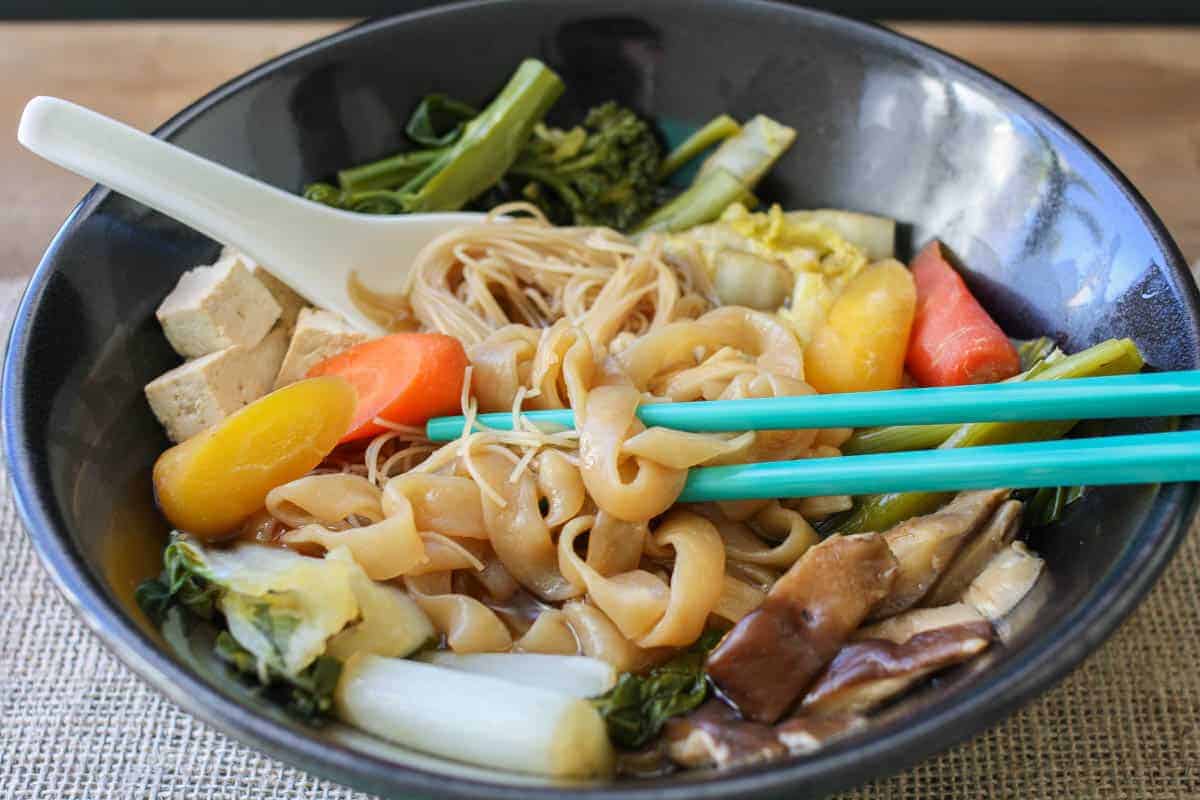
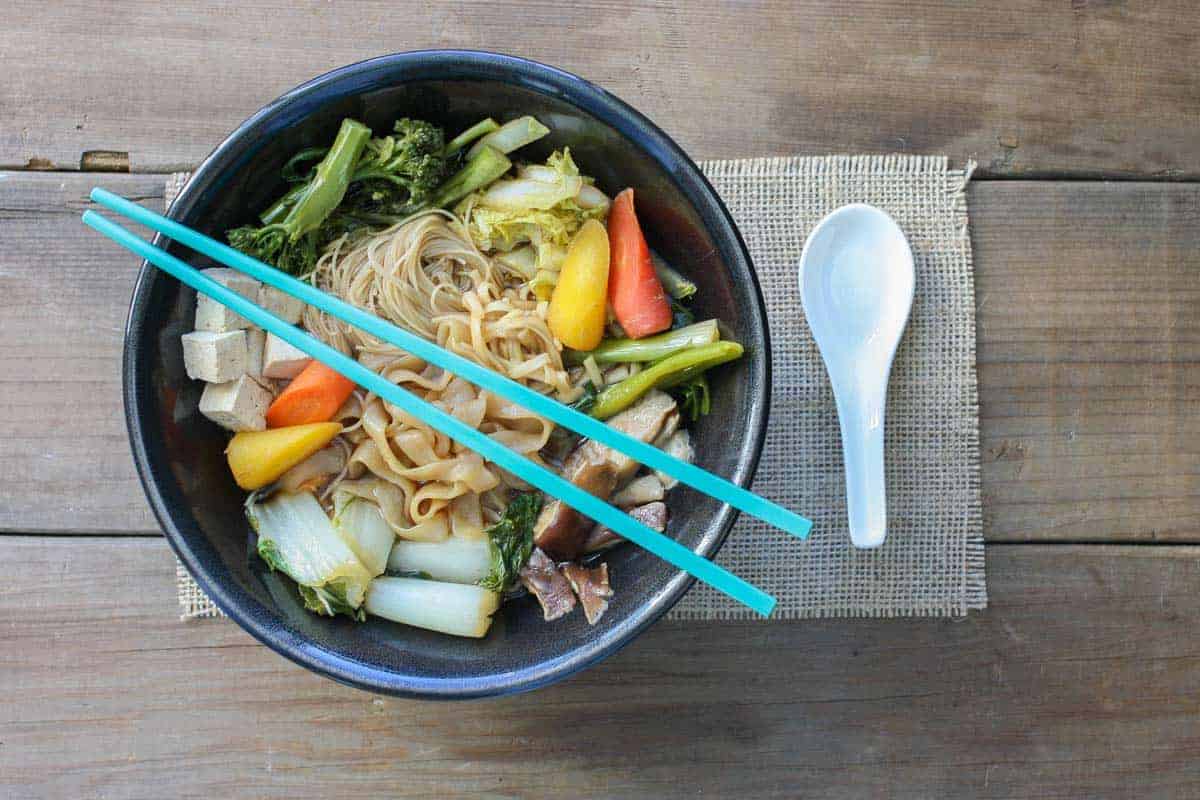
This post may contain affiliate links. As an Amazon Associate, I earn from qualifying purchases. Please read my disclosure.This homemade vegan sukiyaki recipe is a comforting Japanese-inspired hot pot filled with tender tofu, crisp vegetables, and my favorite noodles in a rich, savory broth. I use tamari, mirin, and sake to create an unforgettable umami flavor that takes just 25 minutes to make.
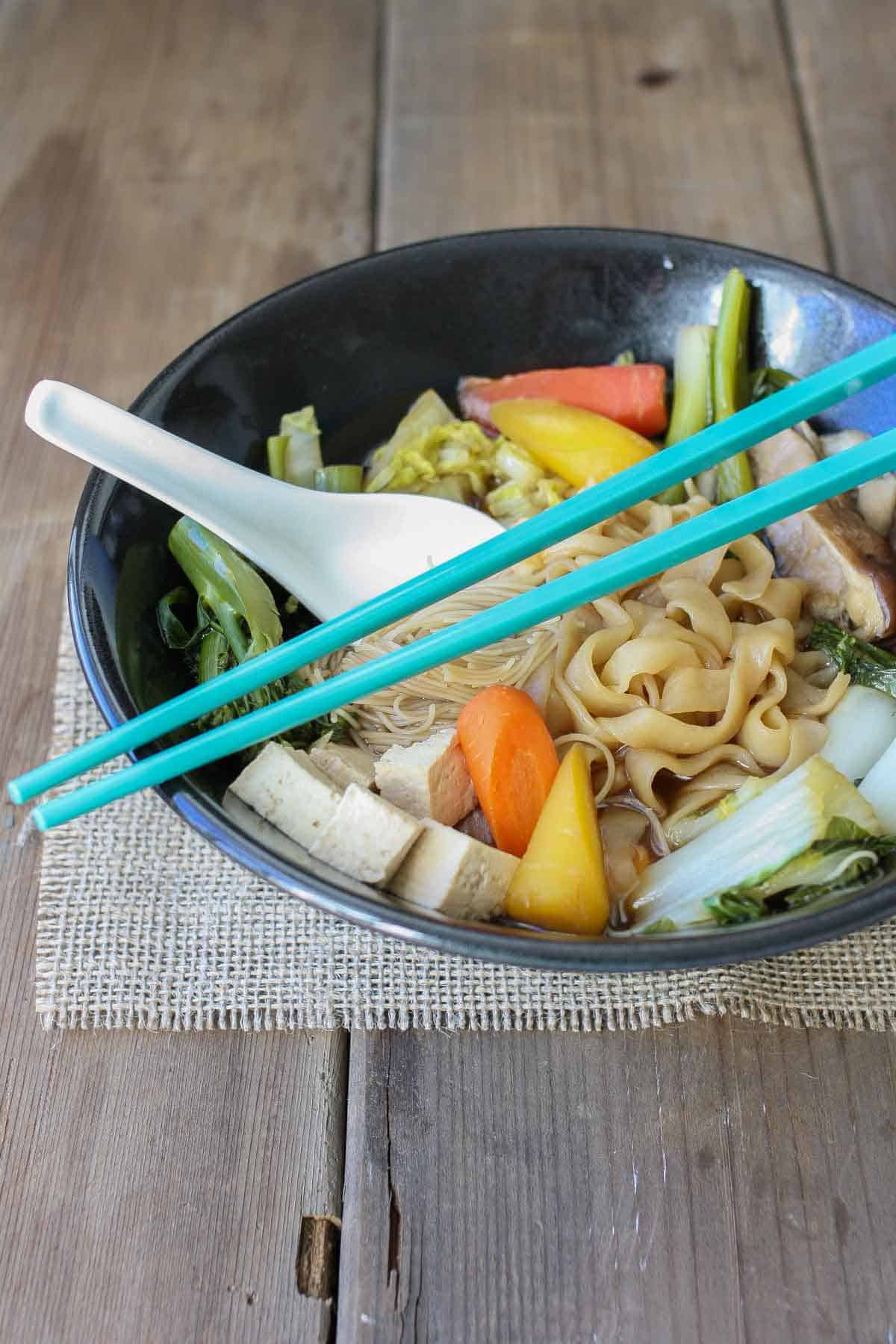
Homemade sukiyaki is the ultimate customizable meal, which is why I love making it for family dinners. I can fill each bowl with my favorite vegetables and leave out certain things for the picky eaters at my table. And just like vegan peanut noodles, it has a fantastic balance of protein and nutrients with a sauce that always has my boys dishing up seconds. This recipe is so quick and easy, I recommend trying it for dinner this week.
Japanese cuisine is not a part of my Greek heritage, but I grew up eating a lot of it and have always loved dishes like vegan miso soup and udon. I first started making this recipe when I wanted something more comforting than a bowl of noodles. Initially, I was worried that my boys would not take to it with a great deal of enthusiasm, but boy did they prove me wrong!
👩🏽🍳 Why I Love This Recipe
Vegan sukiyaki delivers everything I love about a comforting hot pot. The combination of tofu, fresh vegetables, and a medley of tender noodles creates a balanced meal that is packed with vitamins and plant-based protein. The savory-sweet broth ties everything together with a rich umami flavor, which, in my opinion, is the real selling point here. From the perspective of a health coach, I love how veggie-forward this meal is, and it also doesn’t hurt that I can customize it and add even more if I want to!
Apart from being absolutely delicious, my favorite thing about vegan sukiyaki is how quickly it comes together. And as a mom with 3 growing boys, nutritious quick meals are life-saving on busy weeknights. I start by preparing my noodles according to the package instructions, then saute my green onions and mushrooms, and set them aside. After that, I make my broth in the same pot, then add my vegetables in stages, starting with the carrots and broccoli, then the cabbage and bok choy. Finally, I add my aromatics, noodles, and tofu into the pot until everything is warmed through, and serve immediately.
A few years ago I was catering a small dinner party for a few friends and sent out messages asking about food allergies and preferences. The replies left me feeling like I had made a huge mistake. I was about to suggest we all go to a restaurant when I remembered how I used to let my kids build their own bowls of sukiyaki. I cooked all the different kinds of veggies in their own broth and laid out bowls of each different ingredient. It was a little more time-consuming than my usual way of making it, but everyone was happy, and they all loved it. Make this meal and let me know what you have added to make it your own.
🥘 Ingredients
This homemade sukiyaki is built around a rich, savory broth with plenty of fresh vegetables. While it is easy to customize and make it your own, this is everything I put in mine:
Broth: I use a combination of water, mirin, tamari, sake, and sugar for a bold, sweet, and savory flavor.
Asian noodles: I like using a combination of noodles for extra texture, but udon, shirataki, rice noodles, or glass noodles are all delicious choices.
Extra firm tofu: This holds its shape really well while soaking up the flavorful broth.
Vegetables: I like using bok choy, napa cabbage, shiitake mushrooms, Chinese broccoli, thinly sliced carrots, and green onions for a colorful array of flavors and textures in my hot pot.
Oil or vegetable broth: I use a small amount to saute the mushrooms and green onions. Vegetable broth is a great option for an oil-free version.
🔪 How To Make
I cook the vegetables in stages for this homemade sukiyaki to make sure everything stays perfectly tender. This is how I do it:
Prepare noodles: First, I rinse or soak the noodles according to the package directions. Some noodles, like shirataki, only need a quick rinse, while others, such as udon or glass noodles, may need to soak in hot water. Once I have prepped the noodles, I drain and set them aside.
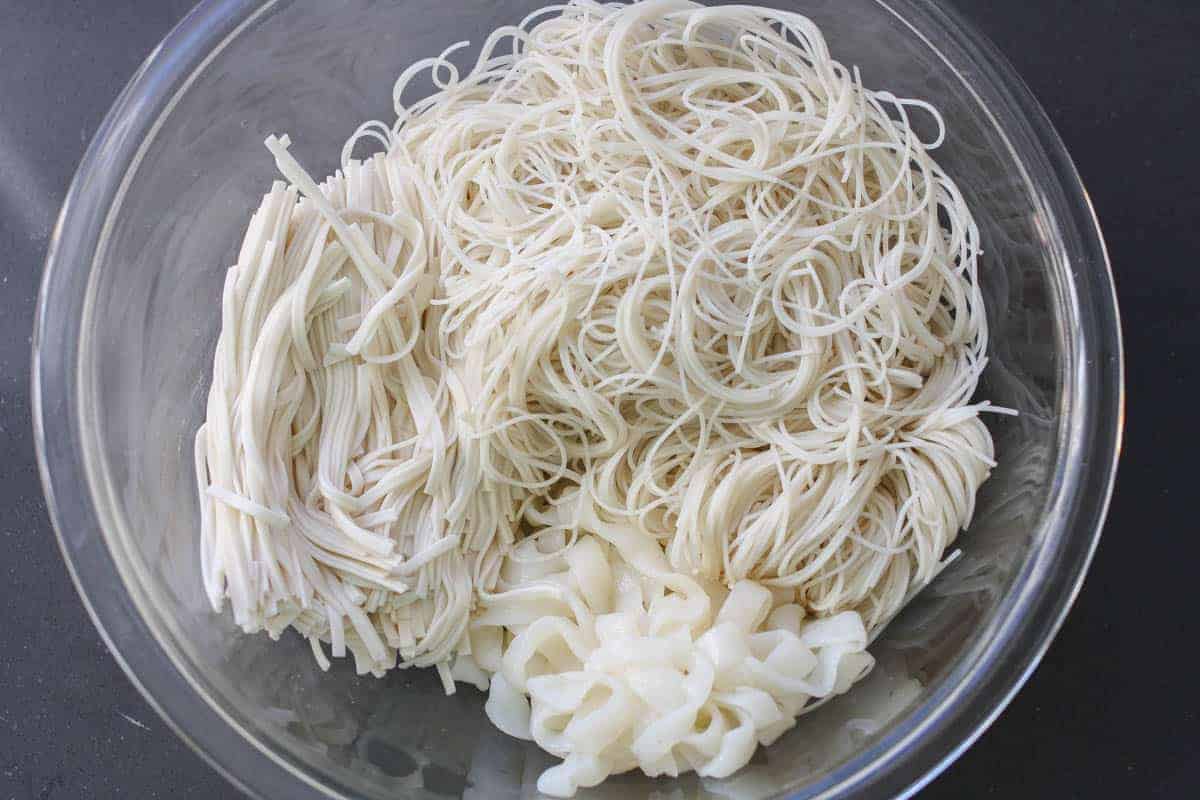
Saute aromatics: Then I heat a large soup pot or Dutch oven over medium heat, add a drizzle of oil, and saute the green onions and shiitake mushrooms for 4-45 minutes until lightly browned. After that, I transfer them to a plate and set aside.
Make broth: I pour the water, tamari, mirin, sake, and sugar into the pot, stir it well, and bring to a gentle simmer until the sugar has completely dissolved.
Cook the firm vegetables: Next, I add the carrots and Chinese broccoli, and simmer for 3-4 minutes until they begin to soften.
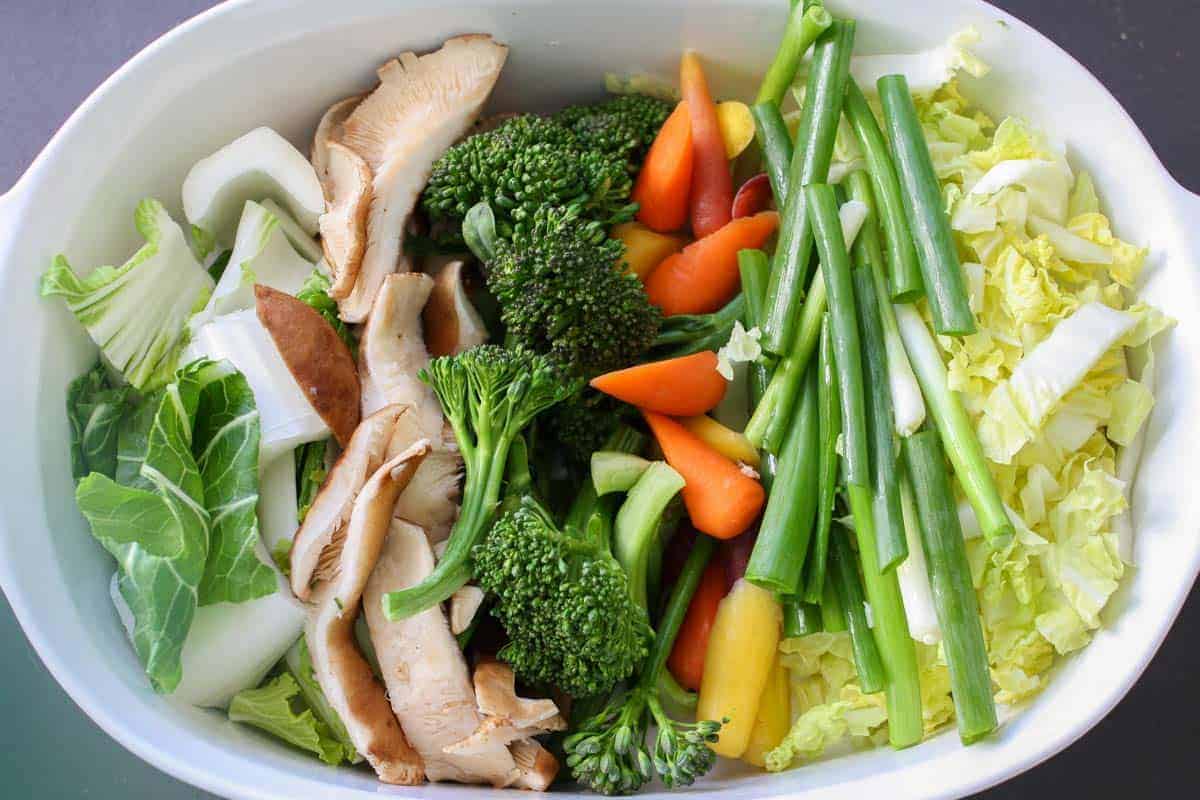
Add the leafy vegetables: After that, I stir in the bok choy and napa cabbage, simmering for another 2-3 minutes.
Finish the hot pot: I reduce the heat to low, then add the tofu, prepared noodles, and sauteed aromatics back into the pot. I cook for 2-3 minutes until everything is heated through.
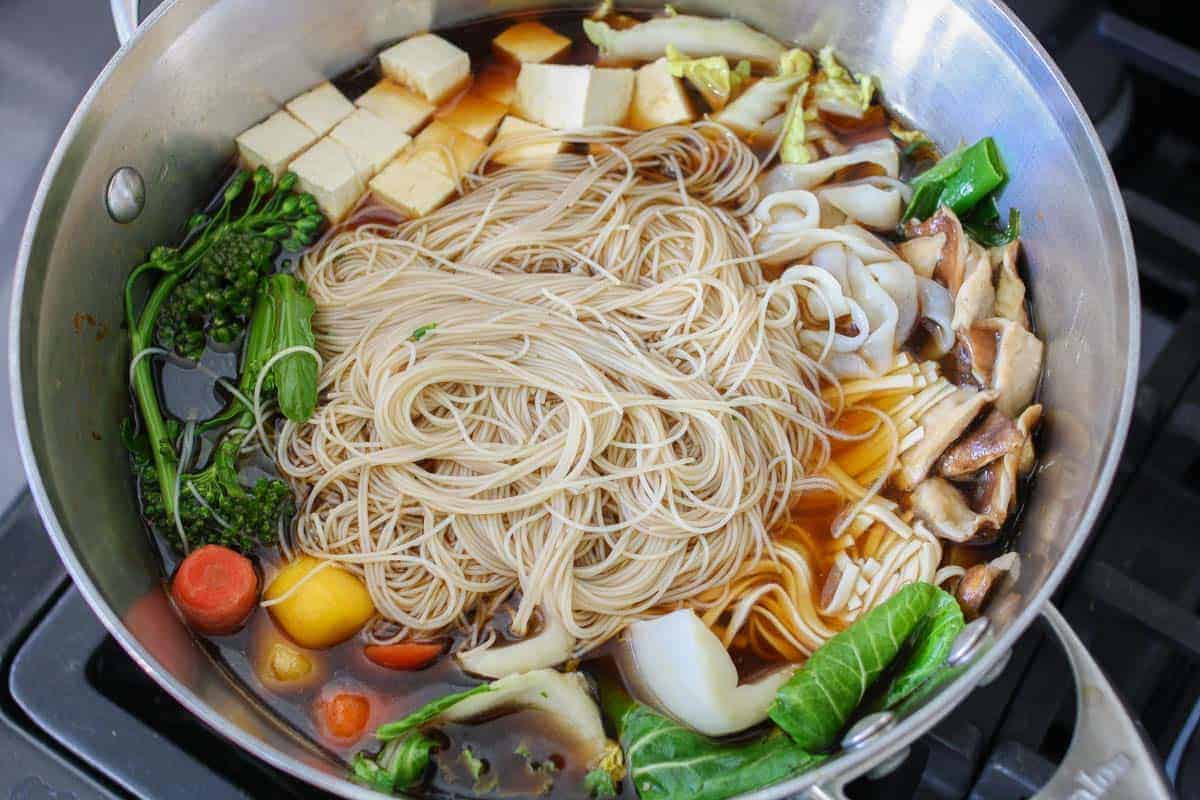
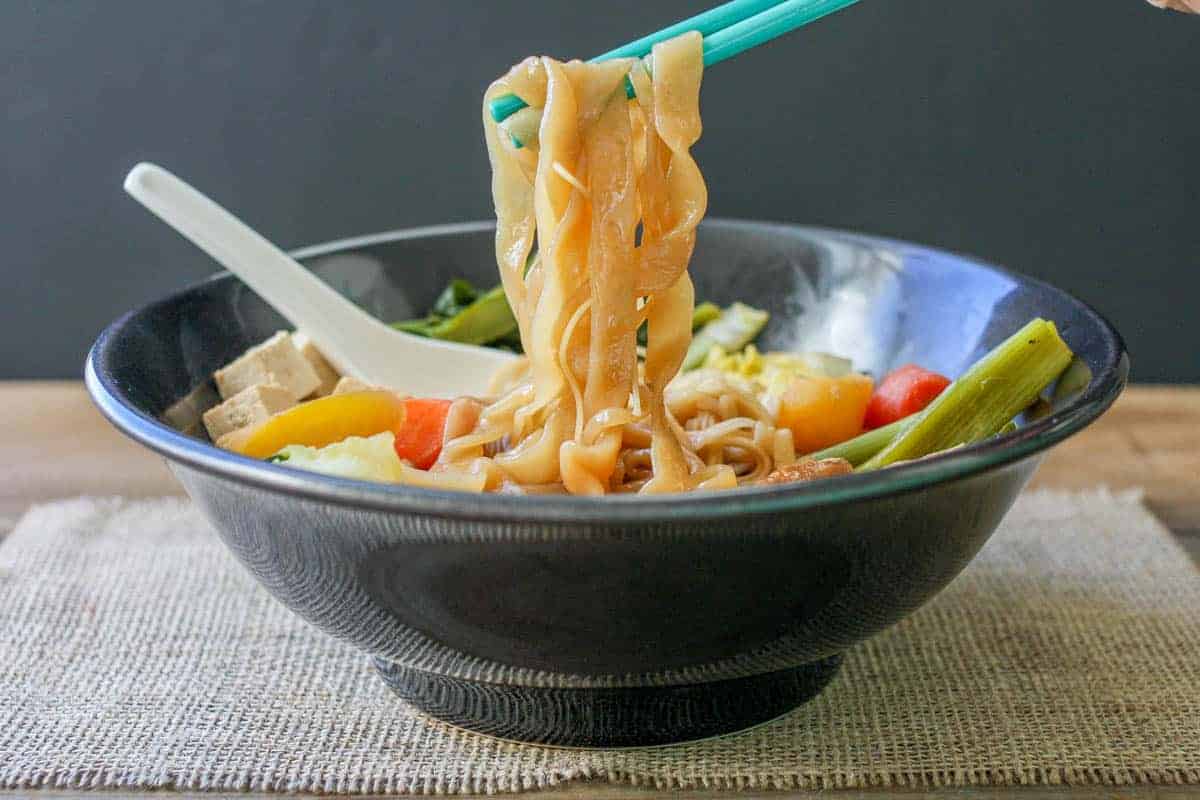
Serve: Finally, I ladle everything into bowls and serve immediately while hot.
💭 Expert Tips
My #1 Secret Tip for this homemade sukiyaki recipe is to always add the vegetables according to how long they take to cook. I know it may be tempting to just add everything in at once, but by starting with the firmer vegetables and finishing with the leafy greens, you keep everything perfectly tender without becoming mushy.
Other Tips To Keep In Mind:
- Press the tofu: I press my tofu for 20-30 minutes before cubing and adding to the broth. This removes excess moisture, which gives the tofu a better chance to absorb more of the flavors in the broth.
- Go for variety: I combine leafy greens, crunchy vegetables, meaty mushrooms, and tender noodles to create a dish that is interesting and satisfying.
- Taste: Depending on the brand of tamari or soy sauce, sometimes I like to add a splash of water if it is too salty or a little extra mirin for a sweeter taste.
- Use fresh shiitake: Whenever possible, I go for fresh shiitake, as they provide the richest umami flavor. Oysters enoki, cremini, or brown mushrooms also work well.
- Serve immediately: It is called a hot pot for a reason. Sukiyaki is at its best when the vegetables are still slightly crisp, and the noodles have not had too much time to absorb too much broth.
📖 Variations
There are countless ways to customize this homemade sukiyaki recipe, but these are 3 of my favorite variations:
Spicy sukiyaki: I add 1-2 teaspoons of chili garlic sauce, sriracha, or a pinch of red pepper flakes to the broth when I want a little heat. I love making this in winter if my nose is feeling a bit stuffy.
Mushroom lover: Instead of just shiitake, I use a combination of oyster, enoki, and cremini mushrooms for even more savory flavor and texture. My best friend loves this one, and sometimes she adds even more mushrooms and nothing else.
Super green sukiyaki: Sometimes when I am in a monochromatic kind of mood, I only add mushrooms and a wide selection of green vegetables. I use broccolini, bok choy, kale, baby spinach, snow peas, edamame, green peppers, and finish it off with bean sprouts. I like making this when I need an antioxidant boost.
🍽 Serving Suggestions
This homemade sukiyaki is already pretty packed with everything you need for a balanced meal, but I recommend serving it with a simple salad topped wth carrot ginger salad dressing and a bowl of miso mushrooms or tofu skewers with ginger soy marinade. This adds even more variety to your plate while keeping with an asian inspired theme.
The last time my kids heard I was making sukiyaki for dinner, they asked if we could add a few of our other favorite asian dinner items to the menu. Since it was the weekend, I had extra time and prepared some vegan chow mein, along with vegan egg rolls, and easy sushi seaweed snacks. Everyone was so full and said they could not eat another bite. That was until I brought out the mango mochi ice cream. Ha!
🧊 Storing And ♨️ Reheating
Refrigeration: I allow the sukiyaki to cool completely before storing it in an airtight container in the refrigerator for up to 4 days.
Freezing: The broth and tofu freeze well for up to 2 months, but I do not recommend freezing the vegetables and noodles, and they soften significantly after thawing.
Reheating: I warm the sukiyaki gently in a saucepan over medium-low heat until everything is heated through. If the noodles have absorbed too much of the broth, stir in a splash of vegetable broth or water before serving.
❓Recipe FAQs
Can I use crispy baked tofu instead of plain tofu?
Yes! Crispy tofu is a great option if you prefer a firmer texture. I recommend baking the tofu separately until completely golden and crisp, then add it to the hot pot during the last 2-3 minutes of cooking.
What can I use instead of sake?
If you do not wish to cook with sake, I suggest replacing it with an equal amount of vegetable broth, plus 1 teaspoon of rice vinegar, and 1/2 teaspoon of sugar for every 1/4 cup of sake. The broth replaces the liquid while the vinegar and sugar mimic the mild acidity and subtle sweetness. Dry white grape juice with a splash of white vinegar also works well if you want a sweeter finish.
Which noodles work best for sukiyaki?
Shirataki mushrooms are the traditional choice because they absorb the broth without becoming heavy. Udon creates a heartier meal with a chewy texture, and glass noodles soak up lots of flavor while staying light. Rice noodles work well for a gluten-free version. If you usually have leftovers, I recommend going for udon as it tends to hold its texture better. And if you are indecisive, do what I do and go for a mix.

Love this plant based quick meal recipe? Please leave a 5-star rating 🌟 in the recipe below and/or a review in the comment section further down the page!
You can also FOLLOW ME on FACEBOOK, INSTAGRAM, and PINTEREST to see more delicious, healthy, family-friendly food, and if you have any questions, I’m here to help!
Homemade Sukiyaki Recipe (Japanese Hot Pot)
This homemade vegan sukiyaki recipe is a comforting Japanese-inspired hot pot filled with tender tofu, crisp vegetables, and my favorite noodles in a rich, savory broth. I use tamari, mirin, and sake to create an unforgettable umami flavor that takes just 25 minutes to make.
Servings: 4 servings
Calories: 281kcal
Ingredients
- 4 cups water
- ¾ cup Tamari or soy sauce if you don't need gluten free
- ¾ cup mirin rice cooking wine
- ½ cup sake
- 3 tablespoons sugar see note
- 8 ounces asian noodles rice, shirataki, udon, cellophane or other noodles of choice (I did a mix)
- 2 cups chopped bok choy
- 2 cups chopped napa cabbage
- 2 cups stemmed and sliced shitake mushrooms
- 1 cup Chinese broccoli or broccolini
- 1 cup sliced carrots
- 1 cup green onions cut into 4 inch pieces
- 1- 14 ounce package extra firm tofu cut into cubes
- oil to sautée veggies or broth if oil free
Instructions
- Rinse and soak noodles in hot water to soften, if necessary depending on the kind of noodles you chose. Shiratake simply need to be rinsed, but some cellophane and udon may need to be soaked in hot water to soften before adding. Drain when done.
- In a large soup pot, sauté the green onions and mushrooms with a dash of oil, or broth, until slightly browned. Remove and set aside to add later.
- Add water, Tamari (or Soy), mirin, sake and sugar to the pot and simmer until the sugar is dissolved. Add broccoli and carrots to the pot. Simmer for a few minutes. Then add bok choy and cabbage.
- Simmer a few more minutes. Then turn heat to low and add mushrooms, green onions, tofu and noodles. Allow to warm for a few more minutes until everything is just cooked.
- Turn off heat and serve.
Notes
- My #1 Secret Tip for this homemade sukiyaki recipe is to always add the vegetables according to how long they take to cook. I know it may be tempting to just add everything in at once, but by starting with the firmer vegetables and finishing with the leafy greens, you keep everything perfectly tender without becoming mushy.
- Press the tofu: I press my tofu for 20-30 minutes before cubing and adding to the broth. This removes excess moisture, which gives the tofu a better chance to absorb more of the flavors in the broth.
- Go for variety: I combine leafy greens, crunchy vegetables, meaty mushrooms, and tender noodles to create a dish that is interesting and satisfying.
- Taste: Depending on the brand of tamari or soy sauce, sometimes I like to add a splash of water if it is too salty or a little extra mirin for a sweeter taste.
- Use fresh shiitake: Whenever possible, I go for fresh shiitake, as they provide the richest umami flavor. Oysters enoki, cremini, or brown mushrooms also work well.
- Serve immediately: It is called a hot pot for a reason. Sukiyaki is at its best when the vegetables are still slightly crisp, and the noodles have not had too much time to absorb too much broth.
Nutrition
Calories: 281kcal | Carbohydrates: 36g | Protein: 20g | Fat: 3g | Sodium: 2981mg | Potassium: 1090mg | Fiber: 6g | Sugar: 18g | Vitamin A: 8285IU | Vitamin C: 93.3mg | Calcium: 228mg | Iron: 3mg