



Indian Cabbage with Peas
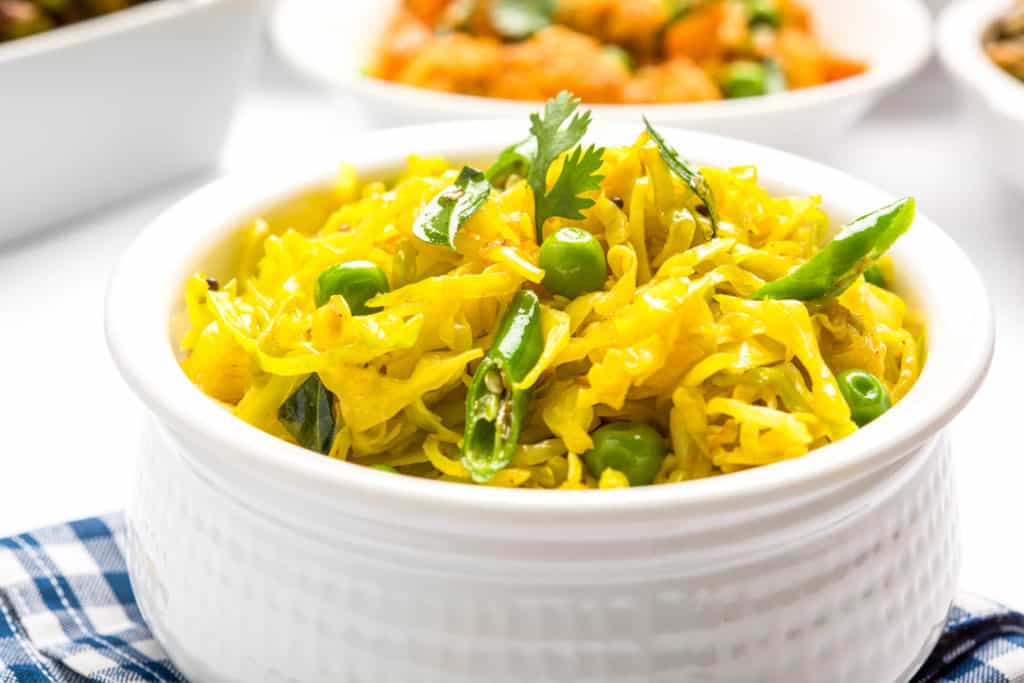
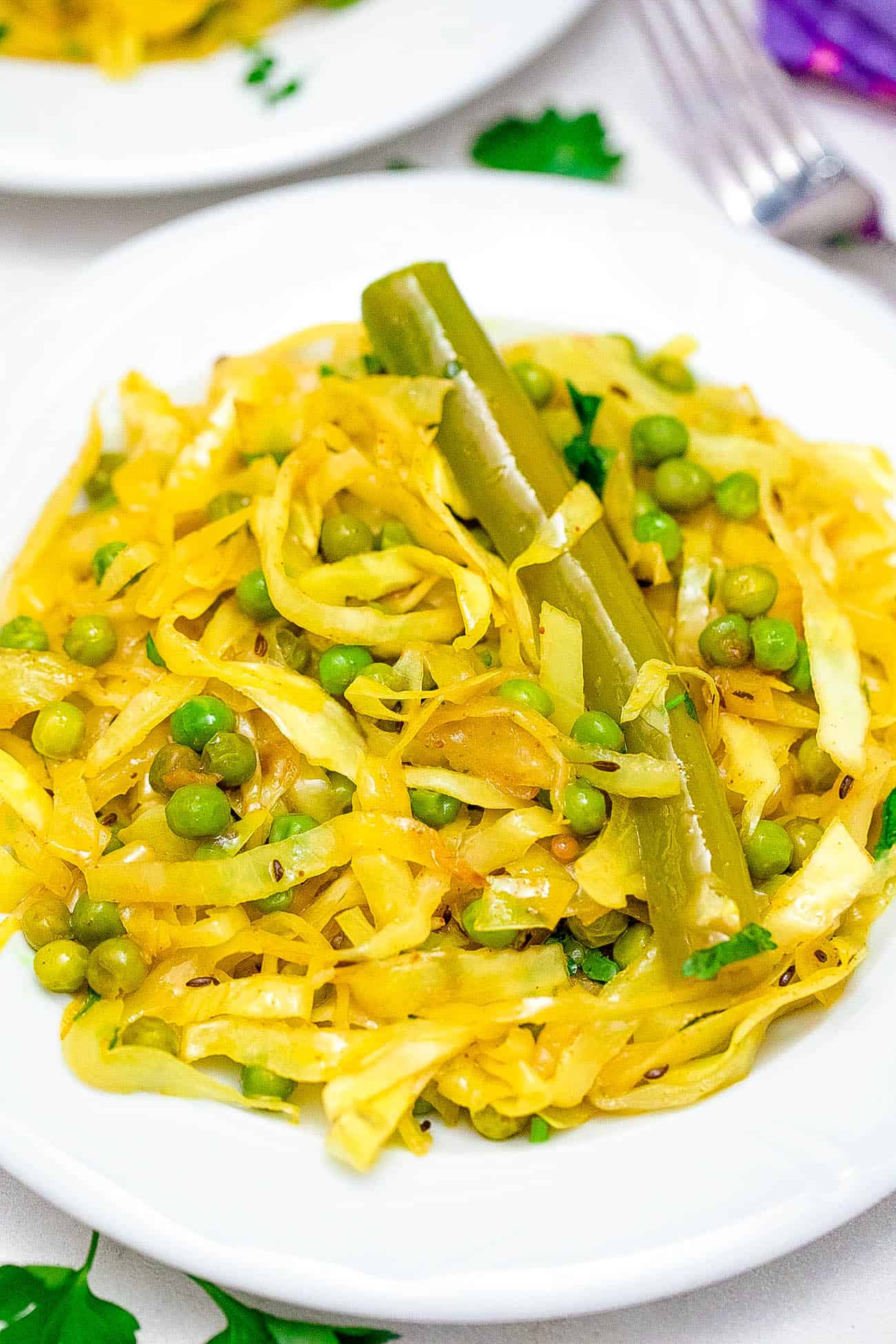
This post may contain affiliate links. As an Amazon Associate, I earn from qualifying purchases. Please read my disclosure.This Indian cabbage with peas recipe transforms simple cabbage, green peas, and cumin seed into a vibrant sabzi packed with warm spices. With a total cooking time of only 45 minutes, this dish delivers smoky charred edges and a gentle kick of heat to your daily dose of veggies. I love how this side dish turns ordinary vegetables into something delicious, nutritious, and exciting.
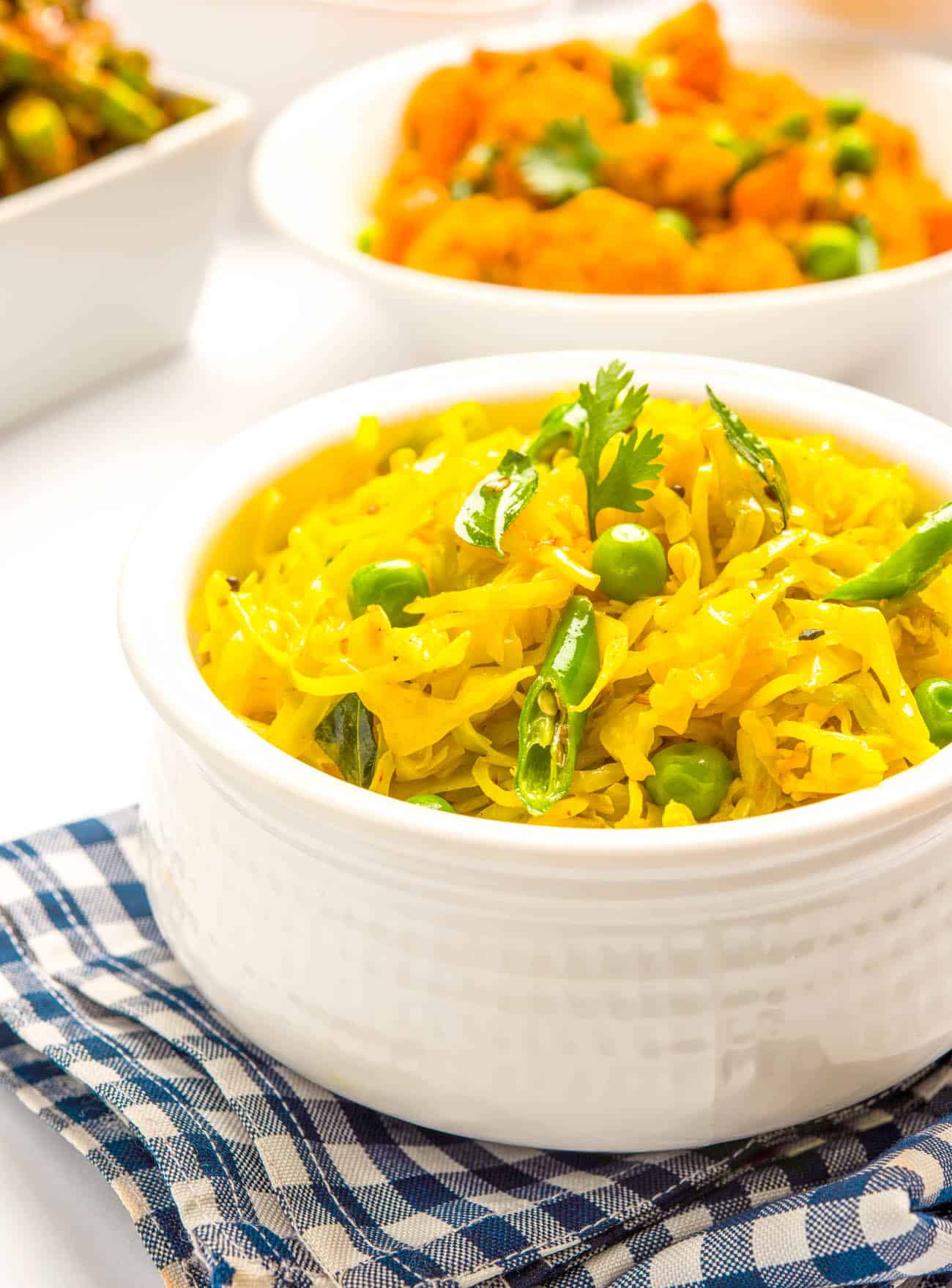
Sabzi is derived from the Persian word sabzi, meaning green. In this case, it refers to leafy herbs and vegetables or cooked vegetable dishes, much like my Indian spiced bok choy. It is a classic dish made with shredded cabbage, green peas, and fragrant spices. Whenever I make this dish, I am reminded of the simple homestyle meals I grew up eating.
I created this version after experiencing way too many disappointing soggy dishes of cooked cabbage. Cabbage is easy enough to get right in its raw form, like in my Mexican cabbage slaw, for example. But cooked cabbage requires some artistry to elevate it to tasty and unique heights. This is one of those vegetables that my kids prefer raw over cooked. But I discovered something of a hack with this recipe. The first time I made it for my kids, I was met with some pushback. But once they had their first bite, they realized it was not soggy but tender with a crunch! They were hooked and even asked for seconds. Ha!
👩🏽🍳 Why I Love This Recipe
As a mom first, and a health coach second, I appreciate meals like this Indian cabbage with peas. It is simple, quick, nourishing, and surprisingly full of differing textures. I can rest easy knowing this one dish delivers fiber from the cabbage, plant protein from the peas, and anti-inflammatory benefits from the turmeric. I have served it as a side dish, light lunch, or even a quick snack.
When I toast the cumin and mustard seeds in hot oil, that is when the base flavors take shape. This builds a deep savory foundation, while the thinly sliced cabbage cooks just long enough to soften without turning slimy. This step also reduces any gas, making it easier to digest, and increases the bioavailability of antioxidants in the cabbage. The brief uncovered cook at the end is what ties the entire dish together. It creates a light browning and slight crunch on the bottom as it chars, providing the sabzi with that signature smoky flavor.
I have a friend who swears by certain holistic practices. If she ever has any kind of joint pain, she wastes no time wrapping it up in a cabbage leaf. So you can imagine my shock when she casually mentioned that she was not overly fond of actually eating cabbage. She would eat it if she had to, but would not go out of her way to do so. This was my time to shine! Knowing that she struggled with inflammation, I knew this dish would be perfect. The next time she had a flare-up, I made a batch and sent it over. Just what the doctor ordered. It was not long before she was calling me, asking for the recipe. Ha!
Latest Recipe Video!
🥘 Ingredients
This is a simple, wholesome dish, so I have kept the ingredient list simple, using fresh vegetables and staple pantry spices.
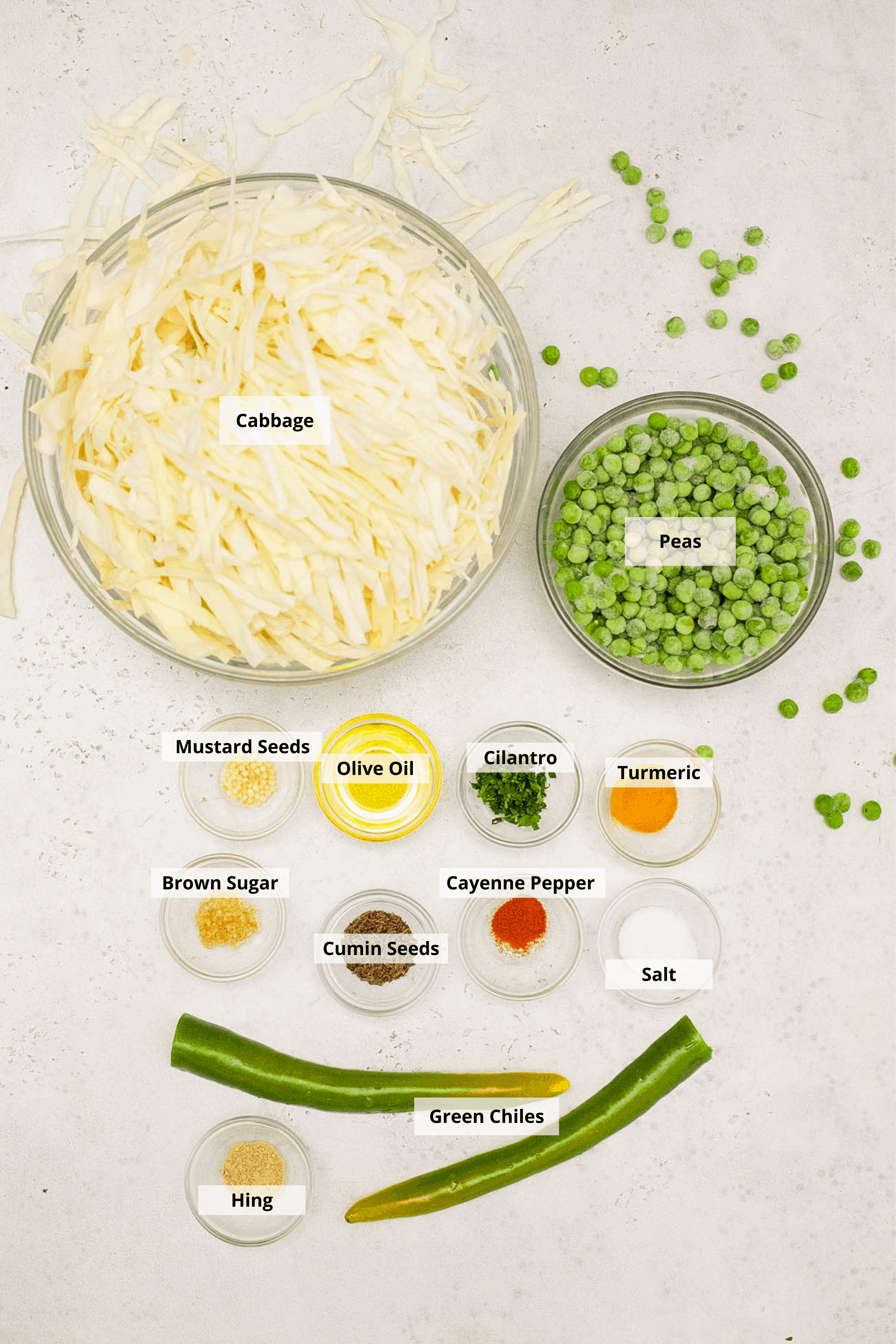
Head of cabbage: I use a thinly sliced, medium-sized head of green cabbage and discard the tough core.
Frozen peas: I use frozen peas for the added brightness, fiber, and protein.
Serrano chili: For a touch of heat, I use one finely chopped chili, and adjust the amount depending on who is at my table.
Asafetida: I use a small pinch of this traditional spice to aid digestion and to mimic the taste of onion and garlic and deepen the savory notes.
Olive oil: This helps toast my spices and lightly caramelize my cabbage.
Spices: Cumin seeds, mustard seed, turmeric, cayenne pepper, and salt add a combination of nutty, subtle bitterness, and warmth.
Coconut sugar: I add a small amount to balance out the heat from the spices and enhance the natural sweetness of the cabbage.
Fresh cilantro: Finishing with a sprinkle of chopped cilantro adds brightness.
🔪 How To Make
This dish is built on layers of flavors and steps, each one building on the last. Below are the steps on how to make it:
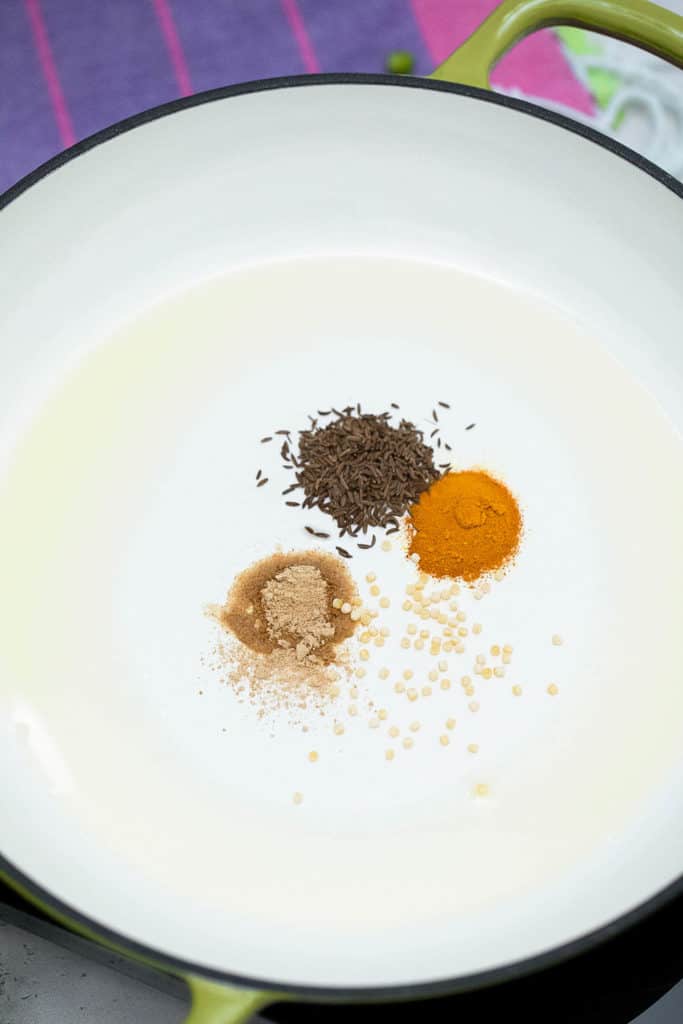
Toast the spices: I heat my oil in a large skillet over medium heat, and test it with one cumin seed. Once it crackles, I add the asafetida, cumin, mustard seeds, and turmeric, and fry until fragrant.
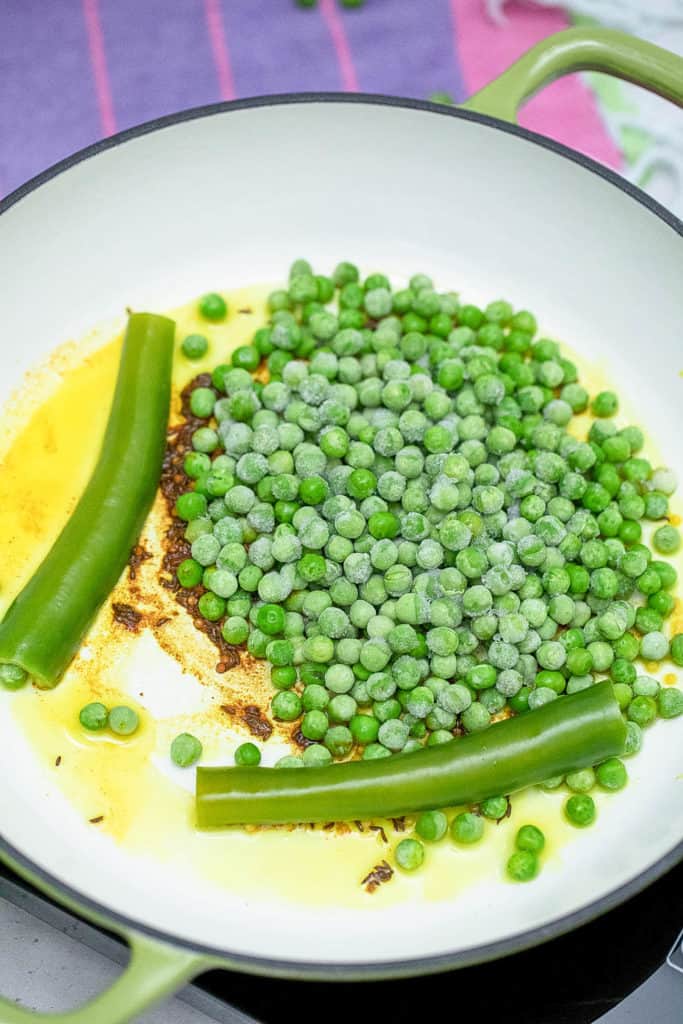
Add peas and chili: I stir in the frozen peas and chopped chili, cooking for a few seconds so they absorb the spice-infused oil.
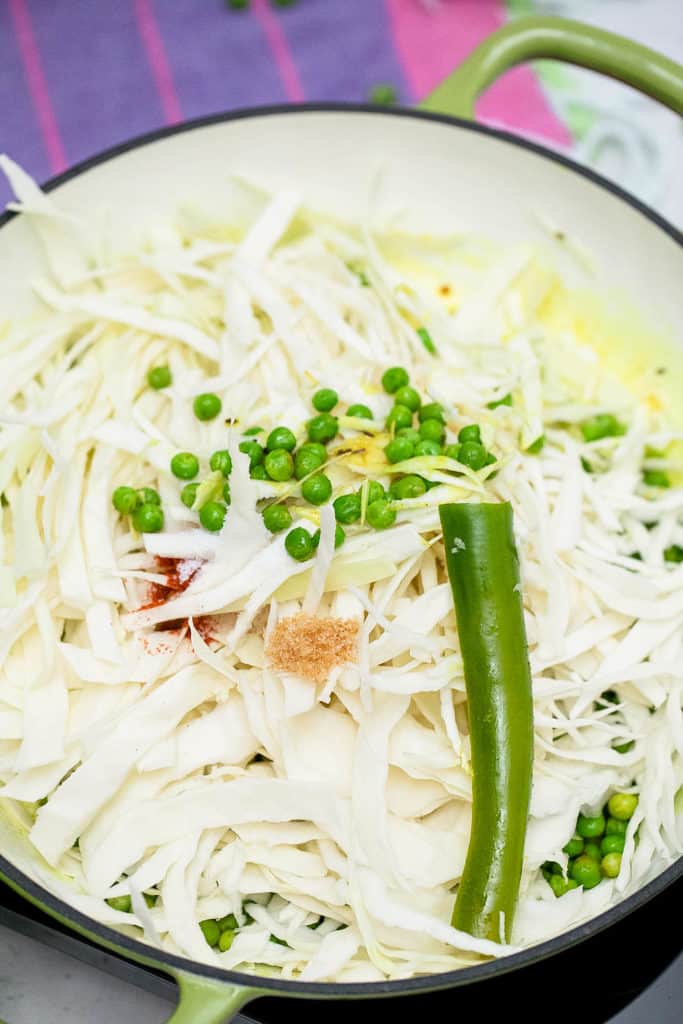
Add the cabbage: Next, I add my shredded cabbage, cayenne pepper, coconut sugar, and salt. Then toss everything well so the spices coat every shred.
Cover and cook: Then I cover the pan and cook on medium heat for 10 minutes, stirring occasionally, until the cabbage has softened.
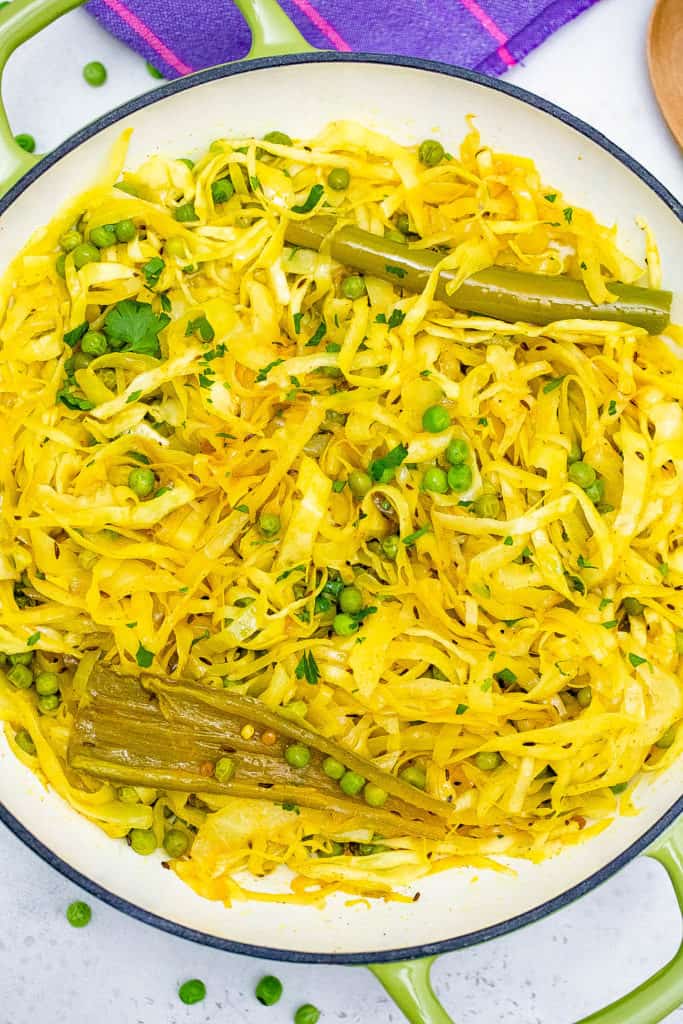
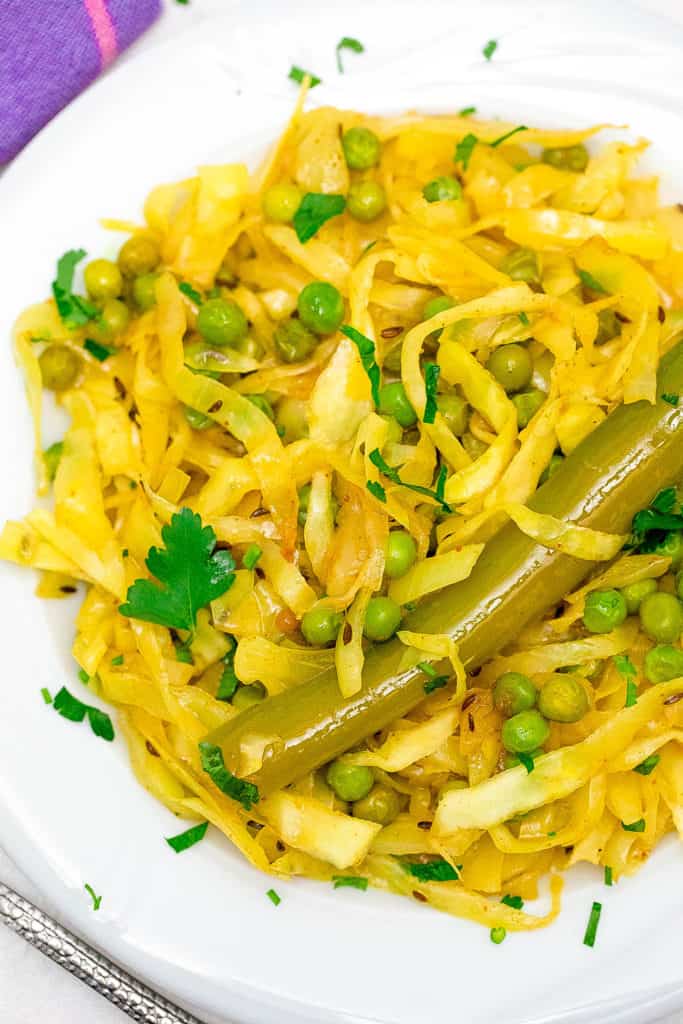
Create a light char: Finally, I uncover the pan, cook for 1 to 2 more minutes, and allow the bottom layer to brown lightly, before stirring and turning off the heat. I finish with fresh cilantro and serve it warm.
💭 Expert Tips
My #1 Secret Tip for this Indian cabbage with peas recipe is to allow the cabbage to brown adequately without stirring too soon. The brief contact with the pan creates the smoky flavor and al dente texture that I want in this dish.
Other Tips To Keep In Mind:
- Get your slices thin: For leafy vegetables, I like to use a chiffonade style cut, although not quite as fine. The long, thin shreds ensure the cabbage cooks quickly, while preserving some crunch.
- Test the oil: I always start with a singular cumin seed to determine when my oil is ready. If you leave your spices in the oil as it heats up, they will become oily and possibly burn, leaving you with a rancid flavor.
- Do not overcrowd: I use a large skillet, allowing for enough room. This way the cabbage cooks, instead of steaming.
- Use non-stick: I choose a non-stick skillet to prevent any sticking and wasted bits during the browning stage.
📖 Variations
Cabbage sabzi variations are limitless, and I have experimented with many combinations over the years. These are the three that are husband and kid-approved.
Carrot boost: I add 1 cup of finely shredded carrot with the cabbage. This adds another layer of sweetness and is almost like a spring roll filling. My husband loves adding toasted almond flakes to this variation for extra crunch.
Coconut finish: I stir in 2 tablespoons of unsweetened shredded coconut at the end, for added texture and mild, rich, nutty flair. This variation is great for when I need to tone down the heat factor, especially for my kids.
Extra veggie blend: When I want to add some more nutritional value to this dish, I add 1 cup of diced zucchini and ½ cup of corn with the peas. I just make sure not to overcrowd the pan during cooking. I have served my kids bowls of this version for dinner, and they loved it.
🍽 Serving Suggestions
I love serving this Indian cabbage and peas alongside my sweet potato and chickpea curry. It provides a great contrast in texture and color against the soft creaminess. And if you love this recipe, I also highly recommend trying my vegan stuffed cabbage rolls. Think of it as an Indian take on a spring roll.
I have also served it as part of a vegetable medley during Indian inspired dinners. Last week I was feeling indecisive and was craving various side dishes and no main in particular. So, why not just have side dishes? I served my Indian cabbage, tandoori cauliflower, and my husband’s favorite Indian vegetables. I made sure to serve these with fresh, authentic Guyanese roti and various toppings and sauces. I am definitely adding this buffet-style Indian dinner to my weekly rotation.
🧊 Storing And ♨️ Reheating
Refrigeration: I allow the cabbage to cool completely, then transfer it to an airtight container and store it in the fridge for up to 4 days.
Freezing: I place the cooled cabbage in a freezer-safe container, and it keeps for up to 2 months.
Reheating: Before reheating, I thaw the frozen cabbage in the fridge overnight, then reheat it in a skillet over medium heat until warmed through and lightly browned again.
❓Recipe FAQs
Can I make this recipe with the asafetida if I do not like how it smells?
Yes, you can substitute a 1:1 mix of garlic powder and onion powder for asafetida. If the smell is what is concerning you, do not worry, as it cooks, the initial smell dissipates, and leaves only the savory flavors.
Is cooked cabbage less nutritious than raw cabbage?
Cooked vegetables are not always less healthy than their raw counterparts. In this case, cooked cabbage is actually more forgiving on the digestive system than raw cabbage. It also enhances the bioavailability of nutrients like vitamin K and increases cancer-fighting compounds such as indoles.
How would the use of red cabbage affect this recipe?
Cooked red cabbage has a more pungent flavor and a firmer texture compared to cooked green cabbage. It also turns into a gray or blue color during the cooking process. For this recipe, red cabbage would not give you the desired outcome, and it is best used in slaws.
Check Out These Other Delicious Indian Recipes!

Love this indian recipe? Please leave a 5-star rating 🌟 in the recipe below and/or a review in the comment section further down the page!
You can also FOLLOW ME on FACEBOOK, INSTAGRAM, and PINTEREST to see more delicious, healthy, family-friendly food, and if you have any questions, I’m here to help!
🎥 Watch How to Make It
Indian Cabbage with Peas
This Indian cabbage with peas recipe transforms simple cabbage, green peas, and cumin seed into a vibrant sabzi packed with warm spices. With a total cooking time of only 45 minutes, this dish delivers smoky charred edges and a gentle kick of heat to your daily dose of veggies. I love how this side dish turns ordinary vegetables into something delicious, nutritious, and exciting.
Servings: 4 servings
Calories: 150kcal
Ingredients
- 1 head of cabbage sliced into fine long shreds discard the stalk and thick stems
- 1½ cups frozen peas
- 1 tbsp extra virgin olive or coconut oil
- Pinch of asafetida hing
- 1 tsp cumin seeds
- ½ tsp mustard seeds
- 1 serrano chili cut in half
- ¼ tsp ground turmeric
- ¼ tsp cayenne pepper
- ¾ tsp salt
- ¼ tsp coconut sugar
- 2 tbsp chopped cilantro for garnish
Instructions
- Heat the oil on medium high in a saucepan. Test the heat by adding one cumin seed to the oil; if the seed cracks right away, the oil is ready. Add asafetida, cumin seeds, mustard seeds, and turmeric. After the seeds crack add the green peas and serrano chili, stir for a few seconds.
- Add the cabbage, cayenne pepper, sugar, and salt. Mix well.
- Cover the pan and let the cabbage cook on medium heat for about 10 minutes, stirring occasionally. Then uncover, and let the cabbage cook for 1-2 minutes until the bottom layer is very slightly browned giving it a little char. Stir again and turn off the heat when done. Top with cilantro and serve.
Notes
- My #1 Secret Tip for this Indian cabbage with peas recipe is to allow the cabbage to brown adequately without stirring too soon. The brief contact with the pan creates the smoky flavor and al dente texture that I want in this dish.
- Get your slices thin: For leafy vegetables, I like to use a chiffonade style cut, although not quite as fine. The long, thin shreds ensure the cabbage cooks quickly, while preserving some crunch.
- Test the oil: I always start with a singular cumin seed to determine when my oil is ready. If you leave your spices in the oil as it heats up, they will become oily and possibly burn, leaving you with a rancid flavor.
- Do not overcrowd: I use a large skillet, allowing for enough room. This way the cabbage cooks, instead of steaming.
- Use non-stick: I choose a non-stick skillet to prevent any sticking and wasted bits during the browning stage.
Nutrition
Calories: 150kcal | Carbohydrates: 24.6g | Protein: 7.3g | Fat: 4.5g | Saturated Fat: 0.6g | Sodium: 552.7mg | Fiber: 9.4g | Sugar: 3.2g






















I love cooked cabbage! Actually I love cooked cabbage more than raw cabbage. Love this recipe. What a great side dish to have. I have never tried asafetida but I love learning about new spices. I have a great Indian grocer near my house so I’ll go look for it.
Awesome! Great to hear Amy! 🙂
Perfectly easy to follow recipe… ideal for quick dinner meal..thanks for the recipe.
Thanks so much! Glad you liked it!
This is a recipe I didn’t know I needed. I love cabbage but have never added these delicious seasonings before!! Can’t wait to try this.
I’m sure you will love this recipe Whitney! Can’t wait to hear how it turns out!
I love the little bit of heat in this and turmeric is a nice addition! everyone loved this dish!
Thanks Claudia! So happy to hear that!
What a beautiful blend of ingredients and I already love cabbage, so this recipe is a win win! Thanks so much for sharing 🙂
Thanks so much Traci! I’m sure you will love this recipe!
Where did you get your little spice glass containers? Ive been looking for something like that.
Hi Emily! I ordered them off Amazon 🙂 and I absolutely love them!
Thanks ! Theyre lovely
No problem! 🙂