
Bok Choy Miso Noodle Soup
This post may contain affiliate links. As an Amazon Associate, I earn from qualifying purchases. Please read my disclosure.This bok choy miso noodle soup is one of my favorite quick dinners when I need something warm, nourishing, and comforting with potential detoxifying benefits. I combine tender bok choy, savory mushrooms, and a rich miso broth into a soup that is ready in just 20 minutes, making it ideal for busy weeknights or cold afternoons.
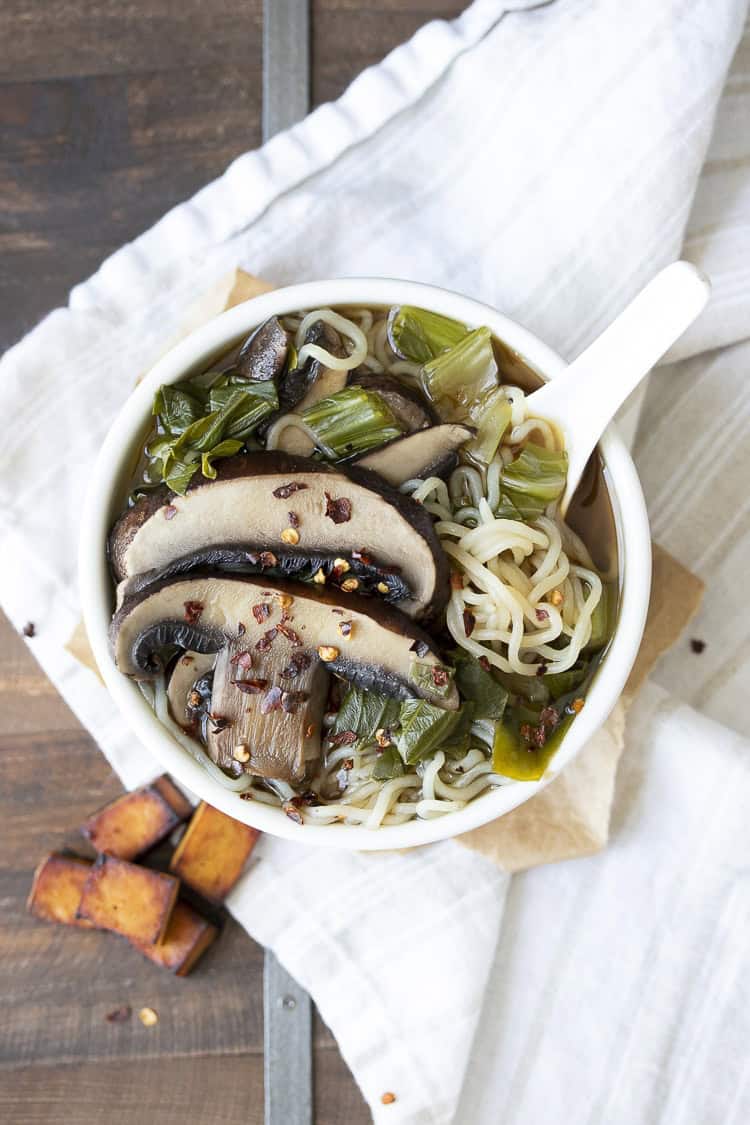
Bok choy miso noodle soup is a Japanese-inspired dish made with flavorful broth, vegetables, noodles, and a choice of protein. This version keeps the ingredient list shorter than my vegan miso soup recipe, while still delivering all the comforting flavors. If regular cream-based soups are too heavy for you, I highly recommend making this miso soup.
I first created this recipe when I wanted something other than vegan chicken noodle soup to help perk my family up when they were down with a cold. The soup needed to come together fairly quickly so I could spend more time looking after my little ones in their moments of need, and bok choy miso noodle soup really delivered. Now, whenever anyone in my family comes down with a case of the sniffles, I waste no time making this soup.
👩🏽🍳 Why I Love This Recipe
It is sometimes hard to believe that this bok choy miso noodle soup contains such simple ingredients, yet it yields complex and comforting flavors. I love the savory broth mixed with the rich umami flavor of the mushrooms. The bok choy is tender but retains a slight bite, which adds interesting texture to the soup. As a health coach, I know why miso is incredibly healthy, and all of its potential benefits, such as immune system support, make me love this soup even more.
Unlike a lot of soups, which need plenty of time on the stove, the broth in this bok choy miso noodle soup develops its flavor surprisingly quickly. I whisk the miso with hot water until smooth before mixing in the tamari and mirin, then saute the mushrooms in that mixture so they absorb all the flavors. After adding the bok choy and remaining broth, the vegetables cook just until tender before I add my noodles and tofu.
Whether I need to detox or a homemade remedy for a common cold, I always make this soup. In fact, I have become quite well known for it among my friends and family. If anyone is under the weather, you can bet I will be there with a flask of piping hot, freshly made soup. Last month I caught one of my boys out on a lie. He was very obviously faking being sick, and I thought it was to get out of school. When he finally came clean, he told me it was because he was really craving miso soup. Ha! Please do not feel like you need to wait for a reason to make this soup. Whip up a batch tonight.
🥘 Ingredients
This is everything I use to create a savory and flavorful bok choy miso noodle soup:

Broth: I combine chickpea miso paste, tamari or soy sauce, mirin, and hot water for a balanced broth with plenty of umami flavor.
Vegetables: Baby bok choy and portobello mushrooms are the stars of this soup. The mushrooms provide a savory meaty texture, and the bok choy stays tender and vibrant.
Noodles: Almost any asian noodle works well here. I like using shirataki noodles for a lighter option, but ramen, rice noodles, soba, or udon are all delicious choices.
Optional protein: firm or extra firm tofu are great for adding extra protein to the soup. I like using crispy baked tofu for additional texture.
🔪 How To Make
Once I have all of my vegetables prepped, making this bok choy miso noodle soup is extremely easy. This is how I do it:
Prepare ingredients: First, I coarsely chop the bok choy, thinly slice the mushrooms, and cook the noodles according to the package directions. If I am using tofu, I press, cut, season, and bake it in the oven until crispy.
Make broth base: Then, I whisk the miso with a little hot water until smooth, and stir in the tamari and mirin until fully combined.
Cook the vegetables: I add the mushrooms and broth mixture to a large pot and cook for a few minutes until the mushrooms begin to soften. After that, I stir in the bok choy with the remaining hot water and simmer until tender.
Add the noodles: If I am using tofu, I add it to the pot, then stir in the cooked noodles, or divide it among serving bowls before ladling the soup over the top.

Serve: I finish each bowl with crispy tofu, green onions, sesame seeds, or my favorite toppings and serve hot.
💭 Expert Tips
My #1 Secret Tip for this bok choy miso noodle soup recipe is to dissolve the miso completely before adding it to the pot. Whisking it with a small amount of hot water first is how I create a silky smooth broth without little bits of undissolved miso.
Other Tips To Keep In Mind:
- Cook the noodles separately: If I suspect that I will have leftovers, I cook and keep the noodles separate from the broth until serving. They stay pleasantly chewy instead of soaking up the broth and becoming soft.
- Do not overcook the bok choy: Bok choy only needs a few minutes to become tender. I cook it just until the stems are crisp-tender to help preserve its texture and bright green color.
- Slice mushrooms thinly: Thin slices cook quickly and absorb more of the miso broth, giving every bite lots of flavor.
- Marinate the crispy tofu overnight: If I am making the crispy tofu option, I marinate it overnight so that it has even more flavor before baking.
- Taste before serving: Different brands of miso and tamari vary in saltiness, so I always taste the broth before serving and adjust with a little extra hot water or tamari if needed.
📖 Variations
Once I had the basic broth just the way I liked it, I started experimenting with different vegetables and toppings for this bok choy miso noodle soup. These variations all keep the same base while creating something a little different:
Spicy kimchi: Kimchi adds a wonderful tangy heat that pairs really well with the savory broth. I stir a spoonful into each bowl just before serving, then finish everything with chili crisp, sliced green onions, and sesame seeds. I love making this when I have a blocked nose, as it opens up my sinuses.
Coconut curry: For a creamier twist, I replace about 1 cup of the hot water with light coconut milk and whisk a spoonful of yellow curry paste into the broth before adding the vegetables. I love using spinach, mushrooms, and mange tout in this version.
Edamame and corn: Shelled edamame, sweet corn, and thinly sliced carrots add extra protein, sweetness, and color without changing the simplicity of the recipe. This variation is especially popular with my boys thanks to its colorful appearance.
🍽 Serving Suggestions
I love serving this bok choy miso noodle soup with plenty of sides that can be added to the soup, like miso mushrooms or crispy air fryer tempeh. I also recommend finishing off the meal with something light and fruity, like mango mochi ice cream.
When I make this at home on a normal weeknight, I usually serve it with homemade vegan sushi, or tofu skewers with ginger soy marinade if my boys are extra hungry. And if I am making it for someone who is feeling a little ill, I like following it up with lavender milk tea to promote relaxation and vegan mochi donuts because nothing makes my kids happier than a little sweet treat.
🧊 Storing And ♨️ Reheating
Refrigeration: I store the broth, vegetables, and tofu in an airtight container in the refrigerator for up to 4 days. If it is at all possible, I recommend storing the tofu and noodles separately.
Freezing: I freeze the broth for up to 3 months without the noodles, and prepare fresh noodles when reheating.
Reheating: If frozen, I thaw the soup in the refrigerator overnight, then warm it gently over medium-low heat until hot. If the leftover noodles were stored separately, I add them during the last few minutes to warm through.
❓Recipe FAQs
How can I fix my miso broth if it is grainy, but I have already added the vegetables?
Grainy broth usually means the miso paste was not fully dissolved before it was added to the soup, but it is easy to improve the texture. I like removing the pot from the heat first, then using a fine mesh strainer to press the broth through with the back of a spoon into another large pot or bowl. The veggies can stay in the original pot while you work. I whisk the broth gently to help break apart any miso clumps and pour it back over the vegetables once it is smooth. If it is still grainy after whisking, pour the broth through a clean piece of cheesecloth, and adjust the taste with a bit more miso if needed. Just be sure to mash it up into a smooth paste before adding it in.
Can I substitute the chickpea miso with another type?
I love chickpea miso for its mild, slightly sweet flavor that allows the vegetables and noodles to shine without overpowering the soup. It is also naturally soy-free. If you cannot find chickpea miso, white miso is an excellent substitute. Yellow miso creates a slightly bolder, saltier soup, so I recommend tasting before adding extra tamari. Red miso has a more robust fermented flavor that is delicious but noticeably stronger, which is why I would start with a little less and adjust to taste.
What can I use if I cannot find miso paste?
Miso gives this soup its distinctive flavor, so there is no exact substitute. If I absolutely cannot find it, I make a simple broth using low-sodium vegetable broth, tamari, a splash of mirin, freshly grated ginger, garlic, and a small piece of kombu if I have it. The finished soup will not have the same fermented richness or gentle sweetness, but it will still taste good.

Love this plant based Soup recipe? Please leave a 5-star rating 🌟 in the recipe below and/or a review in the comment section further down the page!
You can also FOLLOW ME on FACEBOOK, INSTAGRAM, and PINTEREST to see more delicious, healthy, family-friendly food, and if you have any questions, I’m here to help!
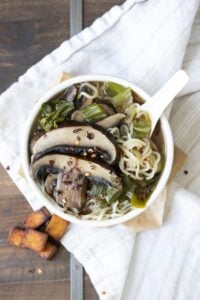
Bok Choy Miso Noodle Soup
This bok choy miso noodle soup is one of my favorite quick dinners when I need something warm, nourishing, and comforting with potential detoxifying benefits. I combine tender bok choy, savory mushrooms, and a rich miso broth into a soup that is ready in just 20 minutes, making it ideal for busy weeknights or cold afternoons.
Servings: 8
Calories: 63kcal
Ingredients
- 3 heads baby bok choy
- 2 portobello mushrooms
- 2 tablespoons chickpea miso paste
- 4 cups hot water (you can add more if you want a more mellow broth)
- 4 tablespoons Tamari or Soy Sauce (low sodium if needed, adjust amount for saltiness you prefer)
- 4 tablespoons Mirin (rice cooking wine)
- 16 ounces Asian noodles of choice , use less if you don’t want as many noodles (I use Shirataki Spaghetti by Nasoya so they are very light)
- 16 ounces firm or extra firm tofu optional, omit for non soy version (can use less or more depending on specific brand package)
Crispy Tofu option (need this in addition to tofu above):
- 2 tablespoons chickpea miso paste
- 2 tablespoons hot water
- 4 tablespoons Tamari or Soy Sauce (low sodium if needed)
- 4 tablespoons Mirin (rice cooking wine)
Instructions
Soup:
- Coarsely chop the bok choy. Set aside.
- Thinly slice the portobello mushrooms. Set aside.
- Cut tofu into cubes if using (follow crispy tofu instructions below if making it crispy). Set aside.
- If your noodles are not already cooked, cook them according to package directions. If using the Shiratake noodles in water I used, then rinse them in a colander.
- Mix the miso and 1/4 cup of the hot water in a small jar with a lid, use a tupperware or other container with a lid if you don’t have a jar. Close the lid tight and shake well to dissolve the miso paste, you may need to use a fork to mash the chunks a bit.
- Once mostly dissolved, add the rest of the tamari/soy sauce and Mirin. Close the lid tight and shake again.
- Add the portobello mushrooms and the marinade to a pot and saute over medium heat for about 2 minutes, until the mushrooms begins to get soft.
- Add the bok choy and the rest of the hot water to the pot, cover and cook for 3 minutes or until the bok choy gets soft.
- Add tofu cubes if using (and not using the crispy tofu option).
- At this point, you can add the noodles or you can keep the noodles separate and add them to the bowls when you serve. If using Shiratake noodles, they will not get soft and mushy so adding them to the pot is perfect. However many other noodles may get overcooked and soft (which I cannot stand) if added directly to the soup.
- Serve hot in bowls! Add crispy tofu if using.
Crispy Tofu Option (can marinade the day before for optimal flavor):
- Add 2 tablespoons of hot water and 2 tablespoons of miso paste in a jar or container with lid. Close the lid tight and shake well to dissolve the miso paste, you may need to use a fork again to mash the chunks a bit.
- Once mostly dissolved, add 4 tablespoons of tamari/soy sauce and 4 tablespoons of Mirin. Close the lid tight and and shake again.
- Cut tofu into cubes and put into a deep dish. Pour marinade over the top. Allow to sit overnight or for about 5-10 minutes if you are making it the day of.
- Preheat oven to 450 F (230 C).
- Transfer marinated tofu cubes onto a parchment lined cookie sheet. I use a slotted spoon to do this. You can save the extra marinade to add to the soup if you want to add more flavor.
- Bake for 25 minutes, or until tofu is nice and crisp.
Notes
- My #1 Secret Tip for this bok choy miso noodle soup recipe is to dissolve the miso completely before adding it to the pot. Whisking it with a small amount of hot water first is how I create a silky smooth broth without little bits of undissolved miso.
- Cook the noodles separately: If I suspect that I will have leftovers, I cook and keep the noodles separate from the broth until serving. They stay pleasantly chewy instead of soaking up the broth and becoming soft.
- Do not overcook the bok choy: Bok choy only needs a few minutes to become tender. I cook it just until the stems are crisp-tender to help preserve its texture and bright green color.
- Slice mushrooms thinly: Thin slices cook quickly and absorb more of the miso broth, giving every bite lots of flavor.
- Marinate the crispy tofu overnight: If I am making the crispy tofu option, I marinate it overnight so that it has even more flavor before baking.
- Taste before serving: Different brands of miso and tamari vary in saltiness, so I always taste the broth before serving and adjust with a little extra hot water or tamari if needed.
Nutrition
Calories: 63kcal | Carbohydrates: 8g | Protein: 4g | Fat: 1g | Sodium: 526mg | Potassium: 99mg | Sugar: 3g | Vitamin A: 1885IU | Vitamin C: 19.1mg | Calcium: 53mg | Iron: 0.6mg