




Pesto Without Pine Nuts
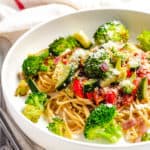
This post may contain affiliate links. As an Amazon Associate, I earn from qualifying purchases. Please read my disclosure.This easy pesto without pine nuts is a little different from the average pesto, and for all the right reasons. I use walnuts, parsley, sage, and garlic to create an aromatic and earthy sauce that instantly adds new dimensions to any meal. It takes me just 10 minutes to make, and easily surpasses any store-bought pesto I have ever tried.
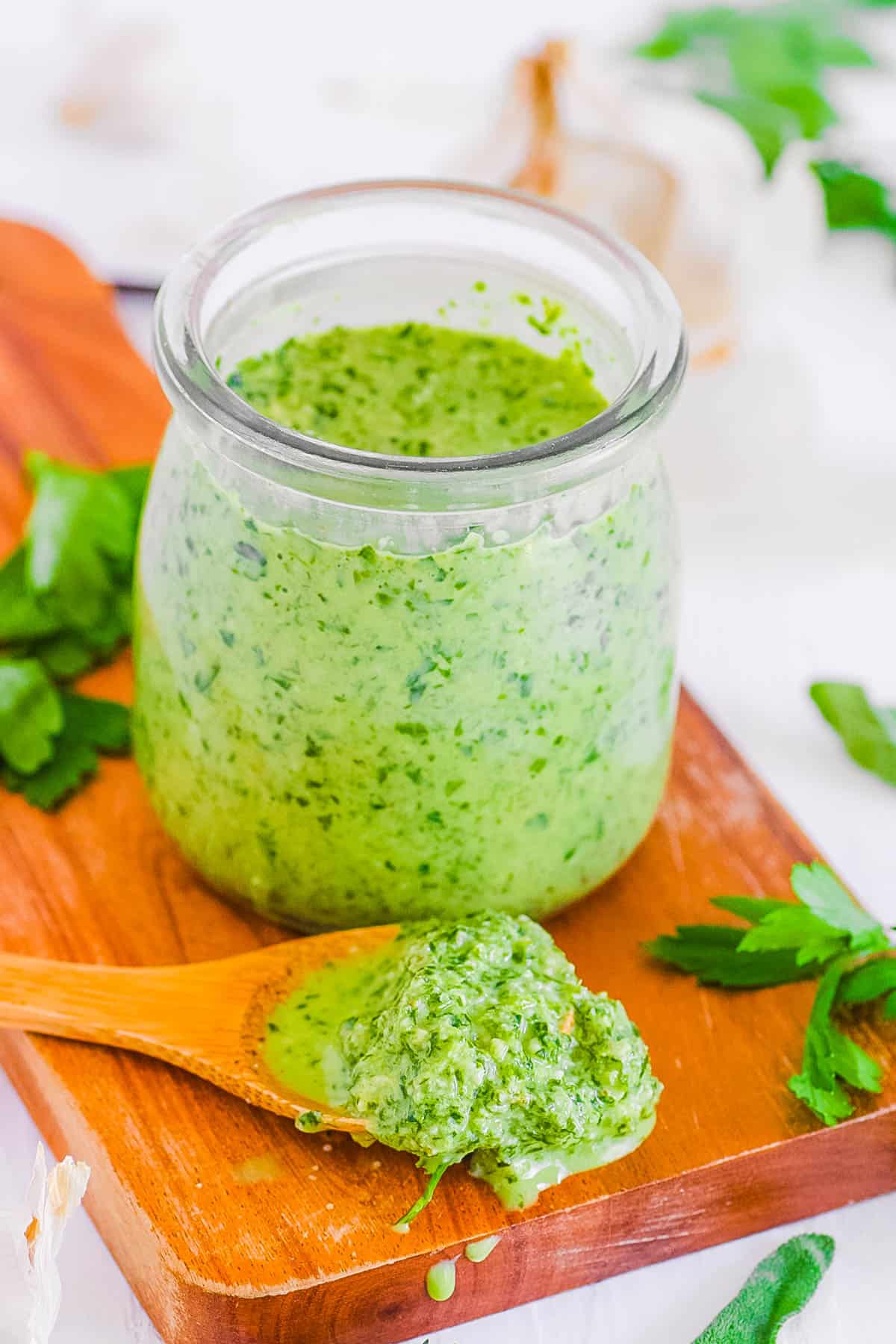
Traditional pesto recipes usually lean on very specific herbs, and have a flavor similar to my vegan basil pesto, and also include pine nuts and significantly more olive oil. For this version, I wanted something slightly lighter, with a more rustic flavor, that could still pair well with the usual pizzas and pastas. I also wanted to include nuts for the healthy fats and flavor, but decided to use something more budget-friendly, like walnuts. If you enjoy homemade sauces, you need to try this alternative take on pesto. The bright green hue alone is enough to elevate your next meal.
I originally started making this pesto when I realized just how expensive pine nuts had become at my local grocery store, which happened to coincide with a time when fresh basil was scarce for some reason. That was not an issue since I enjoy using other herbs in recipes like my vegan kale pesto. The first time I made it, my kids’ eyes widened, and they asked where I got extra peppery basil from. Ha! This has definitely become the favored pesto in my family.
👩🏽🍳 Why I Love This Recipe
As a nutritionist, traditional pesto recipes were always a bit too heavy for me, and that is why I favor this pesto without pine nuts. The walnuts give the sauce just enough body and richness, while the parsley and sage keep everything fresh with a peppery taste. I use broth and lemon juice instead of large amounts of olive oil, which keeps the texture light and almost creamy.
The combination of ingredients works especially well because walnuts blend into a naturally smooth paste once processed. Sage has a more pronounced flavor than basil, which is why I pair it with parsley to keep the sauce from tasting overly sharp. First, I pulse the herbs and walnuts together until it looks finely chopped, then I slowly stream the broth while blending until I have a rich and silky pesto. I finish off with a squeeze of fresh lemon juice to keep the herby flavor vibrant while also preventing oxidation.
A couple of years ago, my eldest was working on a school project about ancient cities and their cultures. I was quite excited when I was told that they were doing Italy, but I grew concerned when she said she wanted to focus on Genoa and make authentic pesto in class for their presentation. There was no way this kid was going to grind up herbs with a pestle and mortar to make edible pesto in the span of 5 minutes. We reached a compromise, and that weekend, we did a time-lapse video of the traditional and ancient pesto making.
For the actual presentation, however, I was asked to make 3 different kinds of pesto with a few sides. Ha! I am pretty sure I was just conned into making snacks. If you want your kids to be as excited and enthusiastic about homemade sauce, try this easy pesto recipe without pine nuts.
Latest Recipe Video!
🥘 Ingredients
For this easy pesto without pine nuts, I use simple fresh ingredients for a smooth sauce with an intense savory flavor. This is what I use:
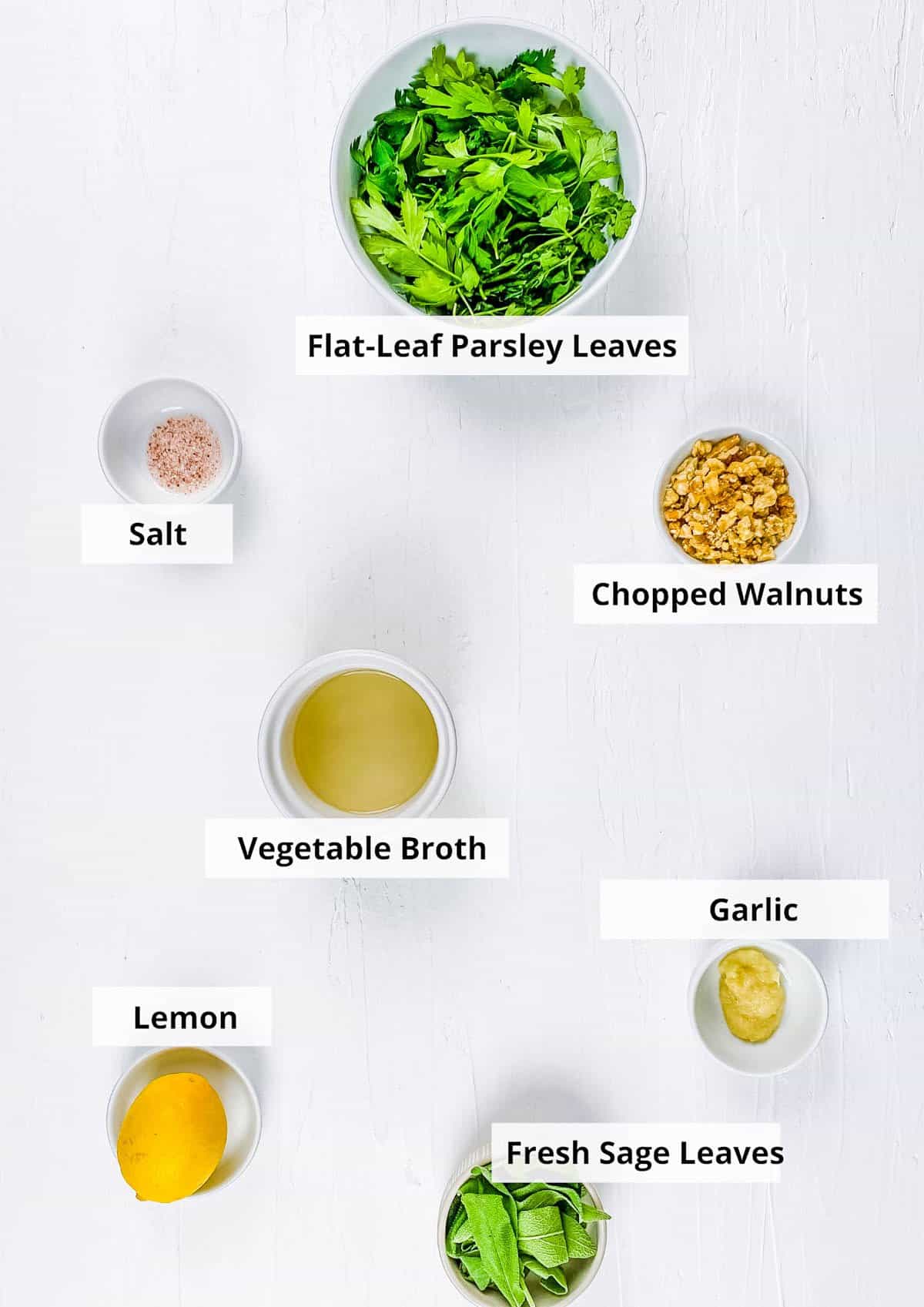
Parsley: Fresh parsley keeps the pesto bright and fresh while balancing the more pungent sage flavor.
Sage: This adds a strong, earthy flavor that makes the sauce taste slightly richer and more savory than traditional pesto.
Garlic: I add fresh garlic for sharpness.
Walnuts: These create a creamy texture and mild nutty flavor.
Lemon juice: I use this to brighten the flavor and help preserve the green color.
Vegetable broth: This helps loosen up the pesto without needing excessive amounts of oil.
Salt and black pepper: These balance the herbs and bring out the nuttiness from the walnuts.
🔪 How To Make
All I need is a food processor and a few minutes to bring this easy pesto without pine nuts together. This is how I make it:
Blend herbs and walnuts: I add the herbs, garlic, walnuts, lemon juice, salt, and black pepper to the food processor. Then pulse everything together until the herbs look finely chopped, and the walnuts break down into a coarse paste.
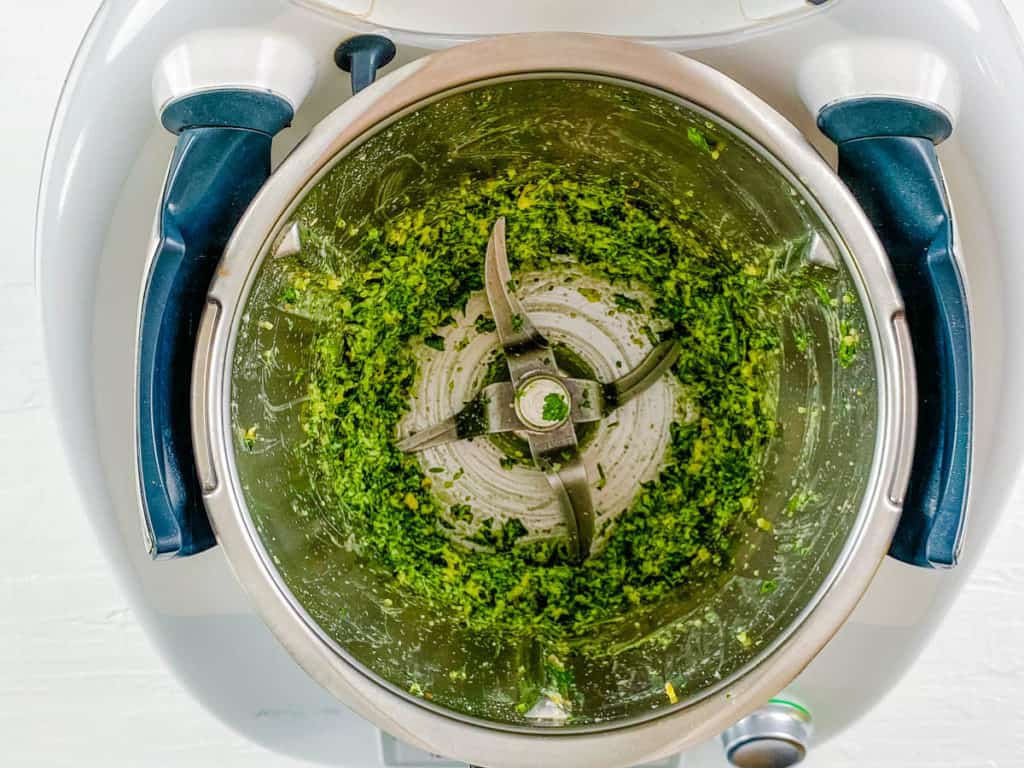
Add broth slowly: With the processor running, I slowly pour in the broth through the feed tube.
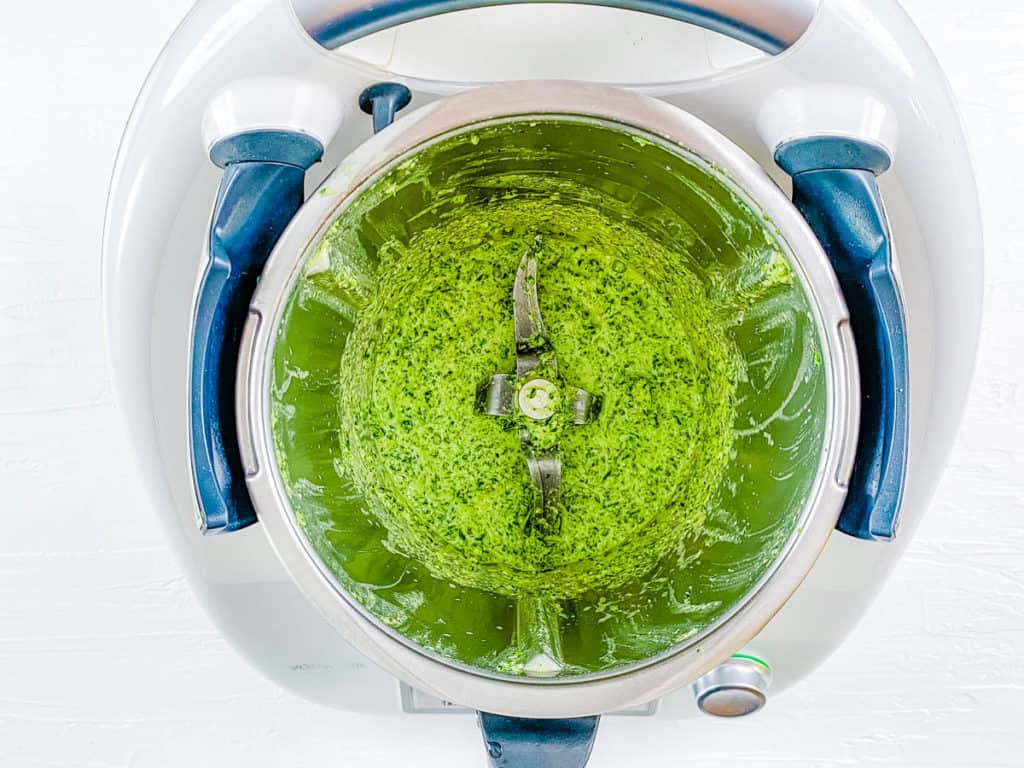
Adjust texture: If the pesto looks too thick, I add another splash of broth until it reaches my desired consistency.
Store or serve: I transfer the pesto into a jar or an airtight container and refrigerate it or use it immediately.
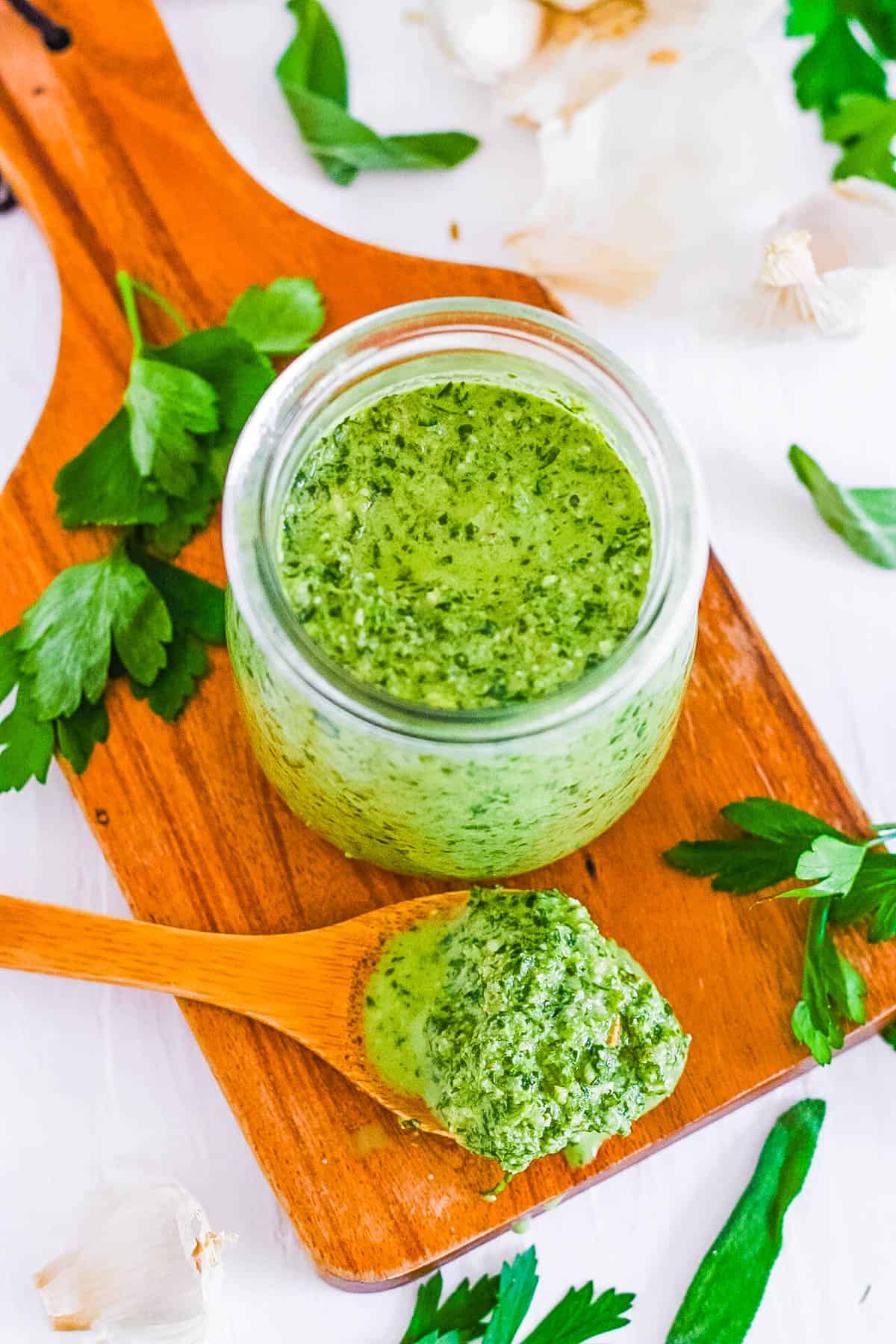
💭 Expert Tips
My #1 Secret Tip for this easy pesto without pine nuts recipe is to blend the pesto in short pulses at first, instead of running the processor continuously. I always keep in mind that the heat from the blades can cause the herbs to overheat, which dulls the fresh flavor and darkens the color. Pulsing in short bursts prevents this.
Other Tips To Keep In Mind:
- Toast walnuts: Lightly toasted walnuts add a warmer, buttery flavor and blend more smoothly into the sauce.
- Scrape down sides: I stop once or twice while blending to scrape down the sides. This gives the pesto a more cohesive texture.
- Add broth slowly: I always pour a thin stream of broth into the blender to help the pesto emulsify. Doing it too quickly can cause separation in the sauce.
- Taste last: Walnuts vary in bitterness slightly, so I always adjust the salt and lemon juice after blending.
- Prevent browning: I press a thin layer of plastic wrap directly onto the surface of the pesto before sealing the container. This limits air contact and keeps the color and flavor fresher for longer in the refrigerator.
📖 Variations
Since I make this easy pesto without pine nuts so regularly, I change it up slightly to keep it interesting. These have been 3 of my favorite variations so far:
Spinach pesto: I add 1 cup of baby spinach along with the parsley and sage for a slightly milder flavor and softer texture. The spinach blends smoothly and gives the pesto an extra vibrant color. My kids prefer this milder flavor.
Creamy pesto: I stir in 2 tablespoons plain dairy-free yogurt after blending for a creamier texture. I love using this in pasta salads or as a base spread for wraps. My husband likes it as a dip.
Seeded pesto: When cooking for someone with nut allergies, I swap the walnuts for a spoonful of my pumpkin seed butter. The texture stays creamy with a slight earthy flavor. I like using this version as a sandwich spread.
🍽 Serving Suggestions
If you have gone through the trouble of making this easy pesto without pine nuts, I highly recommend following through with my homemade vegan pasta and some healthy marinara sauce for a simple but truly wholesome meal. And if you want to make a full meal out of it, serve it with a crisp side of spinach and arugula salad and some freshly baked gluten free focaccia.
At home, I like adding this specific pesto to my margherita flatbread for a bright and peppery kick. Sometimes I like thinning the pesto down slightly and using it as a drizzle. Last week, I treated myself to a solo al fresco lunch with some of my bruschetta burrata. I did not have enough pesto to spread on the base, so I spooned it over instead, and enjoyed it with a chilled Italian margarita.
🧊 Storing And ♨️ Reheating
Refrigeration: I store leftover pesto in an airtight container in the refrigerator for up to 4 days.
Freezing: I freeze leftover pesto in ice cube trays, then transfer the cubes to a freezer-safe bag or container and use as needed.
Reheating: I usually stir the pesto into a hot pasta or warm vegetables rather than reheating it directly. Gentle heat keeps the herbs tasting fresher.
❓Recipe FAQs
Why does my pesto taste bitter?
Bitterness usually comes from overly strong herbs, older walnuts, or too much raw garlic. To avoid this, I always taste a few walnuts before using them to ensure I have a fresh batch. Then I balance the pesto with salt and lemon juice until the bitterness is subdued. You could also roast whole cloves of garlic before blending, for a milder flavor, with a slightly sweet undertone.
What can I use instead of walnuts in this pesto?
I like using blanched almonds, pistachios, cashews, or macadamia nuts as they all work really well. Each of these nuts changes the texture slightly, and you may end up with a slightly grittier texture. If you want the creamiest texture, I would stick to walnuts and macadamia nuts.
How do I fix pesto that turned out too thin?
If my pesto ends up thinner than I wanted, I usually fix it by blending in a small handful of extra walnuts or more fresh herbs. Both help thicken the sauce without making it oily. When I am serving it with pasta, I actually leave the pesto slightly loose as the sauce thickens up a bit once it sits, and coats the hot starchy noodles.

Love this plant based Italian recipe? Please leave a 5-star rating 🌟 in the recipe below and/or a review in the comment section further down the page!
You can also FOLLOW ME on FACEBOOK, INSTAGRAM, and PINTEREST to see more delicious, healthy, family-friendly food, and if you have any questions, I’m here to help!
📋 Recipe Card
🎥 Watch How to Make It
Pesto Without Pine Nuts
This easy pesto without pine nuts is a little different from the average pesto, and for all the right reasons. I use walnuts, parsley, sage, and garlic to create an aromatic and earthy sauce that instantly adds new dimensions to any meal. It takes me just 10 minutes to make, and easily surpasses any store-bought pesto I have ever tried.
Servings: 4
Calories: 52kcal
Ingredients
To Make The Pesto
- ¼ tsp salt
- ½ cup fresh flat-leaf parsley leaves can also use fresh basil
- 2½ tbsp chopped walnuts
- 2 tbsp fresh sage leaves
- 2 tbsp fresh lemon juice
- 1 garlic clove
- ⅓ cup vegetable broth
- ¼ tsp ground black pepper
To Toss With Pasta
- 4 cups cooked whole wheat penne (about 3 cups uncooked)
- 4 zucchini quartered and sliced
- 1 10oz bag baby spinach
- ½ tsp dried oregano
- ½ tsp garlic salt
- 8 tbsp grated parmesan cheese (1 tbsp per serving)
- 2 cloves garlic minced
Equipment
- Pasta Pot
- Large Pan
Instructions
To Make The Pesto
- Combine ¼ teaspoon salt, parsley, and next 5 ingredients (through 1 clove garlic) in a food processor; process until finely chopped, scraping sides.
- With processor on, slowly pour broth through food chute, processing until well blended.
If Tossing With Pasta
- Cook penne according to package directions, cool and set aside.
- Spray a pan with cooking spray, heat over medium heat. Add zucchini and 2 cloves minced garlic and stir fry lightly (for about 5 min max). Add spinach, garlic salt and oregano and cook through until spinach is wilted. Set aside.
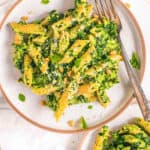
- Combine penne and pesto in a pot on low heat until combined and heated through. Add pepper and mix well. Add in vegetables and serve warm, top with 1 Tbsp Parmesan cheese per serving.
Notes
- My #1 Secret Tip for this easy pesto without pine nuts recipe is to blend the pesto in short pulses at first, instead of running the processor continuously. I always keep in mind that the heat from the blades can cause the herbs to overheat, which dulls the fresh flavor and darkens the color. Pulsing in short bursts prevents this.
- Toast walnuts: Lightly toasted walnuts add a warmer, buttery flavor and blend more smoothly into the sauce.
- Scrape down sides: I stop once or twice while blending to scrape down the sides. This gives the pesto a more cohesive texture.
- Add broth slowly: I always pour a thin stream of broth into the blender to help the pesto emulsify. Doing it too quickly can cause separation in the sauce.
- Taste last: Walnuts vary in bitterness slightly, so I always adjust the salt and lemon juice after blending.
- Prevent browning: I press a thin layer of plastic wrap directly onto the surface of the pesto before sealing the container. This limits air contact and keeps the color and flavor fresher for longer in the refrigerator.
Nutrition
Serving: 0.25of the pesto | Calories: 52kcal | Carbohydrates: 3g | Protein: 1g | Fat: 4g | Saturated Fat: 1g | Polyunsaturated Fat: 3g | Monounsaturated Fat: 1g | Sodium: 228mg | Potassium: 94mg | Fiber: 1g | Sugar: 1g




















This sounds delicious! I have never thought to use sage in my pesto before but it’s a great idea. Can’t wait to try it!
Thanks Danielle! You will love this recipe!
This pesto is amazing. Bursting with flavour!
Awesome! Thanks for letting me know how it turned out for you!
What a great pesto recipe! Shared your recipe with my friends, and they loved it of course!
Woohoo! So happy to hear that Natalie!
You can’t beat homemade pesto and this looks delicious. So vibrant.
Thanks Dannii! Enjoy!
I love using walnuts in pesto (less expensive, and I think walnuts add heaps more flavour). It was the first time I tried using parsley and sage in a pesto! And I absolutely loved it. Very distinctive flavour! 🙂
Aw yay! I’m so happy to hear that Ieva!
This looks so delicious! I love pesto pasta..will try your recipe tonight
Thanks! Can’t wait to hear how it turns out!
We love pesto with walnuts! It gives is such a nutty flavor and goes so well with the whole wheat pasta! Love it!
Yes!! I totally agree about the flavors pairing really nicely with whole wheat vs. white pasta! So glad you liked it!
This pesto was so delicious and easy to make! Will definitely be using again.
Yay! I’m so happy to hear that Emily! Thanks for letting me know!
Comfort food dinner for the win! That pesto sauce is amazing!
Hooray! So happy to hear that Taylor! 🙂
Looks, delicious! My boys love pasta, and I’ve been looking for some new recipes to mix things up!
Awww thanks Alison! 🙂 Hope you and your boys love this recipe!!
This looks so yumm!! It’s tasty as well as healthy!
You will love this recipe!
I love this combination! Love the twist in using walnuts in pesto!
I love to try different pesto recipes. This one sounds fantastic.
I love walnuts — and it’s so nice when something I love eating is a healthy, too. This looks really good.
This is absolutely scrumptious. I do love walnuts in pesto and different herbs. The additions of the scrumptious vegetables make this heavenly.